 An official website of the United States government


Featured Volunteer Profile
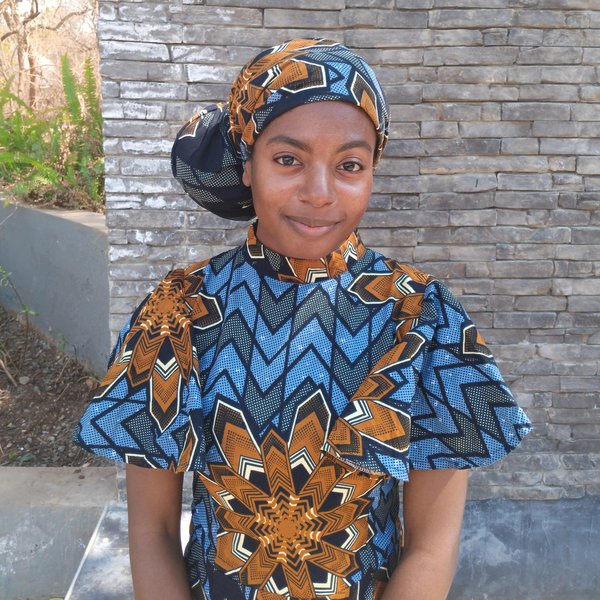
Anissa F.
“My community ... gave me buckets of food without expecting anything in return. They talked my ear off with questions about life in America and my opinions of Malawi. Through their questions, we learned so much about each other.”
1. What first got you interested in the Peace Corps?
I always wanted to live abroad and do humanitarian work, but I couldn’t visualize how to make that dream a reality. I researched the Peace Corps and grew to see it as an opportunity to do humanitarian work at the grassroots level. As I learned more about the Peace Corps, I was able to connect with Returned Peace Corps Volunteers (RPCVs) whose experiences helped me make my dream a reality. Knowing that there was such a huge, supportive Volunteer community that I could lean on for support was honestly the push I needed to choose to serve.
2. What projects did you work on with your community?
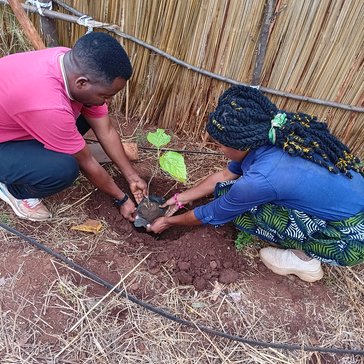
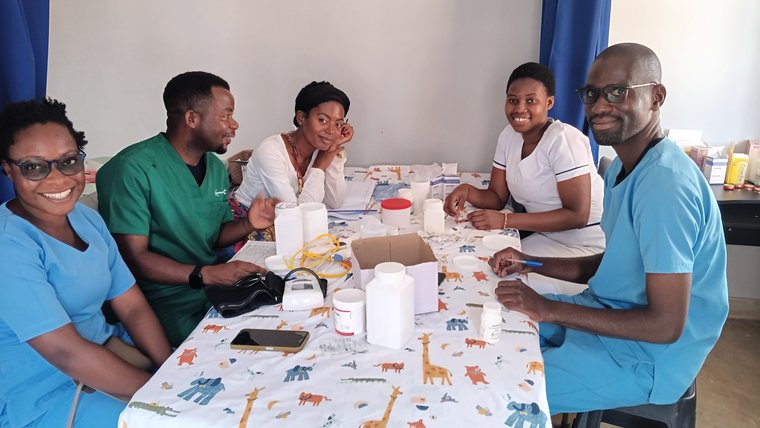
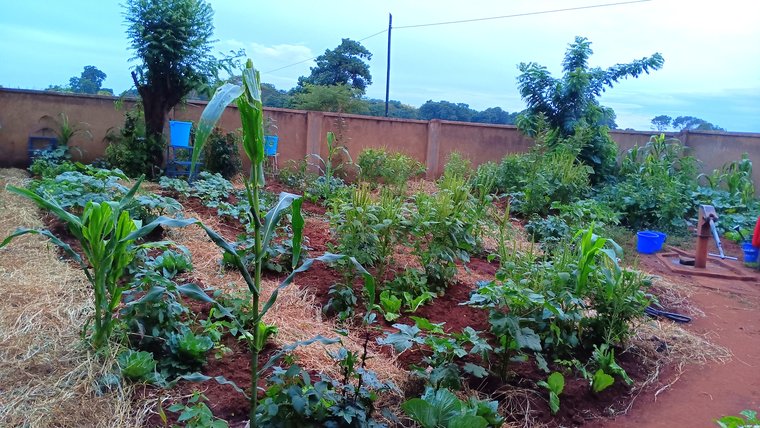
Projects I worked on included teaching women and girls how to sew reusable menstrual pads, providing operational and management support to a community bakery, and establishing a garden at the health center to support expecting and new mothers. Pregnant women in the local communities of Malawi normally get to the health center at least a month prior to their delivery date due to the long distance many need to travel, and for regular antenatal supervision. With the help of a neighboring Volunteer, I organized cooking demonstrations for mothers with children under 5, where we made dishes like samosas, chapatis (a flatbread), tacos, and egg tarts. I also connected secondary school youth (ages 12-24) with educational resources through the America Center.
3. What strategies did you use to integrate into your community?
Integrating into my community was a bit of a challenge. Not being able to speak the Chichewa language confidently significantly hurt my community’s initial perception of me; they assumed I was prideful because I spoke English. I struggled to properly convey my intentions without the support of my counterparts or the help of a friendly village kid acting as my translator.
My counterparts were extremely helpful in conveying what my role as a Peace Corps Volunteer entailed and my desire to work hand-in-hand with community members. With time, my proficiency in Chichewa grew thanks to the tutoring provided by my counterparts, and I was able to greet everyone with a Mulibwanji (Good morning), a Mwadzuka Bwanji (How are you?) or a Bho bho (an informal hello typically used between friends or children) with ease.
Being the daughter of a Jamaican mother and a father with a thick southern accent, I grew up around people who spoke with broken English. I have a deep respect for people learning a new language. Learning the English language and acclimating to American society and culture is not easy. My experience in Malawi made me want to wholeheartedly support immigrants and empathize with their language challenges.
4. What was the highlight of your time in service?
The biggest highlight of my service was the people who welcomed me with a chair and a hot plate of nsima—a thick dough-like dish similar to West and Central African fufu. Nsima has the texture and firmness of cold grits and is usually served hot with vegetables and a source of protein. I never imagined growing to love a group of people so fiercely. They excused my poor Chichewa and enthusiastically offered to teach me. With them, each day was an adventure and a new learning experience. I will be forever grateful to them.
5. What did you enjoy most about the community where you served?
My community was curious and charitable. They gave me buckets of food without expecting anything in return. They talked my ear off with questions about life in America and my opinions of Malawi. Through their questions, we learned so much about each other. My community was also unique in its diversity—there are people from various academic backgrounds, every region of Malawi, and even some from other African nations.
6. What are some of the most important things you learned from your community?
I learned so much from my community during service. I learned how to make the most out of what resources are available, no matter how minuscule they may seem. I learned the importance of being prepared to pivot at a moment’s notice when sudden unforeseen events occur. I am grateful that my community helped me learn what true hospitality means. But the most important thing I learned from my community is to always be patient and kind in all that I do.
7. How did you spend time when not working on a project?
When I wasn’t working on a project, I asked my counterparts if I could assist them with their work. This involved me sorting community health information in a spreadsheet, recording client intake and vaccination records, or sometimes, simply keeping them company. I am truly grateful that my counterparts enjoyed spending time with me as much as I enjoyed spending time with them. I also hung out with my neighbors, read romance books, and slept whenever I could.
8. How did you wrap up your service as a Volunteer?
I hate goodbyes. Although the end of service is bittersweet, I made the most of it with the people who made my service such a wonderful and life-changing experience. I surrendered to my cravings and ate as much mandazi and zitumbuwa as possible.
Mandazi is basically a moderately sweet doughnut shaped into a ball and boiled in oil. It is the most commonly sold pastry in Malawi. You can find it literally anywhere: at markets, schools, clinics, or busy street intersections or bus stops. Mandazi is usually eaten as a snack or lunch, and in my opinion, best eaten fresh. Zitumbuwa has a texture similar to that of a plain hush puppy without any vegetables, proteins, or herbs incorporated. It is made with a mix of maize and soya flour, baking soda, and a little bit of salt and sugar or bananas. It is shaped into a small disk or a flat circle and then fried in oil. Zitumbuwa is usually eaten for breakfast or as a snack.
9. What will you do differently now that you’ve returned to the U.S.?
I plan to prioritize my physical and mental health, and to make sure I don't dismiss my feelings. I also hope to cook from scratch more often and to share meals with my loved ones whenever possible. Most of all, I hope to continue to value the time I spend with those around me. One habit I gained during my service that I sincerely hope to never break is simply checking in with others. I want to keep making an intentional effort to stay connected to those I care about.
Learn more about serving as a Peace Corps Volunteer in Malawi.



