 An official website of the United States government




Featured Volunteer Profile
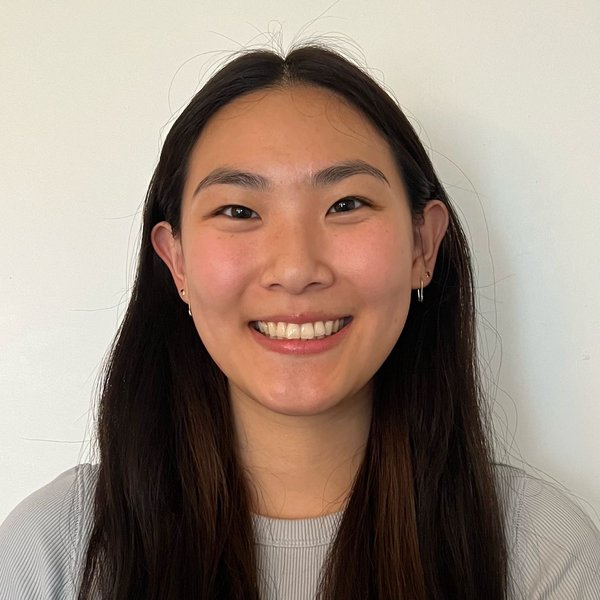
Angelina L.
“Life in the village moves at a gentler pace compared to the city, and I have come to appreciate the importance of stepping back, being present, and focusing on what truly matters, especially family.”
1. What got you interested in the Peace Corps?
I was first introduced to the Peace Corps during my high school American history class. As the child of immigrants, I grew up surrounded by the strength and support of a close-knit community. These experiences instilled in me a deep commitment to service and a passion for helping others. When I learned about the Peace Corps, it immediately resonated with me as it aligned with the values I had grown up with and the person I aspired to be. However, it wasn’t until I was nearing the end of my undergraduate studies and considering a gap year that I seriously began exploring the organization. I connected with a campus Peace Corps recruiter, who introduced me to Returned Peace Corps Volunteers (RPCVs) in my area. Hearing their stories of how their service shaped their lives and how they continued to serve their communities solidified my decision to become a Peace Corps Volunteer.
2. What projects are you working on?
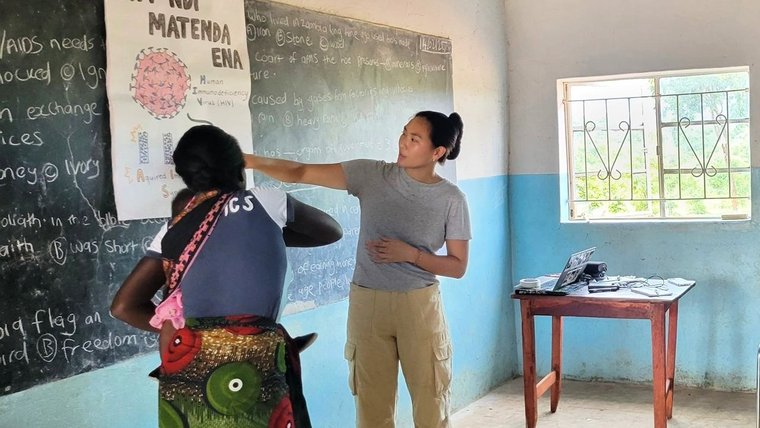
As a Community Health Empowerment Volunteer, I use a grassroots approach to community outreach in collaboration with the Zambian Ministry of Health. My efforts have focused on advancing health education and promoting behavior change in key areas such as maternal and child health, nutrition, malaria prevention, adolescent sexual health, and HIV testing and treatment adherence. Since last year, I have led a youth club with school-going adolescents, facilitating discussions on nutrition, positive body image, and youth leadership.
Recently, I launched a new initiative, specifically targeting adolescents living with HIV or affected by it in some way. These youth clubs aim to provide accurate, stigma-free education that supports HIV treatment adherence and positive living practices for HIV-positive youth.
Both initiatives are closely tied to a 2024 grant project I supported, which funded the training of 16 community-based volunteers. These volunteers are now certified by the Ministry of Health to conduct HIV testing and provide education on maternal/child health and HIV/AIDS. The grant also supported the creation of a community garden, which I continue to expand in partnership with the local clinic by planting fruit trees and vegetables to promote a diverse diet and improved nutrition within the community.
3. What strategies have you used to integrate into your community?
Learning new languages has always been a personal challenge for me. To overcome this, I committed significant effort to developing a functional language level before entering my community and have continued to build on those skills ever since.
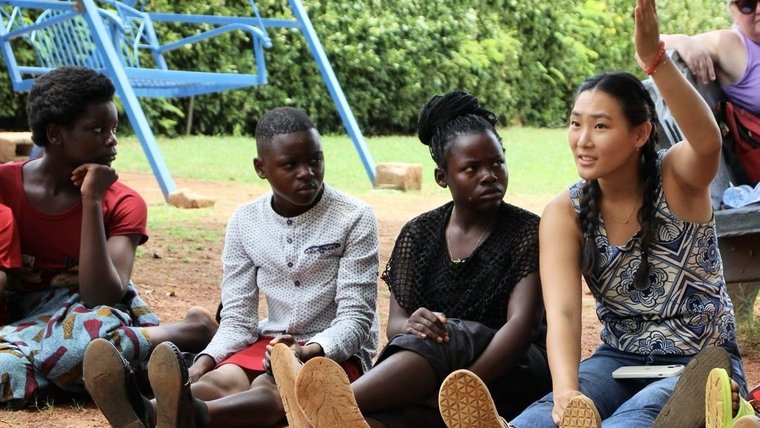
While language is one tool for connection, I’ve found that simply spending time with people, sharing space and presence, has been just as meaningful. Regular visits to my counterparts’ homes and my host family’s home, even if it means sitting in comfortable silence with the women and children, have helped me feel deeply rooted in the community. Additionally, frequent interactions with the neighborhood children, both through school-based projects and casual encounters, have strengthened mutual familiarity and trust, further integrating me into the fabric of daily life.
4. What is a highlight of your time in service so far?
One of the highlights of my Peace Corps service has been the collaborative projects I’ve had the opportunity to take part in. From leading workshops at fellow Volunteers’ sites to organizing larger-scale initiatives like Girls Leading Our World (GLOW) and Boys Respecting Others (BRO) camps, these experiences have created lasting memories, not only with other Volunteers but also with the individuals who participated in our programs. Working closely with fellow Volunteers through the challenges and successes of these initiatives has made the experience especially meaningful. Sharing in the process has deepened my appreciation for the impact we’re making in our communities and reminded me of the strength that comes from collective effort.
5. What have you enjoyed most about the community where you are serving?
My village, located in the Eastern Province of Zambia, is an area rich in culture, generosity, and warmth. What I’ve appreciated most about my community is their welcoming spirit and genuine curiosity about me and the Peace Corps. As the first Volunteer assigned to this site, I believe our exchange has been truly mutual; they have learned from me just as much as I have learned from them.
The support I’ve received from my counterparts, host family, and neighbors has been extraordinary. Their kindness, patience, and willingness to include me have made this community feel like home. Their care has been a source of strength and comfort during some of the most difficult times of my service, particularly when I experienced significant harassment elsewhere in the district. In every way that matters, my community has been my safe haven. Simple moments like hearing neighbors affectionately call me “Amake ndi Zuzu,” (“mother of Zuzu [my cat]”) are small gestures that make me feel truly seen, valued, and accepted as a part of the community.
6. What are some of the most important things you’ve learned from your community?
I have learned so much from my community so far. One has been the value of slowing down. Life in the village moves at a gentler pace compared to the city, and I have come to appreciate the importance of stepping back, being present, and focusing on what truly matters, especially family. I have also learned how deeply rooted the sense of community is here. People live with and around their families, but beyond that, the entire village functions like one extended family. When someone is in need or has work to be done, others show up without hesitation. The support is immediate and generous, a true reflection of selflessness and mutual respect.
I have also learned what resilience and adaptability look like in practice. During Zambia’s worst drought in decades, I watched members of my community respond to the failed harvest by finding creative ways to support themselves. Some began panning for gold, others raised broiler chickens, and many filled potholes in the road for small amounts of money. These efforts showed an incredible determination to overcome hardship. My community has not only taught me about strength, but they have also inspired me with their unwavering perseverance and unity.
7. How do you spend time when you are not working on a project?
When I’m not working on a project out in the community, I enjoy reading and crocheting, both of which are activities I can do from my porch or indoors. I also hold responsibilities within the Peace Corps Zambia community as a member of two Volunteer-led committees: the Volunteer-Staff Service Improvement Committee and the Women’s and Girls’ Empowerment Committee. As a result, you can often find me typing away on my laptop, either inside or out on the porch. The change of scenery helps me feel more connected to my community, even when my work pulls me away from direct socializing. Lastly, my friends and family, those in Zambia and back in the States, are an incredible support system that I rely on, so I stay in touch with them as often as my cell service allows.
8. What are you looking forward to in your remaining time as a Volunteer?
Unfortunately, I’m nearing the end of my two-year service. With the time I have left, I’m eager to continue working on meaningful projects with my community and to bring them to a point where I feel confident in their sustainability. One project we’re beginning is mushroom propagation, which is an extension of the community garden we established last year and have continued to support. In the coming months, I look forward to harvesting mushrooms as well as planting more fruit tree seedlings and vegetables as we enter the new planting season.
I also hope to spend as much time as possible with the community and friends I’ve made here in Zambia. Saying goodbye will undoubtedly be emotional and difficult, so what I’m most looking forward to now is simply soaking in these final months and appreciating every moment.
9. Once you finish your service, what will you do differently when you return to the U.S.?
When I return to the U.S., I may look like the same person who left, but I know I’ve grown and changed in profound ways. My cultural humility, patience, and ability to extend grace—to others and to myself—have deepened significantly. I’ve developed a newfound appreciation for a slower, more intentional pace of life and gained a heightened awareness of the diverse circumstances, cultures, and backgrounds that shape people's lives. While my day-to-day routines may not change drastically—aside from instinctively reaching to flush the toilet on the left-hand side—I know that my perspective has been fundamentally transformed. The way I see and move through the world will never be the same.



