 An official website of the United States government


Featured Volunteer Profile
Thaddeus S.
“To show up at someone's house and be present as they grieve the loss of a loved one, to be present at someone's birthday celebration, or just to show up to an event because someone wants you to attend, can be very impactful.”

1. What got you interested in the Peace Corps?
I got interested in the Peace Corps for two reasons: I wanted to have stories and experiences that not many people have, and I needed something to help my career.
I first heard about the Peace Corps from my neighbor who served in Peace Corps/Liberia and was captivated by the struggles he went through, the people he met, and the stories he told. He talked of a unique camaraderie between the Volunteers. All I could think about was those bonds that he made in Liberia and what I wouldn't do to have friends like that.
Secondly, just as I was planning on getting an internship, the pandemic struck. This left me with very little on my resume and very little to offer. The Peace Corps’ post-service benefits, such as non-competitive eligibility, could help kickstart my career and get me those entry-level jobs that I might never otherwise get. I feel more confident applying for jobs knowing that I have my Peace Corps service on my resume.
2. What projects are you working on?
I am working on a literacy camp for a local Indigenous community. A fellow Peace Corps Volunteer is currently serving there as part of the Environment sector. My colleague, as well as many members of her community, feel there is inadequate literacy training for their teachers. Together, we are planning a literacy summer camp where we will train teachers and educate students.
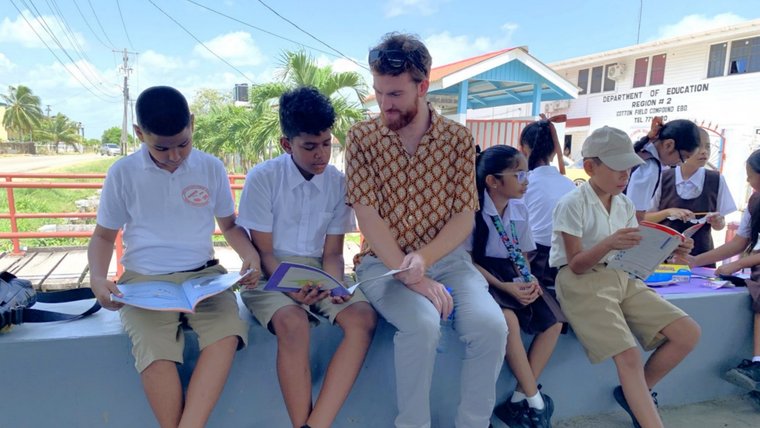
At my site, I am busy teaching literacy, co-teaching, and teaching computer literacy to grade 6 students. Student access to computers is very limited, and this class enables the children to use the four lab computers in the library. The hope is that greater access and understanding of technology leads to more career success in an ever more digital Guyana.
3. What strategies have you used to integrate into your community?
I could create a list of all the strategies I have employed from community walks, neighborhood meetings, and parent teacher conferences to playing football (soccer), watching cricket, and going to birthday parties. However, the most effective tool I've used has been simply saying “yes” to any event or activity someone wanted to do, as I’m able. This simple axiom has brought me a lot of goodwill among my teachers and neighbors, led me to the highlight of my service, and continues to produce lifelong memories even towards the end of my service.
During pre-service training, my host mother suggested that I invite my friends to a community get-together that she was catering for a couple of nearby villages. I said “yes.” The event was about the history and culture of my host community, its slave plantation heritage, its emancipation, and the music and culture that originates from Africa. Towards the end, there was a demonstration of drums in which most of the congregation got up to dance onstage, they asked us to dance. I said “yes.” One of the aunties present came over and complimented me on my dancing. We began to talk, and I mentioned that I like to play soccer. It turned out that she was the owner/organizer of the local soccer team and asked if I’d like to join. I said “yes.” After several weeks of practicing, we went on to play a couple of games in the regional league. The people I met and the activities that happened as a result of attending that one community event follow me to this day. I still get recognized for playing on the soccer team, and I keep in contact with some of the players. All thanks to saying “yes!”
4. What is a highlight of your time in service so far?
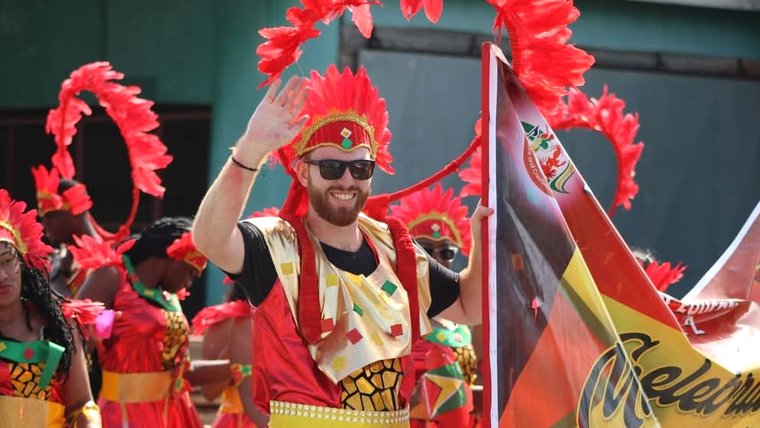
The highlight would have to be my involvement in activities for Guyana’s Mashramani Day in 2024 and 2025. Guyana celebrates its establishment as a republic on Mashramani Day, featuring its own version of carnival with a massive parade/competition held on main roads in towns across the country. Organizations compete against each other for the best costumes, floats, choreographed dances, and banner.
I helped my school compete in the children's march and knew how exciting and fun a larger march could be. When a teacher asked if I wanted to participate in the big Mashramani Day march with the Ministry of Education, I said “yes!”
The day of the march, all the teachers from my school and I dressed in our revelry costumes and spent the afternoon dancing our hearts out to soca music along a 4-mile route. Group leaders made up an impromptu dance in front of the judges, and we all followed along. I was truly astonished when we were announced as the first-place winner that year! In the following weeks, many random people said they watched me in the parade, commented about how unlikely it was to see a White boy participating, and asked me where I was from. I was tagged in pictures of Mashramani posted all over social media. My family was able to watch many videos of the celebration at home. We had so much fun and I got to meet so many people; it was the highlight of my service until we won again the next year!
5. What have you enjoyed most about the community where you are serving?
My community on the Essequibo Coast allows you to have the lifestyle you choose. If you are a reserved person who likes the comforts of home with the occasional get-together at a friend's house, you can do that. It's rural, but if you want to go out at night and be very socially active, you can also do that. My community is only a short bus ride away from the regional capital, which has moderately lively nightlife. I switch it up from week to week. One week I go to wakes, birthdays, house parties, and weddings most days, and on alternate weeks I stay home, go to the gym, and talk to my neighbors.
6. What are some of the most important things you’ve learned from your community?
One of the most important things I’ve learned in my community is the importance of the simple act of showing up. Halfway through my second year of school, one student passed away. He had been sick for some time, and I didn't personally know him, but the teachers who did were devastated. The wake was held over several days, as is customary in Guyana, and I didn’t know whether I should show up or not. One of the teachers made it clear that showing up was important even if I didn’t know the person. To show up at someone's house and be present as they grieve the loss of a loved one, to be present at someone's birthday celebration, or just to show up to an event because someone wants you to attend, can be very impactful. Your presence shows that you care. Sometimes just being there is all that is needed.
7. How do you spend time when you are not working on a project?
In my free time I go out with friends, play football, or cook. There are plenty of things to do and see. When I'm not going out, I usually go to the gym or play football. Living alone means the majority of my time is spent cooking for myself and cleaning up afterwards. A lot of people may find this to be the best or hardest part of Peace Corps service. Confronting yourself and your habits in another culture has absolutely been a challenge. The time spent by myself has helped me grow and change as a person. I honestly don't know if I could have done that in any other environment.
8. What are you looking forward to in your remaining time as a Volunteer?
I look forward to all the going-away parties I am about to have. I look forward to solidifying all the relationships I've made along the way. Saying goodbye to the people that I've impacted and to the people who have impacted me. I look forward to leaving all those relationships on a high note and with memories none of us will forget.
9. Once you finish service, what will you do differently when you return to the U.S.?
I believe I have an entirely new appreciation of food and hospitality. Being in Guyana has made me appreciate fruit as I never have before, and on my few trips home, I was astounded at the size and selection the U.S. has. I will try and make pumpkin curry with American pumpkins and dhal and rice with local split peas. I will try to cook as well and as frequently as I have in Guyana and resist the temptation to go out every other night. I will also try to be as hospitable to my guests as the Guyanese were to me. If someone comes over to my house, I will feed them till they burst and then give them juice to drink on top of it all. Lastly, I hope that I will remain just as accepting and adaptable as I have been in Guyana.
Learn more about serving as a Peace Corps Volunteer in Guyana.



