 An official website of the United States government


Returned Volunteer Profile
Daniel B.
“Peace Corps forces you to embrace challenge and adapt to new situations. Regularly, I am in a position of having to further adapt and learn a new skill or build off skills developed during Peace Corps service.”
1. What were your primary responsibilities during service?
My primary responsibilities during my service were teaching high school math and physics. During my two years of service, I taught 8th through 11th grade levels in northern Mozambique. I also served as the provincial assistant coordinator and then provincial coordinator for the science fair as well as leading a JUNTOS youth group. The JUNTOS youth group is a program aimed at empowering young people through discussions and activities centered around community development, leadership, and social issues such as health awareness and civic responsibility. Through JUNTOS, I worked closely with youth to foster critical thinking, teamwork, and a sense of agency in addressing challenges within their communities. This group provided a safe and supportive space for young people to express themselves, learn new skills, and take active roles in shaping their futures.
2. What projects did you collaborate on with your community?
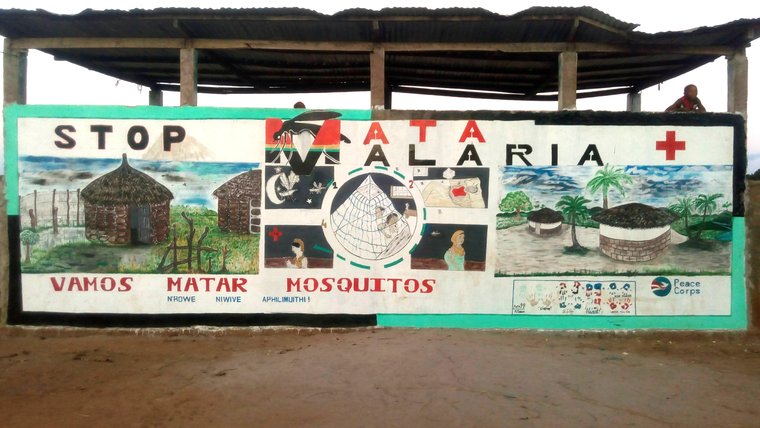
In addition to organizing a science fair and leading the youth group, several of us Peace Corps Volunteers in our village worked with a couple different local partners (local department for the Ministry of Education and Youth Development) to paint and design a malaria mural at the main soccer stadium in town. Furthermore, I hosted open office hours at my house for two hours daily, Monday through Friday, for students of any age and discipline.
During my service, I partnered with a local health association, which focuses on critical health initiatives, including malaria prevention and the promotion of antiretroviral therapy adherence. One of the key programs I supported was a peanut butter incentive initiative. Under this program, individuals who visited the hospital to collect their monthly antiretroviral medication received 1 kilogram of peanut butter as an incentive to encourage consistent treatment adherence.
My role specifically involved assisting in the production of peanut butter, working alongside the team to ensure a steady supply for the program. In my second year, a hospital doctor began prescribing peanut butter to malnourished children and youth as a nutritional supplement, recognizing its significant impact on their recovery. This dual-purpose initiative not only supported medication adherence but also addressed malnutrition in the community. I’m proud to say that the hospital continues to produce peanut butter to this day, sustaining this impactful program.
3. How did Peace Corps service influence your professional path and development?
My Peace Corps service developed my ability to understand cultures very different from my own, allowing me to adapt to new and very challenging situations. Living in a remote location, I learned many diverse skills including concrete works (built my own mini-water capture system, basic carpentry (built chairs, tables, small playground, etc.), and electric wiring/installations (re-wired my house). My communication skills were put to the test, learning Portuguese and the local language Makua.
4. How do you use skills honed during service in your current job?
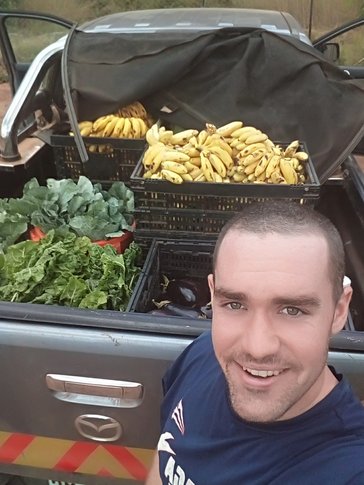
I work as a finance/operations director at a fruit and vegetable packhouse in the general region of my Peace Corps town. I rely on skills developed during my Peace Corps tenure on a daily basis—whether it be communication internally within our company or with our out-growers who often do not speak fluent Portuguese. Peace Corps forces you to embrace challenge and adapt to new situations. Regularly, I am in a position of having to further adapt and learn a new skill or build off skills developed during Peace Corps service.
5. How have you helped those at home understand the value of Peace Corps service and communities abroad?
Several of my close friends and immediate family members have come to visit the Cabo Delgado province as a result of shared stories and an interest to see the life I describe to them on a daily basis. The Peace Corps experience is invaluable to developing a holistic understanding of the world.
6. What Peace Corps benefits have been useful to you?
The Returned Volunteer (RPCV) network is extensive across the world. When I travel or look for potential work connections, there is almost always a RPCV somewhere. There is an inherent trust among RPCVs, having all gone through a similar experience—across different countries, decades, and sectors.
7. How have you remained involved with the Peace Corps community following service?
My largest continuous involvement in the Peace Corps community is through RPCV networks. Most major cities in the U.S. have RPCV groups that meet regularly. Furthermore, many international NGOs and companies have RPCV leadership/directorship.
8. What tips do you have for Volunteers just returning from their service?
A two-year service in the Peace Corps is a trialing period. It’s okay to not have the next step figured out and take a moment to re-adjust to a different culture again. Take advantage of traveling as you finish and make sure to find enjoyable activities.



