 An official website of the United States government


Returned Volunteer Profile
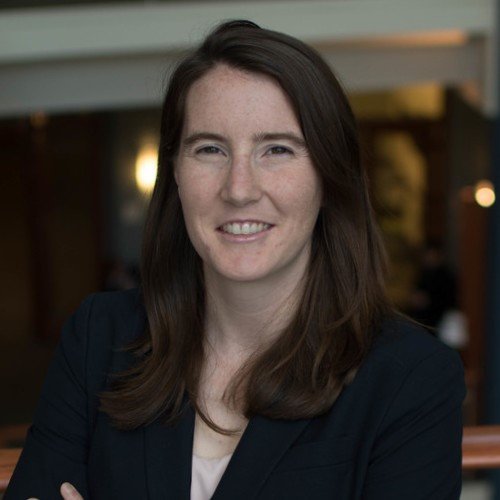
Abra S.
“I work in a global Fortune 200 company in biopharmaceuticals on innovative products in cell and gene therapy. I’ve had the opportunity to work in countries such as Japan and the Netherlands where I’ve applied my intercultural and language skills...”
1. What were your primary responsibilities during service?
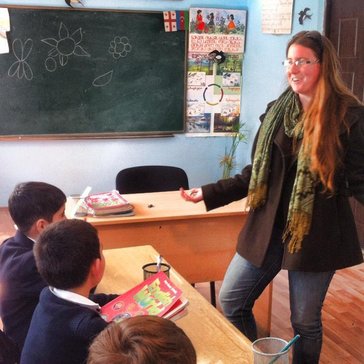
I worked at a local school teaching English to students grades 1-12. I partnered with English teachers to develop new teaching curriculum that would be engaging and encourage creative thinking for students. I also worked with a local bicycle business developing ways to diversify and increase revenue.
2. What projects did you collaborate on with your community?
I identified a scholarship program in the U.S. for one of my teaching counterparts. He became a recipient of the scholarship and lived in the U.S. for six weeks in Arkansas to learn about the American education system while exchanging ideas and knowledge from the Azerbaijani education system. He brought many of these ideas back to his classrooms and students that he continues to share in Azerbaijan. I also organized the region’s first spelling bee to encourage students to learn and study English, which then became a national event with the help of other Peace Corps Volunteers.
In addition, I worked with a local bicycle store to start a bike club so that my students could travel around the region.
3. How did Peace Corps service influence your professional path and development?
Peace Corps service gave me enough money to move to Washington, D.C., and I used the Peace Corps network to set up a living space in the city to get started. Peace Corps’ non-competitive eligibility (NCE) helped me get a federal government job. I then got a scholarship at Georgetown University, where I earned an MBA.
Peace Corps opened my mind to living in other parts of the world and got me over the fear of trying something new and entrepreneurial. I’ve had international work assignments because of my cross-cultural skills and adaptability, and willingness to work with people from all over the world. It’s led to work in Japan, Hong Kong, China, and the Netherlands.
It’s also given me a lifelong community of other Returned Peace Corps Volunteers (RPCVs). I know that anywhere in the world I go, I can find a fellow RPCV who is open and willing to help, as I am to them. It creates a lifelong bond with the people you serve with and the community you worked in. My teaching counterparts and students, 10 years later, still call and write to me.
4. How do you use skills you honed during service in your current job?
I work for a global Fortune 200 company in biopharmaceuticals, on innovative products in cell and gene therapy. My worked is focused on improving patient access to these products around the world. I’ve had the opportunity to work in countries such as Japan and the Netherlands, where I’ve applied intercultural and language skills I developed in Peace Corps.
During service, I developed leadership skills, giving me the ability to initiate new ideas and organize and motivate a group of people around them, which have served me well in every job I’ve had since Peace Corps service. Bridging communication between groups from different countries and professional backgrounds has also been invaluable throughout my career, and another important skill I learned in service. I also learned how to work in ambiguity and to be self-motivated and autonomous.
These are skills that employers value that not all employees have, nor have the opportunity to develop them. Peace Corps service was a rare opportunity to test my knowledge, skills, and abilities, and to see the tangible impact of the effort and work I put into my community.
5. Have you shared your experience to help those at home understand the value of Peace Corps service and communities abroad?
Since returning from Peace Corps service, I’ve spoken at schools and universities about my Peace Corps experience, sharing what I learned about another part of the world. I’ve inspired some of my friends and family to join the Peace Corps, live abroad, or study abroad. I’ve helped applicants to the Peace Corps navigate the application process and helped RPCVs reacclimate after service.
6. What Peace Corps benefits have been useful to you?
- Service award (readjustment allowance)
- NCE
- TEFL work
- Having the lifelong community and network of Peace Corps
- Scholarships and admittance to graduate school
7. Have you remained involved with the Peace Corps community after service?
I’ve made many RPCV friends across the country. Some of my best friends today are RPCVs, many of which I didn’t serve with, but got to know after service. I have also served as president of the Seattle RPCV group.
8. What advice/tips do you have for Volunteers just returning from their service?
- Join the National Peace Corps Association (NPCA)
- Find a local or regional RPCV group to join
- Get involved in your community with community service
- Share your experience with students
- Maintain friendships with people you served with
- Leverage your NCE
- Apply to Coverdell Fellows graduate schools
- Know that you’re not alone



