An official website of the United States government

Official websites use .gov
A
.gov website belongs to an official government
organization in the United States.

Secure .gov websites use HTTPS
A
lock (
) or https:// means you’ve safely connected to
the .gov website. Share sensitive information only on official,
secure websites.

Search
Connect with the Peace Corps
If you're ready for something bigger, we have a place where you belong.
Apply to the Peace Corps
The application process begins by selecting a service model and finding an open position.


Let us help you find the right position.
If you are flexible in where you serve for the two-year Peace Corps Volunteer program, our experts can match you with a position and country based on your experience and preferences.
Serve where you’re needed mostSustainable Agriculture Facilitator
 Agriculture
Job highlights
Applications are now closed. View current openings.
Apply by
January 1, 2026Know by
May 1, 2026Depart on
September 7, 2026Duration
2 years, plus 3 months trainingAbout the project
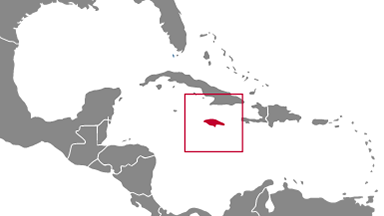
Jamaica is rich in biodiversity and has multiple opportunities for Volunteers to collaborate with farmers on locally prioritized projects.
The Sustainable Agriculture Facilitator seeks to support Jamaicans in rural communities to achieve sustainable livelihoods and resilience to environmental shocks and stresses. This goal will be achieved through the following objectives:
Objective 1: Increase Agricultural Diversity, Productivity, and/or Sustainability
Objective 2: Increase Agriculture-based Income
Objective 3: Strengthen Agricultural Organizations
Potential activities include working alongside community partners to promote climate smart agricultural practices, post-harvest management, basic agribusiness skills, and support organizational capacity development processes. Volunteers will work with organizations and project partners to plan and co-facilitate trainings and promote knowledge exchange on business skills needed to implement sustainable agricultural projects and income generation activities.
Learn more about what Volunteers do in country by visiting our Jamaica project page.
Required skills
Qualified candidates will have one or more of the following criteria:
Qualified candidates will have an expressed interest in working in agriculture and one or more of the following criteria:
• Bachelor of Arts/Bachelor of Science degree in any field
OR
• 5 years' professional work experience
SPECIAL NOTICE ABOUT CITIZENSHIP: Candidates who are dual citizens of Jamaica and the U.S. are not eligible to serve with Peace Corps Jamaica. Volunteer safety is of paramount importance, and the protections of U.S. citizenship promote Volunteer safety. If anyone holding dual U.S. and Jamaican citizenship were to face a legal, safety, or other emergency situation in Jamaica, the Peace Corps' ability to intervene would be limited. If you hold citizenship with both the U.S. and Jamaica, we encourage you to look at other opportunities with Peace Corps.
Language: There are no pre-requisite language requirements for this position.
Required behavioral competencies
These competencies are essential for all service assignments and are assessed in the application and interview process:
Motivation for and commitment to service
Adaptability and open-mindedness
Problem solving and resourcefulness
Behavioral maturity and professionalism

Photos from Jamaica



How you and the community will make an impact together:
All Volunteers live in a host family setting for the duration of their service. All assignments are in rural areas, predominantly in the interior and mountainous regions of the island. The standard of living varies widely within rural communities. The most common living situation is a self-contained unit in a family yard or attached to a family home, although some Volunteers may be in a room within the family home with a private bathroom and shared living area and kitchen. During Pre Service Training or occasionally at a 2-year site (i.e., when a host family has visitors) Volunteers may have a shared bathroom situation. Cellular phone coverage is available in most rural communities, but there may not be internet at the home. All Volunteers will have access to internet either by purchasing data for home use from their living stipend or by traveling to their worksite or nearby access point. Host families assist Volunteers with orientation in the community, Jamaican home life, and cross-cultural adjustment during Pre-Service Training and in the assigned 2-year community.
Electricity is present island-wide, except in very remote areas. The amenities that each Volunteer will have with their assigned host families will vary; however, all Volunteers will have access to basic amenities, including a stove and refrigerator. Due to scarcity and high prices, conservation of electricity and water is critical while living with Jamaican host families. Volunteers may also experience short or extended power and water outages on a semi-regular basis and especially in the wake of adverse weather events such as storms. In addition, Volunteers should expect to encounter high temperatures on a regular basis and be prepared to cope with extreme heat, as air conditioning is not widely available on the island. Some sites in wet climates have challenges with mold. In these situations, staff will provide support to PCVs to mitigate mold growth. Peace Corps staff support Volunteers with training and strategies to integrate and adapt effectively and appropriately to living in the new intercultural context of their host community.
The Jamaican diet consists of mostly chicken although beef, goat, and fish are readily available. Vegetarians and vegans can be well accommodated with a wide selection of fresh fruits, vegetables, beans, and grains available, especially in larger supermarkets.
Learn more about the living conditions, including detailed information on culture, communications, housing, and health/crime statistics on our Jamaica country page. You can also delve into stories about local communities by reading our blog or Volunteer stories.
Meet a Volunteer in Jamaica
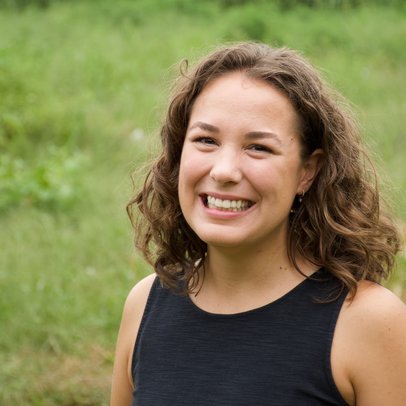
Sophia Z.
Agriculture Advisor
"I do my best to remain flexible as the organization navigates the many challenges they face, rather than pushing through projects and priorities that may not serve their changing needs."
See full Volunteer profile
To learn more about serving as a couple in Jamaica, visit the country page.
Application process
From application to departure takes around nine months. Learn about the application process for Volunteer opportunities.
Medical/legal clearance
You will need to be cleared medically and legally in order to serve in Jamaica. Review information on medical clearance and legal clearance to learn about the process.