An official website of the United States government



A love for literacy begins at home
Your English teacher announces that for the next half hour, the class will be called on randomly to read aloud from the textbook. You frantically scan the page for words you could potentially mispronounce in front of your peers. A knot grows in your stomach, your palms start to sweat.
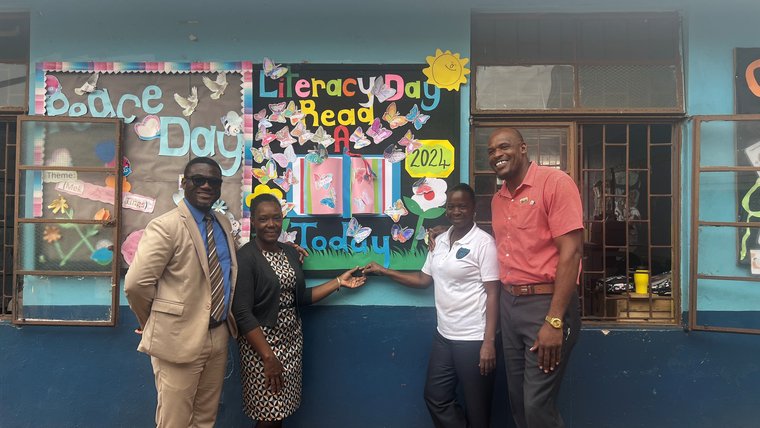
This common fear only intensifies for students who find themselves falling behind their peers. In Jamaica, Bethabara Primary School is determined to make reading fun, not stressful. One way in which they do this is by partnering with the Peace Corps to bring native English speakers into the classroom virtually.
As schools around the world navigated the pandemic by migrating classrooms online, some communities, like Bethabara’s, lacked the technological resources and familiarity with teaching platforms to continue growing the students’ literacy skills. Thankfully, the pandemic also ushered in a new way for schools to receive Peace Corps support: The Virtual Service Pilot (VSP).
Bethabara viewed Virtual Service as a way to improve students’ literacy levels by at least one grade level and also to shape them into more confident, independent readers. The school started its first short-term, virtual engagement in February of 2022. Two U.S. citizens with extensive teaching experience agreed to individually donate around 10 hours each week for 27 weeks as Virtual Service Pilot Participants (VSPPs).
Cecil Hamilton, the school’s principal, enthusiastically oriented the two VSPPs by providing a virtual tour of the school. The VSPPs and the school’s literacy coordinator then co-facilitated weekly literacy sessions to a dozen grade one students who received a lower reading score on the Informal Diagnostic Reading Inventory (IDRI) assessment.
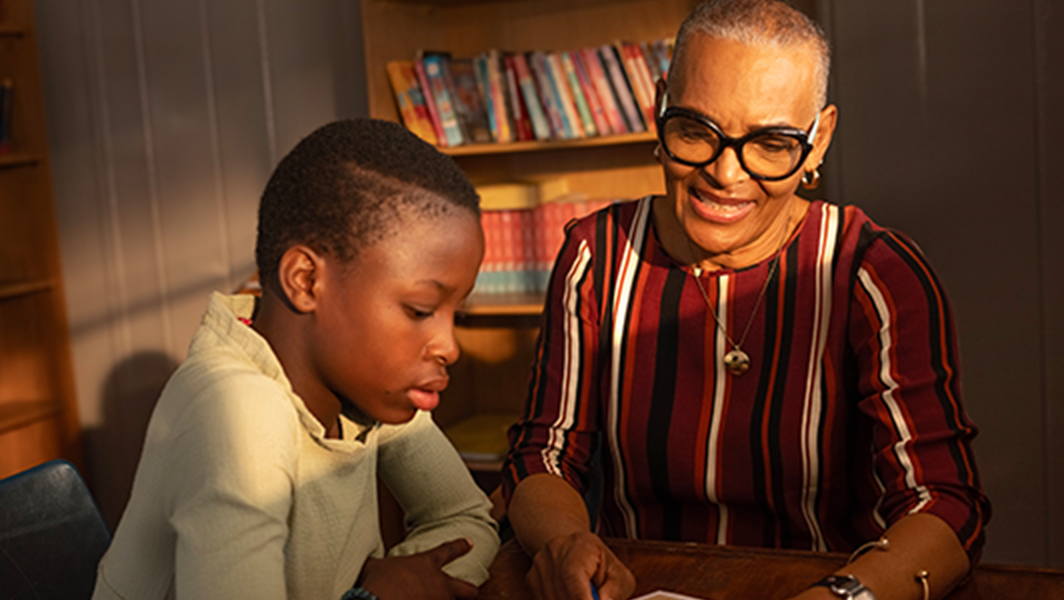
One of the VSPPs, Barbara “Bobbi” Donovan, who previously served as a Peace Corps Volunteer (Sri Lanka 1988-1990) and currently manages California’s literacy nonprofit, Sunshine Family Outreach Center, shared: “Participants get a small, [one-time] stipend. I used mine for a document camera. Rather than just sharing my screen, I could show myself building words with magnetic letters and reading pattern books like Brown Bear Brown Bear, What Do You See? which kept the students engaged. For them to see how great reading is, and to be so excited about that—that was always my favorite part."
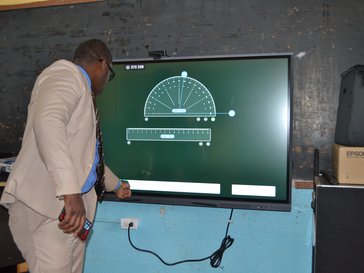
Hamilton shared that the experience emphasized the school’s need for more technological resources; his laptop alone did not make it easy for the students to see and engage with the two VSPPs even in small groups of 3 or 4.
“We didn’t have enough devices. The students would be [packed] in my office. We now have a room to facilitate online learning, so [space] now won’t be a challenge for us. We will be helping more students read and write.”
Perhaps the biggest takeaway from the virtual project was the importance of training parents on literacy teaching strategies for at-home learning.
“At the start of the engagement, the principal held a virtual parent meeting with me and the school’s literacy coordinator. The parents talked about what they wanted from this project for their children,” said Bobbi.
“Bobbi went through the procedure of what [would] take place, and the [parents] enthusiastically gave their permission. As a school, we adopted Parent Day and in November, Parent Month. We showcase literacy strategies, how to teach reading to the parents, and then they demonstrate how to do it,” shared first grade teacher, Mrs. Davette Haughton.
The engagement’s literacy lessons were recorded and digitally stored in a place where parents can access them to practice at home. The school also hosts regular parent empowerment sessions.
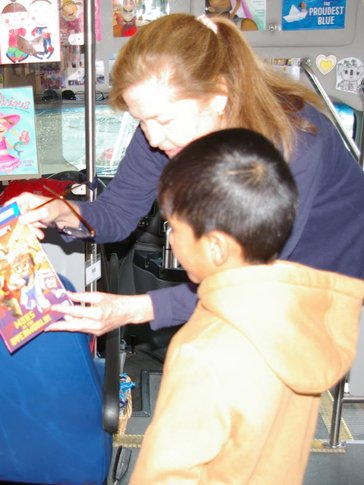
The principal provided examples of how the school’s staff equips parents to support at-home literacy learning: “Mrs. Davette Haughton and Mrs. Dionne Salkey-Francis show the [parents] how to make [learning tools] from recyclable items, use furniture as teaching aides, or write and mail letters.”
Teachers are excited by the growth they observed in each of the twelve students involved.
“The students have grown so much! They have come out of their shells and are more positive. After starting to read, they were walking around the place more positively. Their self-esteem skyrocketed!” said Mrs. Salkey-Francis, who teaches grade five English.
As for the parents, many of whom remember their own challenges in school, they appreciate the opportunity to learn new ways of nurturing their child’s love for reading.
“Being involved in this program has allowed me to play a more active role in my children’s teaching and learning. From the empowerment sessions, I value the creative ways in which the teachers assist individual students to develop their reading,” shared one parent.
Want to support literacy and English learning with the Peace Corps? Explore Peace Corps’ Education opportunities both in person and online.