An official website of the United States government

Official websites use .gov
A
.gov website belongs to an official government
organization in the United States.

Secure .gov websites use HTTPS
A
lock (
) or https:// means you’ve safely connected to
the .gov website. Share sensitive information only on official,
secure websites.

Search
Connect with the Peace Corps
If you're ready for something bigger, we have a place where you belong.
Apply to the Peace Corps
The application process begins by selecting a service model and finding an open position.


Let us help you find the right position.
If you are flexible in where you serve for the two-year Peace Corps Volunteer program, our experts can match you with a position and country based on your experience and preferences.
Serve where you’re needed mostSustainable Agriculture Facilitator
 Agriculture
Job highlights
- Learn Jamaican Patwa from skilled Language and Cross-Culture Facilitators.
- Gain valuable, hands-on experience with sustainable farming practices at a grassroots level.
- Experience the beautiful Jamaican culture firsthand.
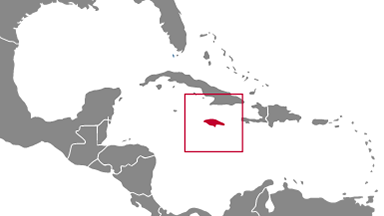
Jamaica • North America
In partnership with: Rural Agriculture Development Authority (RADA), local farmers
Get answers live — every weekday at .
Apply by
August 15, 2026Know by
October 1, 2026Depart on
March 8, 2027Duration
2 years, plus 3 months trainingAbout the project
Jamaican farmers are looking to increase profitability while building agricultural resilience to common natural disasters. Will you lend a hand?
Two recent hurricanes, including last year’s Category 5 Hurricane Melissa, resulted in significant damage to the island and economic loss. Farmers regularly face prolonged droughts, water management and distribution challenges, market gluts, and issues with integrated pest management to name a few. Therefore, the Rural Agricultural Development Authority (RADA)—a subsidiary of the Ministry of Agriculture, Fisheries and Mining—has identified a critical need for environmental adaption and resilience training at the local level. Additionally, many farmers begin traditional agricultural growing and selling practices after high school and do not pursue an advanced degree, resulting in a lack of business skills. Training in this area is essential for farming communities to enhance productivity, sustainability, and market compliance for long-term success.
As a Sustainable Agriculture Educator, you will collaborate with project partners to strengthen community resilience through the transfer of appropriate skills and technologies. Your collective goal is to improve agricultural productivity and sustainability. Together, you will help farmers adopt practices that conserve soil and water, improve post-harvest handling, and enhance agribusiness skills, ultimately contributing to food security and economic stability in rural communities.
Learn more about what Volunteers do in country by visiting our Jamaica project page.
Required skills
Qualified candidates will have one or more of the following criteria:
Associate degree in any field and at least two years of full-time, post-high school work experience (from any combination of roles).
OR
Bachelor's degree in any field.
OR
High school diploma or GED and 4 years of full-time post-high school work experience (from any combination of roles).
Language: There are no pre-requisite language requirements for this position.
Required behavioral competencies
These competencies are essential for all service assignments and are assessed in the application and interview process:
Motivation for and commitment to service
Adaptability and open-mindedness
Problem solving and resourcefulness
Behavioral maturity and professionalism

Photos from Jamaica



How you and the community will make an impact together:
Conduct personalized farm assessments, including mapping, soil testing, and documenting farm water management.
Plan and facilitate engaging training sessions on agricultural and organizational development.
Support the adoption of sustainable soil and water conservation techniques.
Plan and facilitate workshops on agro-processing and post-harvest management practices.
Provide basic agri-business training on topics, including market analyses, bookkeeping, and local resources such as Agricultural Linkages and Exchange (ALEX).
Support regular organizational capacity assessments.
You may also work on additional projects that meet the community’s interests and priorities, such as agrotourism farm stays and after-school clubs.
This position requires that Volunteers be prepared to serve in deep rural communities where infrastructure may be limited. Assignments are in rural, often mountainous areas, with varying standards of living. Volunteers must be comfortable with modest and reduced conveniences, particularly related to disruptions to electrical power and internet as well as access to running water. Markets or larger shopping areas are just a taxi ride away. Volunteers live with host families but can expect a private room in the family home or self-contained unit on the property.
Learn more about the living conditions, including detailed information on culture, communications, housing, and health/crime statistics on our Jamaica country page. You can also delve into stories about local communities by reading our blog or Volunteer stories.
Meet a Volunteer in Jamaica
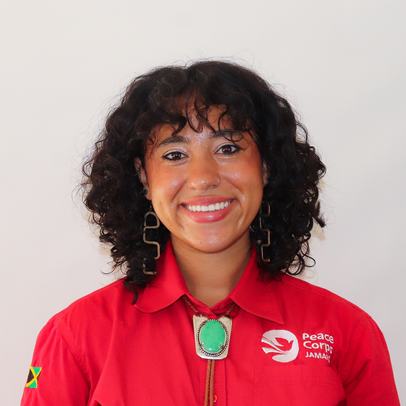
Roshana G.
Sustainable Agriculture Volunteer
"The biggest lesson I’ve learned from my community can be summed up by the Jamaican proverb, 'One, one coco full basket,' which means that small, consistent, and patient efforts eventually lead to meaningful, long-term success."
See full Volunteer profile
As a Sustainable Agriculture Educator, you will be trained on resource conservation techniques, including, land husbandry, integrated pest management and basic farm water management systems. Peace Corps Jamaica will teach you Jamaican Patwa to help you comfortably live in and connect with the community. You will also receive language resources to continue your language learning during service.
After 10 weeks of training, you will move to rural community where you will collaborate with a local farmers group and the Rural Agricultural Development Authority staff. You will work with the community to assess the local needs and develop solutions based on agricultural best practices.
Only heterosexual couples can be accepted for this program. Each person must apply separately and qualify for a position in a different sector than their partner. Couples will live together during training but may separate occasionally for field-based activities. Cohabitating couples are highly encouraged to present themselves as married throughout service due to cultural expectations.
To learn more about serving as a couple in Jamaica, visit the country page.
Application process
From application to departure takes around nine months. Learn about the application process for Volunteer opportunities.
Medical/legal clearance
You will need to be cleared medically and legally in order to serve in Jamaica. Review information on medical clearance and legal clearance to learn about the process.