An official website of the United States government

Official websites use .gov
A
.gov website belongs to an official government
organization in the United States.

Secure .gov websites use HTTPS
A
lock (
) or https:// means you’ve safely connected to
the .gov website. Share sensitive information only on official,
secure websites.

Search
Connect with the Peace Corps
If you're ready for something bigger, we have a place where you belong.
Apply to the Peace Corps
The application process begins by selecting a service model and finding an open position.


Let us help you find the right position.
If you are flexible in where you serve for the two-year Peace Corps Volunteer program, our experts can match you with a position and country based on your experience and preferences.
Serve where you’re needed mostSustainable Agriculture Agent
 Agriculture
Job highlights
- Gain hands-on experience strengthening food security alongside smallholder farmers overseas.
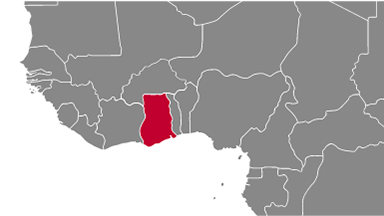
- Learn one of Ghana’s 80 languages to connect with your neighbors.
- Become a valued colleague and community member.
Applications are now closed. View current openings.
Apply by
June 15, 2026Know by
August 1, 2026Depart on
January 17, 2027Duration
2 years, plus 3 months trainingAbout the project
Ready to roll up your sleeves and make a lasting impact in agriculture? Support smallholder farmers as they adopt sustainable, adaptive agricultural practices and technologies.
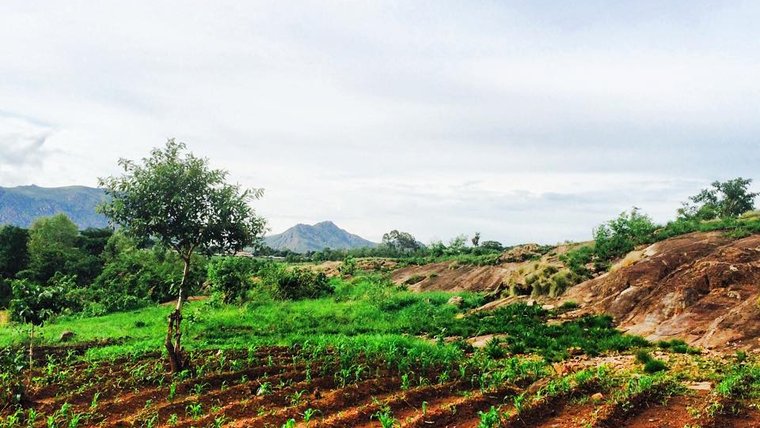
Smallholder farmers in Ghana face persistent challenges in improving agricultural productivity and household nutrition. Limited access to modern farming techniques, poor soil and water management, and reliance on traditional practices hinder food security and income generation. These issues are compounded by environmental stressors, such as seasonal bushfires, soil erosion, and climate variability. Historically, agriculture has been the backbone of rural livelihoods in Ghana, but systemic constraints and resource limitations have slowed progress toward sustainable farming and dietary diversity. Addressing these challenges will strengthen food security, improve household nutrition, and create income-generating opportunities for rural communities.
As a Sustainable Agriculture Agent, you will collaborate with community members to promote adaptive, sustainable agricultural practices to strengthen the country’s resilience against environmental shocks and economic instability. These efforts contribute to Ghana’s broader development goals, fostering healthier communities, reducing poverty, and supporting long-term agricultural sustainability.
Learn more about what Volunteers do in country by visiting our Ghana project page.
Required skills
Qualified candidates will have one or more of the following criteria:
Associate degree in any field and at least two years of full-time, post-high school work experience (from any combination of roles).
OR
Bachelor's degree in any field.
OR
High school diploma or GED and 4 years of full-time post-high school work experience (from any combination of roles).
Language: There are no pre-requisite language requirements for this position.
Required behavioral competencies
These competencies are essential for all service assignments and are assessed in the application and interview process:
Motivation for and commitment to service
Adaptability and open-mindedness
Problem solving and resourcefulness
Behavioral maturity and professionalism

Photos from Ghana



How you and the community will make an impact together:
Apply community development tools and build strong relationships with community partners.
Conduct participatory needs assessments to identify agricultural priorities.
Facilitate trainings on improved crop cultivation and soil and water conservation.
Demonstrate small animal husbandry techniques to local farmers.
Train farmers on post-harvest handling and storage practices.
Introduce record-keeping and basic financial management for farmer groups.
Support women and youth to develop nutrition-focused home gardens.
Assist communities in forming and managing village savings and loan associations.
You may also work on additional projects that meet the community’s interests and priorities, such as school gardens.
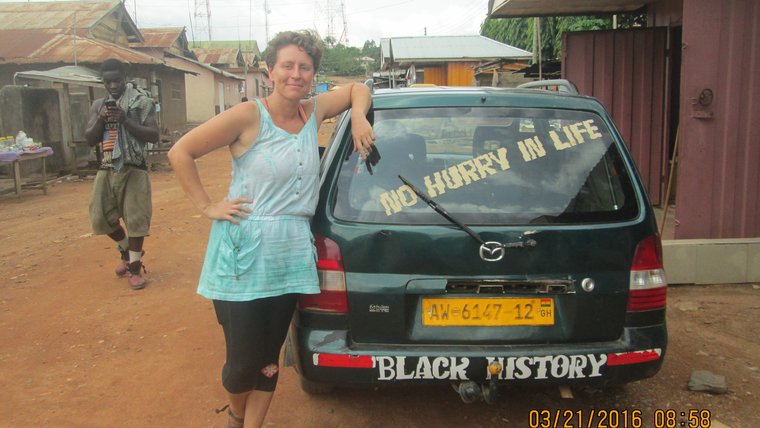
While subject to change based on programmatic needs, Volunteers are currently placed in the following regions: Greater Accra, Bono, Eastern, Northern, Oti, and Volta. Volunteers live in rural communities in the Volta and Northern regions under modest conditions, often without electricity or piped water, and relying on boreholes or wells. Housing typically consists of one or two rooms with basic amenities, and flexibility is essential for adapting to these settings.
Learn more about the living conditions, including detailed information on culture, communications, housing, and health/crime statistics on our Ghana country page. You can also delve into stories about local communities by reading our blog or Volunteer stories.
Meet a Volunteer in Ghana
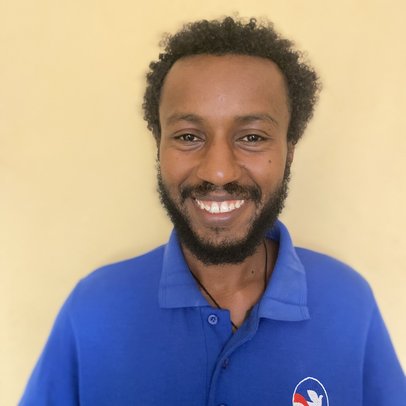
Wonde N.
Agriculture Extension Agent
"My community has taught me that quality is much more important than quantity. Focus on those who are dedicated, and their work will inspire others to get involved."
See full Volunteer profile
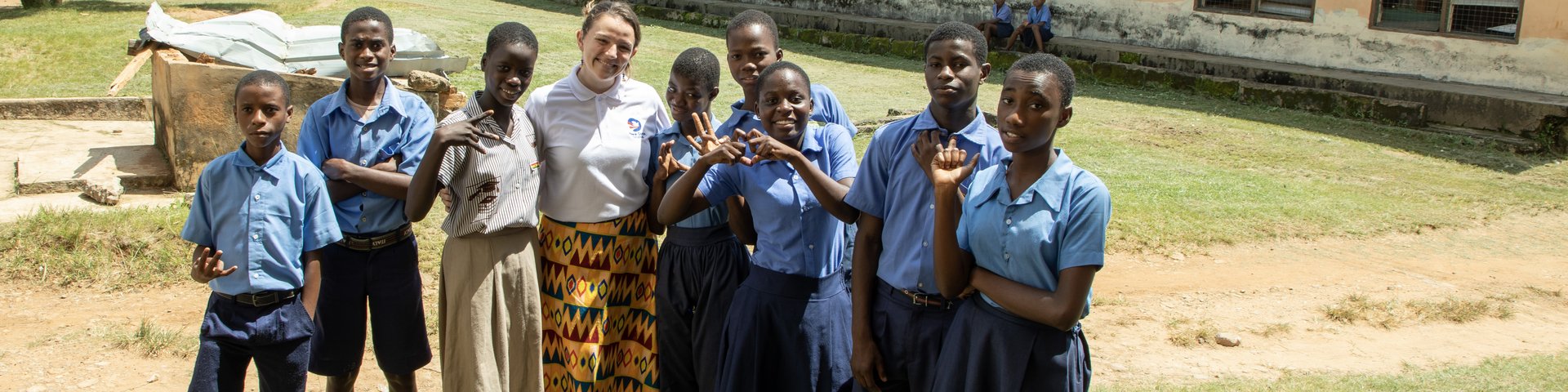
As a Sustainable Agriculture Agent, you will be trained on crop production, soil and water conservation, and nutrition practices. Peace Corps/Ghana will teach you Twi, Ewe, Dagbani, or Ghanaian Sign Language to help you comfortably live in and connect with the community.
After 10 weeks of training, you will move to a rural community where you will collaborate with smallholder farmers, women, and youth. You will work with the community to assess the local needs and develop solutions based on agricultural best practices.
Only heterosexual couples can be accepted for this program. Each person must apply separately and must qualify for a position in either the same or a different sector than their partner. Cross-sector couples will live with different host families who may reside in different communities during training. Cross-sector couples may see each other for joint-sector training days or on the weekends but neither are guaranteed. Couples who are selected for the same sector will live together but work with different local partners which may be in the same community or in neighboring communities (not more than 30 minutes apart).
To learn more about serving as a couple in Ghana, visit the country page.
Application process
From application to departure takes around nine months. Learn about the application process for Volunteer opportunities.
Medical/legal clearance
You will need to be cleared medically and legally in order to serve in Ghana. Review information on medical clearance and legal clearance to learn about the process.