An official website of the United States government

Official websites use .gov
A
.gov website belongs to an official government
organization in the United States.

Secure .gov websites use HTTPS
A
lock (
) or https:// means you’ve safely connected to
the .gov website. Share sensitive information only on official,
secure websites.

Search
Connect with the Peace Corps
If you're ready for something bigger, we have a place where you belong.
Apply to the Peace Corps
The application process begins by selecting a service model and finding an open position.
Let us help you find the right position.
If you are flexible in where you serve for the two-year Peace Corps Volunteer program, our experts can match you with a position and country based on your experience and preferences.
Serve where you’re needed mostRidge to Reef Resilience Promoter
 Environment
Job highlights
Applications are now closed. View current openings.
Apply by
January 1, 2026Know by
March 1, 2026Depart on
July 11, 2026Duration
2 years, plus 3 months trainingAbout the project
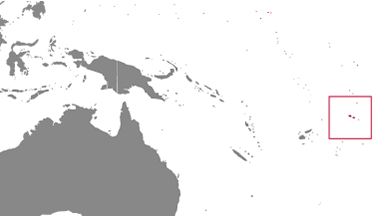
The Independent State of Samoa, located in the heart of the Pacific, faces increasing environmental challenges that threaten both its natural resources and the livelihood of its people. Peace Corps Samoa’s Environment Project – Ridge-to-Reef Resilient Samoa – supports the Samoan government's ongoing environmental efforts as well as community-identified priorities that are often directly or indirectly tied to their environment and natural resources. Peace Corps Volunteers work alongside community counterparts to plan, implement and monitor their environmental project priorities within a ridge-to-reef landscape. Volunteers support their counterparts on project design and management efforts. In addition, Volunteers prioritize raising knowledge, skills and awareness for a range of environmental topics covering the broader ridge-to-reef landscape unique to the Samoan islands.
Peace Corps Volunteers serve at the invitation of the Samoan Government, through the Ministry of Natural Resources and Environment (MNRE) and the Ministry of Women, Community and Social Development, to provide project management support and help communities plan, implement and monitor environmental priorities related to the sustainable management of coastal and marine ecosystems, forest and watershed habitats, and solid waste. For sustainability, Volunteers focus on community capacity building through participatory project design management (PPDM) and education and awareness efforts for men, women, youth and children.
Volunteers and their partners will be trained to utilize participatory tools in a phased, asset-based approach to uncover existing strengths, advantages, and opportunities. Volunteers will play multiple roles during their service in Samoa to support and build capacity around environmental education, engagement, and action:
-Increase knowledge, understanding, and appreciation of the environment, national environmental policy and best practices, and proactive engagement among youth and adult community members.
-Support needs assessments and development of action plans for community-specific environmental priorities, risks, and opportunities.
-Strengthening culturally appropriate community-level environmental adaptation and mitigation measures.
-Research and develop responsible and sustainable resources to support project development and implementation.
This new project, launched in 2025, is aimed at demonstrating a community-based approach ensuring that women, girls, and people with disabilities are not only beneficiaries but active participants and leaders in community efforts to protect and sustain the environment.
Volunteer assignments evolve over time, which requires ample patience and persistence. All Volunteers go through ups and downs as they adapt and learn by doing, especially in their first year. This will be the time to build on competencies in language, relationship building, community engagement tools, and adjusting to island life. These skills along with, initiative, humility, and flexibility are critical to a successful and effective service. Before swearing in as Volunteers, Trainees will receive eleven weeks of language, cultural, and technical training to prepare them for service.
Learn more about what Volunteers do in country by visiting our Samoa project page.
Required skills
Qualified candidates will have one or more of the following criteria:
Qualified candidates will have an expressed interest in promoting environmental awareness and action in schools and communities, and meet the following minimum criteria:
Bachelor of Arts/Bachelor of Science degree in any field and one or more year(s) of professional work experience in environmental education, environmental activities, and/or climate change resilience or adaptation activities.
OR
5 years’ professional work experience and one or more year(s) of professional work experience in environmental education, environmental activities, and/or climate change resilience or adaptation activities.
Language: There are no pre-requisite language requirements for this position.
Required behavioral competencies
These competencies are essential for all service assignments and are assessed in the application and interview process:
Motivation for and commitment to service
Adaptability and open-mindedness
Problem solving and resourcefulness
Behavioral maturity and professionalism

Photos from Samoa



How you and the community will make an impact together:
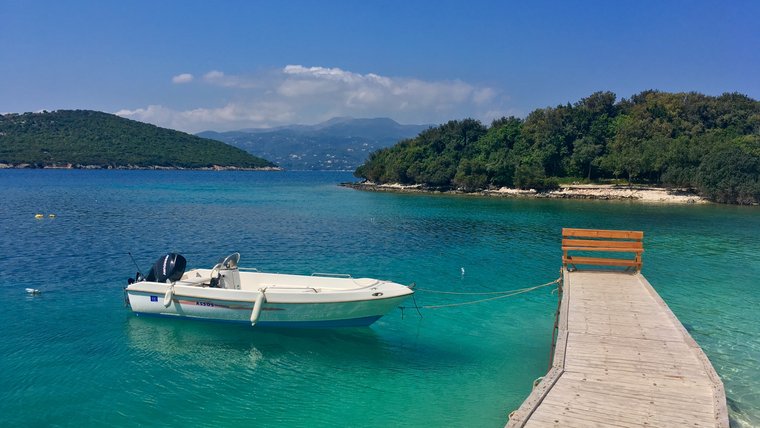
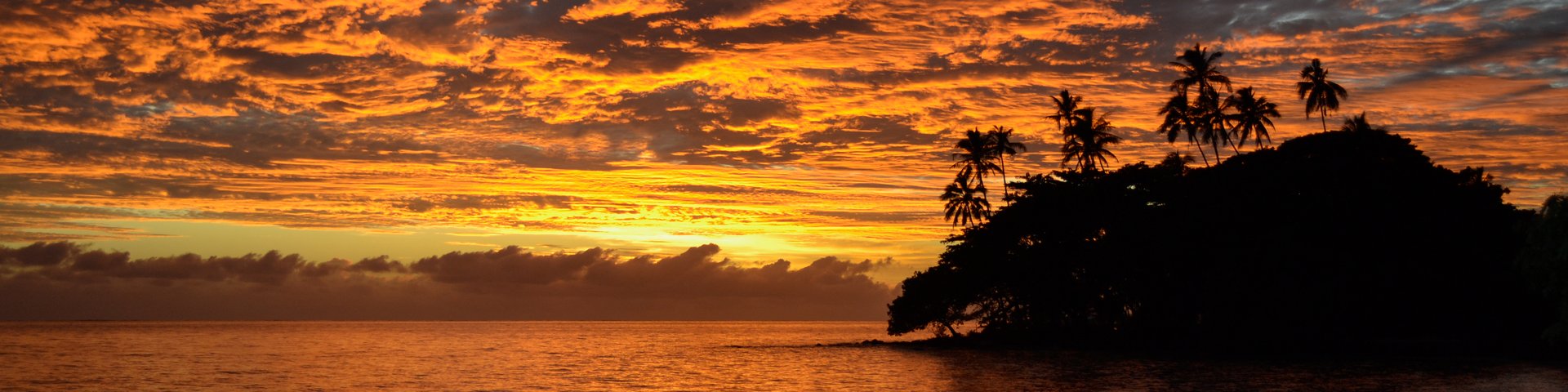
Samoa is an island nation of about 200,000 people. Reefs fringe the shores and there are mountains in the center of the two main islands. Most Volunteers do not live on the ocean, but it is never far away. Samoa is hot and humid with two main seasons – rainy and dry. The country’s small size also means Volunteers’ travel and activities are scrutinized by community members. Living in a “fishbowl” environment can be challenging. Volunteers who are committed to their community integration and their work can build meaningful relationships in their communities and have a successful service. Integration into a community will help mitigate the attention Volunteers experience, create trust, and help the Volunteer and the community have an enriched, memorable experience.
Clothing:
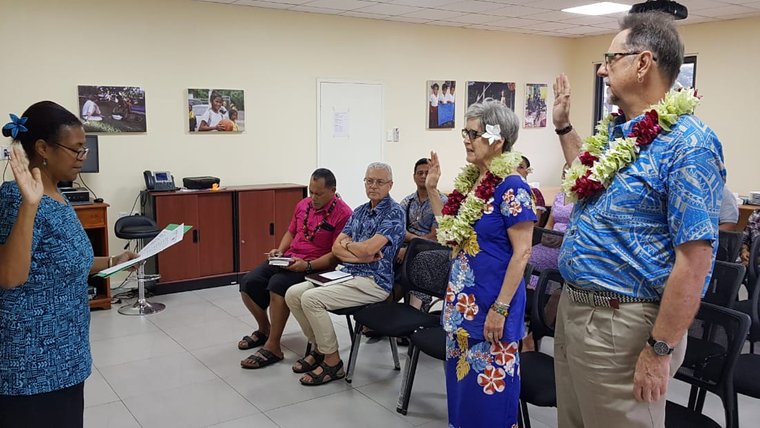
Personal appearance is important to Samoans. The dress code is business casual. Women are expected to wear a wraparound “lavalava” or an ankle length sarong/skirt and top with sleeves, or an ankle length dress. Men can wear a wraparound lavalava and shirt with sleeves. Dressing appropriately will help Volunteers gain respect in their community, facilitate integration, and increase your credibility and effectiveness.
Housing/Transportation:
Volunteers live with host families during both the 11 weeks of PST and the entire two years of service. Volunteers live in a private room in a family’s house. Transportation to and from the villages is usually by bus. Taxis are available but are more expensive. Within the village, Volunteers get around on foot or bicycle.
Food/Diet:
The diet in Samoa consists primarily of taro, breadfruit, yams, potatoes, rice, canned corned beef, fish, chicken soup, seasonal fresh vegetables and fruit and various meats. Vegetarians can fare well in Samoa with patience and creativity. For strict vegans or Volunteers with specific food allergies, it can be harder, but doable.
Connectivity:
While internet is becoming more widely available throughout the country, access is still expensive and may be limited by location and cost. Peace Corps Samoa does not provide Volunteers with a cell phone or data. Volunteers may bring an unlocked phone from the US or buy one in country. Most Volunteers also bring a laptop or tablet to use in Samoa. It is the Volunteer’s responsibility to maintain and buy insurance for any electronics that they bring.
Culture/Religion:
Samoa is culturally Polynesian and the majority of Samoans are Christian. Religion plays a strong role in village and community life. Most Volunteers attend church at least once a week, regardless of their own beliefs as a way of integrating into the community and participating in village life.
Local Attitudes and Culture:
Volunteers who are of an American racial, ethnic, or national minority or whose religious or spiritual beliefs differ from the majority of their country of service may experience a high degree of curiosity or unwanted attention. Please be aware that American concepts of politeness and appropriate behavior are not universal. Ethnically, nationally, or racially diverse Americans may be asked where they are “actually from” or if they are “really” American. Many Volunteers have been able to turn these encounters into learning experiences, sharing American values and deepening local community members’ understanding of Americans.
Read more about living conditions in Samoa here: https//www.peacecorps.gov/samoa/living-conditions/
Learn more about the living conditions, including detailed information on culture, communications, housing, and health/crime statistics on our Samoa country page. You can also delve into stories about local communities by reading our blog or Volunteer stories.
Meet a Volunteer in Samoa
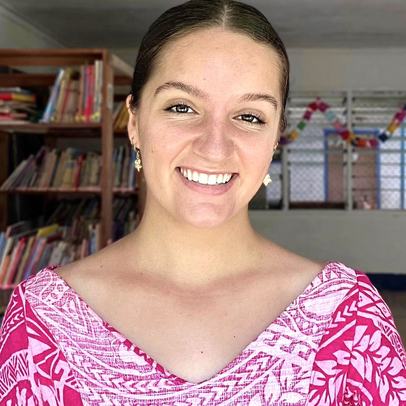
Elizabeth H.
English Literacy Educator
"Some days we collect cocoa beans to make Samoan chocolate or pick lychee and mango at our family’s plantation up the mountain — other days I might go fishing with my host dad on our paopao (wooden canoe) or explore the reef with the kids."
See full Volunteer profile
No couples are accepted for this position.
Application process
From application to departure takes around nine months. Learn about the application process for Volunteer opportunities.
Medical/legal clearance
You will need to be cleared medically and legally in order to serve in Samoa. Review information on medical clearance and legal clearance to learn about the process.