An official website of the United States government

Official websites use .gov
A
.gov website belongs to an official government
organization in the United States.

Secure .gov websites use HTTPS
A
lock (
) or https:// means you’ve safely connected to
the .gov website. Share sensitive information only on official,
secure websites.

Search
Connect with the Peace Corps
If you're ready for something bigger, we have a place where you belong.
Apply to the Peace Corps
The application process begins by selecting a service model and finding an open position.


Let us help you find the right position.
If you are flexible in where you serve for the two-year Peace Corps Volunteer program, our experts can match you with a position and country based on your experience and preferences.
Serve where you’re needed mostPublic Health Educator
 Health
Job highlights
- Receive comprehensive training in participatory development, project management, facilitation, and creating culturally relevant solutions.
- Learn the Liberian English dialects from Language and Cross-Cultural Facilitators.
- Build lasting friendships through cultural exchange and community engagement.
Get answers live — every weekday at .
Apply by
November 15, 2026Know by
January 1, 2027Depart on
June 17, 2027Duration
2 years, plus 3 months trainingAbout the project
Whether you already have a background in health or are interested in starting a rewarding career in public health, Liberian community health workers are looking for your support as they strengthen health programs.
Rural communities in Liberia continue to face high maternal and under-five mortality, limited access to health facilities, and an ongoing shortage of trained health personnel. Long distances, poor road conditions, and limited resources make community-based care essential for families who rely heavily on community health workers for health education, referral, and basic services. Strengthening community health is a national priority, yet persistent gaps in training, supervision, and service delivery require additional support to ensure consistent, high-quality care across remote areas.
As a Public Health Educator, you will work alongside community health workers to improve maternal and newborn health practices, enhance child nutrition, strengthen illness prevention, and promote timely referral to care. In the short term, you will expand health outreach, reinforce key health messages, and increase community engagement. Your support will lead to stronger community health systems, healthier families, and greater trust in Liberia's national health system.
Learn more about what Volunteers do in country by visiting our Liberia project page.
Required skills
Qualified candidates will have one or more of the following criteria:
Associate degree in any field and at least two years of full-time, post-high school work experience (from any combination of roles).
OR
Bachelor's degree in any field.
OR
High school diploma or GED and four years of full-time, post-high school work (from any combination of roles).
Language: There are no pre-requisite language requirements for this position.
Required behavioral competencies
These competencies are essential for all service assignments and are assessed in the application and interview process:
Motivation for and commitment to service
Adaptability and open-mindedness
Problem solving and resourcefulness
Behavioral maturity and professionalism

Photos from Liberia



How you and the community will make an impact together:
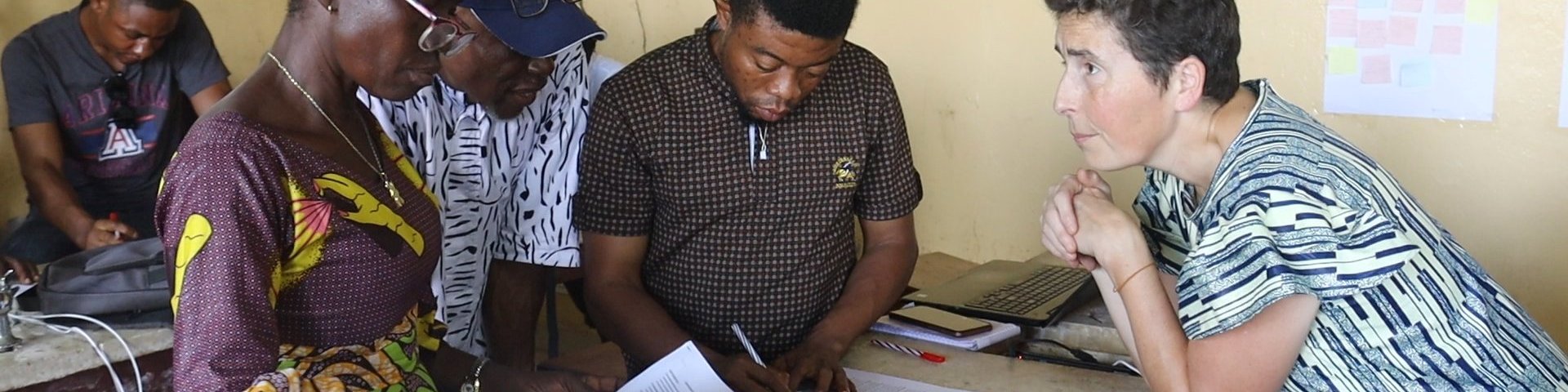
Conduct data collection, analysis, and reporting to identify emerging trends and monitor programmatic impact.
Train community health workers in behavior change communication as well as monitoring and evaluation.
Provide one-on-one support and mentoring.
Assist home visits to promote essential maternal, newborn, and child health practices.
Facilitate group sessions with pregnant women on healthy pregnancy or newborn care.
Support caregiver group meetings on essential child health practices.
Support non-clinical work at the clinic, including health education and growth monitoring.
You may also work on additional projects that meet the community’s interests and priorities, such as supporting youth health clubs or wellness events.
Volunteers will live in modest housing in a rural community within a 20-minute walk to work. Electricity and running water are not guaranteed. Volunteers may have an inside flushing toilet or an outside pit latrine and access to water from a nearby pump.
Learn more about the living conditions, including detailed information on culture, communications, housing, and health/crime statistics on our Liberia country page. You can also delve into stories about local communities by reading our blog or Volunteer stories.
Meet a Volunteer in Liberia
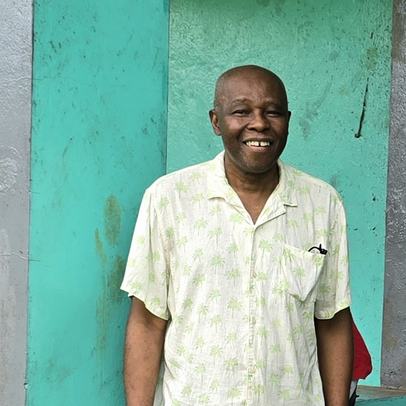
Kwame F.
Literacy Teacher Trainer
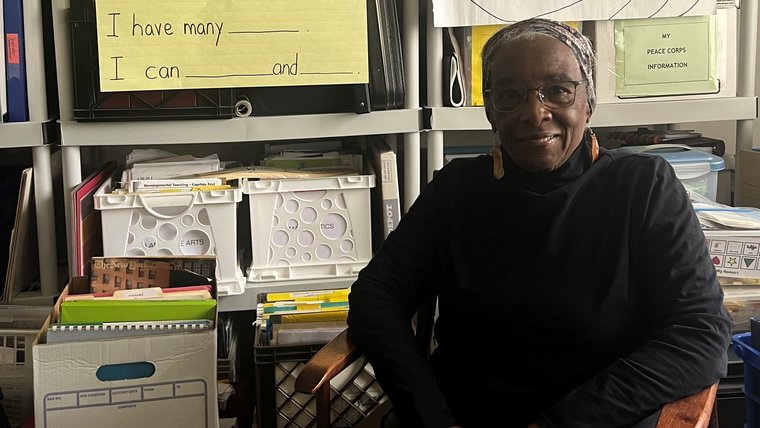
"What I value most is witnessing student growth—both academically and personally. Seeing children grasp literacy concepts that once felt unreachable is profoundly fulfilling."
See full Volunteer profile
As a Public Health Educator, you will be trained on the national community health program, monitoring and evaluation best practices, and maternal and child health. Peace Corps/Liberia will teach you Liberian English to help you comfortably live in and connect with the community. You will also receive language resources and learn basic information on the local dialect.
After 10 weeks of training, you will move to a rural community where you will collaborate with clinic staff and community health workers. You will work with the community to assess the local needs and develop solutions based on communities identified priorities.
Only heterosexual couples can be accepted for this program. Each person must apply separately and qualify for a position in a different sector than their partner. Cross-sector couples will live with different host families who may reside in different communities during training. Cross-sector couples may see each other for joint-sector training days or on the weekends but neither are guaranteed. Couples that serve in this country must be legally married to avoid conflicts that are not aligned with cultural and religious beliefs.
To learn more about serving as a couple in Liberia, visit the country page.
Application process
From application to departure takes around nine months. Learn about the application process for Volunteer opportunities.
Medical/legal clearance
You will need to be cleared medically and legally in order to serve in Liberia. Review information on medical clearance and legal clearance to learn about the process.