 An official website of the United States government


Featured Volunteer Profile
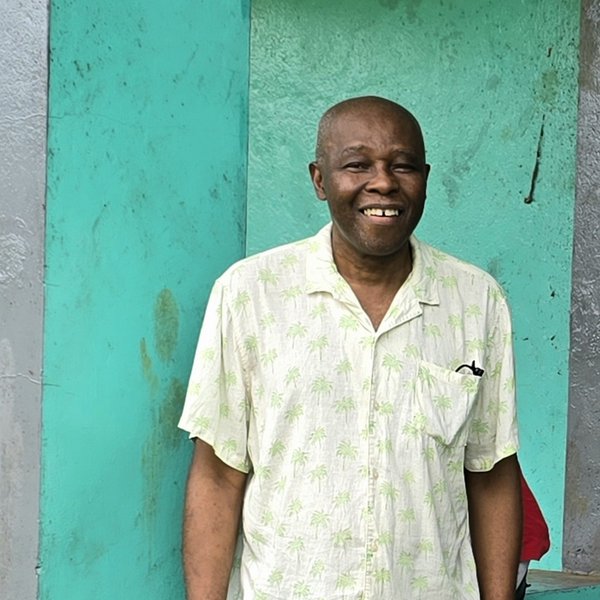
Kwame F.
“What I value most is witnessing student growth—both academically and personally. Seeing children grasp literacy concepts that once felt unreachable is profoundly fulfilling.”
1. What got you interested in the Peace Corps?
My interest in the Peace Corps stems from a desire to give back after a long career filled with growth, purpose, and reward. I’ve worked in education, public service, and international journalism, and each role has deepened my belief that knowledge must be shared to have lasting value. The Peace Corps gives me a unique chance to put these skills into practice where they are needed most. When I heard about the literacy challenges at a school in Liberia—first flagged by the former head of elementary education—it felt like a call to action. I wanted to serve where I could make a difference in the lives of young learners, while also working alongside teachers to strengthen their capacity. The Peace Corps’ mission of peace, development, and friendship aligns with my own values of service and humanism, so joining felt like a natural next step.
2. What projects are you working on?
At the school, my work responds to a longstanding challenge identified by the former supervisor of elementary education, who recognized low literacy rates as a serious problem and requested a Peace Corps Volunteer specifically for early literacy support. My project addresses this need through both teacher training and direct student support. I focus on upgrading teachers’ instructional skills in phonics, language arts, reading, and comprehension so that their pupils benefit long after my service ends. Already, I have conducted a workshop on classroom management, and I am planning a second one on strategies and architecture for learner-friendly classrooms. Co-planning and co-teaching with faculty has not only built their capacity but also sustained their confidence to tutor and reinforce literacy skills independently.
In addition, I am pursuing a grant to secure tablets that will expand students’ access to digital literacy, which is an increasingly important part of education. My approach is two-pronged: equipping teachers with effective methods and simultaneously working with students to raise their literacy levels.
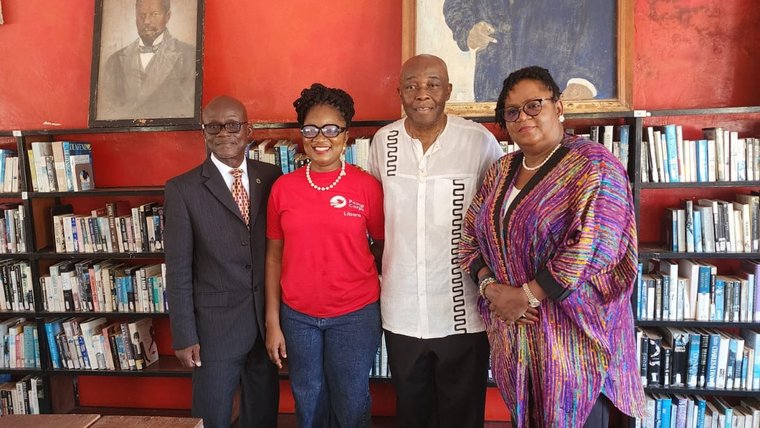
Further, the Peace Corps country director has requested my involvement in conceptualizing and developing a permanent Peace Corps Liberia exhibit at the Museum of Liberia in recognition of the program’s 60th anniversary. I have met with museum leadership, provided a preliminary exhibit outline, and secured support from a former Volunteer who curated a Peace Corps exhibit in Botswana for the program’s 50th anniversary. My extension would allow continuity on this nationally meaningful project while preserving the Peace Corps’ legacy of partnership in Liberia.
3. What strategies have you used to integrate into your community?
Integration has come through being both a learner and a contributor. In the classroom, I adapt U.S.-training methods to fit the Liberian context, while learning continuously from teachers’ lived experience. With students, I emphasize engagement and confidence—encouraging public speaking, debates and celebrating achievement through simple but meaningful recognition.
Beyond academics, I worship at the school chapel alongside students and university counterparts. These shared academic, cultural, and spiritual spaces have fostered trust, belonging, and mutual respect.
4. What is a highlight of your time in service so far?
One major highlight has been leading a classroom management workshop that sparked immediate and practical changes in teaching approaches. Co-facilitating the school’s first career day was another meaningful moment, helping students link education to future possibilities.
Working with the school’s press club has also been deeply rewarding, allowing me to blend journalism with education as students develop their voices as writers and speakers. These moments stand out because they reflect growth not only in literacy, but in confidence and aspiration.
5. What have you enjoyed most about the community where you are serving?
What I value most is witnessing student growth—both academically and personally. Seeing children grasp literacy concepts that once felt unreachable is profoundly fulfilling. I also appreciate the strong connection between the school and university, which reinforces a shared educational and faith-based community.
The warmth, resilience, and hospitality of the people here have made service not only impactful, but joyful.
6. What are some of the most important things you’ve learned from your community?
The first lesson is that education cannot succeed without strong parental and community involvement. Teachers do their best, but children thrive when families reinforce learning at home. I’ve also learned that creativity is essential when resources are limited. Teachers here make the most of what they have, and sometimes the simplest methods, like celebrating a student’s strong essay with a star, can have big impact. Another key lesson is the importance of early literacy. When children master phonetics and reading skills at a young age, it sets the stage for all their future learning. Finally, I’ve learned from the community’s resilience and faith—qualities that shape how they face challenges and inspire me in my own work.
7. How do you spend time when you are not working on a project?
When I am not in the classroom or conducting workshops, I invest in personal renewal. Meditation and spiritual growth as a Christian keep me grounded and aligned with my purpose. I also make time for recreational activities that keep me fit, both to maintain energy for teaching and to stay connected to the joy of movement. Reading and writing remain passions, and they often feed into my work with students, especially the press club. Informal conversations with community members are another way I spend time—they deepen my cultural understanding and strengthen relationships beyond the school walls.
8. What are you looking forward to in your remaining time as a Volunteer?
I look forward to deepening teacher workshops focused on literacy instruction and classroom management, leaving behind a more confident and skilled faculty. With students, I aim to continue strengthening reading, writing, and speaking skills while nurturing a lifelong love of learning.
I am equally committed to advancing the Peace Corps Liberia permanent exhibit at the Museum of Liberia. Designed as a national educational resource, the exhibit will highlight Peace Corps’ role in development and partnership. It is an honor to contribute to a project that will stand as a lasting monument to Peace Corps’ impact in Liberia.
9. Once you finish service, what will you do differently when you return to the U.S?
My service has reinforced my desire to stay connected to the Peace Corps, whether through continued service abroad or advocacy at home. I will return with a deeper appreciation for resilience, resourcefulness, and community—qualities I want to model in Washington, D.C. I also hope to share the lessons of Liberia with others, highlighting the value of cultural exchange, patience, and education as a driver of development. My outlook has been reshaped by the experience of working alongside Liberian teachers and students, and I intend to bring that perspective into every space I occupy back in the U.S. Most of all, I will seek to embody the Peace Corps’ mission of peace and friendship in practical, everyday ways.
Learn more about serving as a Peace Corps Volunteer in Liberia.



