An official website of the United States government

Official websites use .gov
A
.gov website belongs to an official government
organization in the United States.

Secure .gov websites use HTTPS
A
lock (
) or https:// means you’ve safely connected to
the .gov website. Share sensitive information only on official,
secure websites.

Search
Connect with the Peace Corps
If you're ready for something bigger, we have a place where you belong.
Apply to the Peace Corps
The application process begins by selecting a service model and finding an open position.
Let us help you find the right position.
If you are flexible in where you serve for the two-year Peace Corps Volunteer program, our experts can match you with a position and country based on your experience and preferences.
Serve where you’re needed mostMath and Science Educator
 Education
Job highlights
- Exchange teaching experiences with Ghanaian junior high school teachers.
- Learn a local language and develop lifelong friendships through rich cultural exchange.
- Live within a welcoming community and experience its cultural traditions.
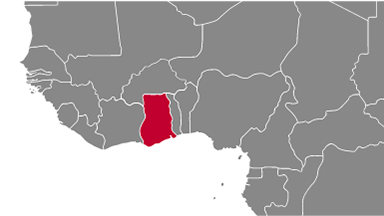
Applications are now closed. View current openings.
Apply by
June 15, 2026Know by
August 1, 2026Depart on
January 17, 2027Duration
2 years, plus 3 months trainingAbout the project
Calling all math and science educators—junior high schools across Ghana are seeking your support with science, technology, engineering, mathematics (STEM), and literacy learning.
There is a growing shortage of STEM teachers in Ghana's public schools due to a government-issued hiring freeze on public sector employment. Additionally, STEM professionals typically prefer the salaries of industry roles over public school teaching. This has led to a situation where STEM teachers are either formerly retired teachers or young, inexperienced high school graduates. The pandemic also resulted in students falling behind in school due to the school closures. Consequently, many children are unable to read grade-level content.
As a Math and Science Educator, you will collaborate with local teachers and junior high school staff to boost student achievement in STEM and literacy skills. Together, you will engage the larger community in learning activities and develop local capacities to use research-based, student-centered classroom practices.
Learn more about what Volunteers do in country by visiting our Ghana project page.
Required skills
Qualified candidates will have one or more of the following criteria:
Bachelor's degree in secondary education with a concentration in math.
OR
Bachelor's degree in any discipline with secondary certification in math.
OR
Bachelor's degree in math, engineering, or computer science.
OR
Bachelor's degree in any discipline with a minor or equivalent in math.
Language: There are no pre-requisite language requirements for this position.
Required behavioral competencies
These competencies are essential for all service assignments and are assessed in the application and interview process:
Motivation for and commitment to service
Adaptability and open-mindedness
Problem solving and resourcefulness
Behavioral maturity and professionalism

Photos from Ghana



How you and the community will make an impact together:
Plan and teach math and science lessons aligned with inquiry‑based, student‑centered pedagogy.
Design sustainable learning aids using locally available materials.
Support remedial groups and after-school tutoring.
Grade homework and examinations.
Engage parent teacher associations and community.
Train community members on access‑to‑learning topics, such as menstrual hygiene and positive masculinity.
You may also work on additional projects that meet the community’s interests and priorities, such as youth life skills camps.
While subject to change based on programmatic needs, Volunteers are currently placed in the following regions: Greater Accra, Bono, Eastern, Northern, Oti, and Volta.
Volunteers are placed in rural communities in Ghana. Some Volunteers will live in self-contained concrete houses while others may have one or two rooms inside a family compound or nurse’s quarters.
Learn more about the living conditions, including detailed information on culture, communications, housing, and health/crime statistics on our Ghana country page. You can also delve into stories about local communities by reading our blog or Volunteer stories.
Meet a Volunteer in Ghana
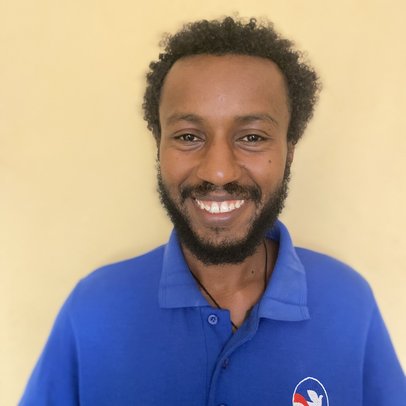
Wonde N.
Agriculture Extension Agent
"My community has taught me that quality is much more important than quantity. Focus on those who are dedicated, and their work will inspire others to get involved."
See full Volunteer profile
As a Math and Science Educator, you will be trained to support student‑centered teaching and integrate literacy into STEM lessons. Peace Corps/Ghana will teach you Twi, Ewe, Dagbani, or Ghanaian Sign Language to help you comfortably live in and connect with the community.
After 11 weeks of training, you will move to a rural community and collaborate with local schools to assess needs and develop solutions to improve student achievement and teacher capacity.
Only heterosexual couples can be accepted for this program. Each person must apply separately and must qualify for a position in either the same or a different sector than their partner. Cross-sector couples will live with different host families who may reside in different communities during training. Cross-sector couples may see each other for joint-sector training days or on the weekends but neither are guaranteed. Couples who are selected for the same sector will live together but work with different local partners which may be in the same community or in neighboring communities (not more than 30 minutes apart). Cohabitating couples are highly encouraged to present themselves as married throughout service due to cultural expectations.
To learn more about serving as a couple in Ghana, visit the country page.
Application process
From application to departure takes around nine months. Learn about the application process for Volunteer opportunities.
Medical/legal clearance
You will need to be cleared medically and legally in order to serve in Ghana. Review information on medical clearance and legal clearance to learn about the process.