An official website of the United States government

Official websites use .gov
A
.gov website belongs to an official government
organization in the United States.

Secure .gov websites use HTTPS
A
lock (
) or https:// means you’ve safely connected to
the .gov website. Share sensitive information only on official,
secure websites.

Search
Connect with the Peace Corps
If you're ready for something bigger, we have a place where you belong.
Apply to the Peace Corps
The application process begins by selecting a service model and finding an open position.
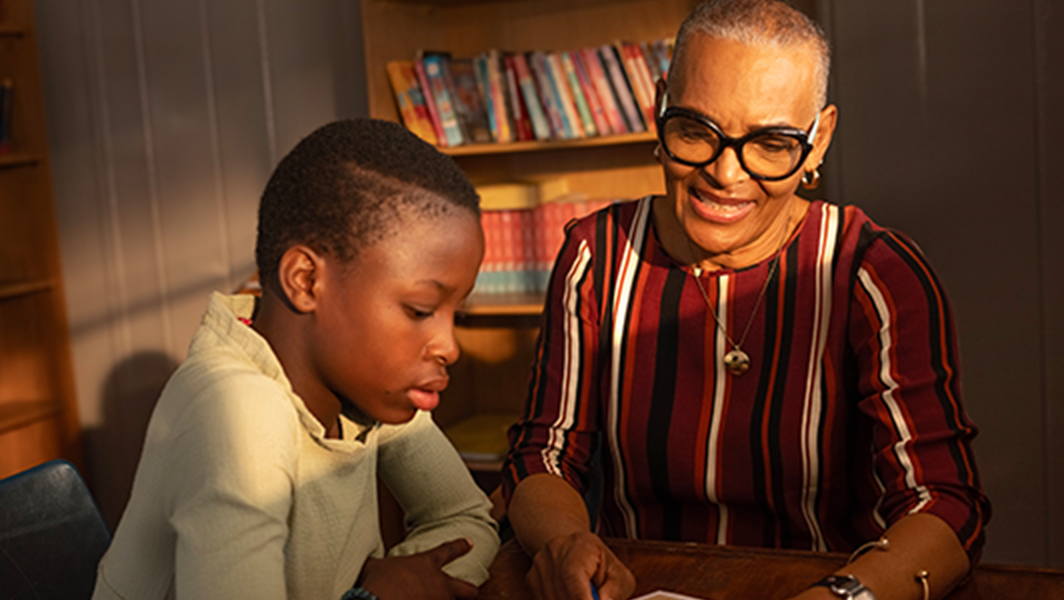
Let us help you find the right position.
If you are flexible in where you serve for the two-year Peace Corps Volunteer program, our experts can match you with a position and country based on your experience and preferences.
Serve where you’re needed mostElementary School Literacy Teacher
 Education
Job highlights
- Gain hands-on teaching experience using evidence‑based literacy strategies that make a difference in student learning.
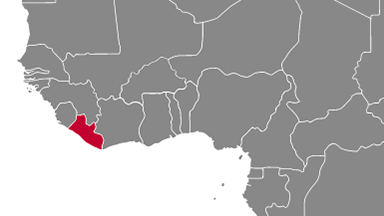
- Exchange knowledge and build meaningful professional relationships with Liberian educators.
- Develop intercultural competence and adaptability—skills essential for global careers.
Get answers live — every weekday at .
Apply by
November 15, 2026Know by
January 1, 2027Depart on
June 17, 2027Duration
2 years, plus 3 months trainingAbout the project
Ready to help young learners build strong reading and writing skills? Liberian communities invite you to support elementary literacy learning.
Low literacy rates remain one of Liberia’s most persistent education challenges, especially in early grades where students often lack the foundational skills needed to build upon. Limited access to age-appropriate materials, overcrowded classrooms, and gaps in teacher training continue to slow progress nationwide. Many schools struggle to provide consistent instructional support due to resource constraints and rural-urban disparities. Improving literacy is a key priority for Liberia’s government, which recognizes that stronger reading outcomes drive long-term economic and social development.
As an Elementary School Literacy Teacher, you will play a vital role in building strong foundational reading and writing skills. Working alongside Liberian educators, you will support classroom instruction, develop targeted interventions, and help parents learn useful strategies to continue learning at home. Your service will strengthen classroom instruction, broaden literacy opportunities, and support the country’s ongoing efforts to improve education.
Learn more about what Volunteers do in country by visiting our Liberia project page.
Required skills
Qualified candidates will have one or more of the following criteria:
Associate degree in any field and at least two years of full-time, post-high school work experience (from any combination of roles).
OR
Bachelor's degree in any field.
OR
High school diploma or GED and four years of full-time post-high school work experience (from any combination of roles).
Language: There are no pre-requisite language requirements for this position.
Required behavioral competencies
These competencies are essential for all service assignments and are assessed in the application and interview process:
Motivation for and commitment to service
Adaptability and open-mindedness
Problem solving and resourcefulness
Behavioral maturity and professionalism

Photos from Liberia



How you and the community will make an impact together:
Plan and facilitate communities of practice for teachers.
Develop age-appropriate classroom routines and instructional practices.
Create and model simple teaching and learning with local educators
Lead small group reading sessions to reinforce foundational literacy skills.
Support school improvement projects or literacy-focused initiatives.
Facilitate or assist with community or parent engagement activities that promote early grade reading.
Mentor teachers through informal coaching, modeling, and shared reflection.
You may also work on additional projects that meet the community’s interests and priorities, such as supporting after-school reading clubs or digital literacy sessions.
The Volunteer will live in a self-contained apartment or house with a separate kitchen, bathroom, and sitting area. Housing in rural areas may have inconsistent running water or electricity. The Volunteer should be prepared for an outdoor pit latrine and to use a bucket for bathing. Limited cell coverage should also be expected in some areas.
Learn more about the living conditions, including detailed information on culture, communications, housing, and health/crime statistics on our Liberia country page. You can also delve into stories about local communities by reading our blog or Volunteer stories.
Meet a Volunteer in Liberia
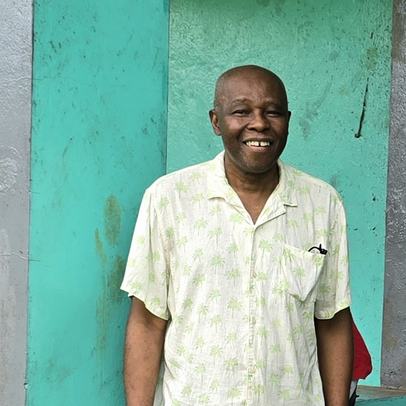
Kwame F.
Literacy Teacher Trainer
"What I value most is witnessing student growth—both academically and personally. Seeing children grasp literacy concepts that once felt unreachable is profoundly fulfilling."
See full Volunteer profile
As an Elementary School Literacy Teacher, you will be trained on early grade literacy instruction, classroom management strategies, and community engagement. Peace Corps/Liberia will teach you Liberian English to help you comfortably live in and connect with the community. You may work with a tutor to learn Kpelle, Lorma, Gio, Mano, or Bassa.
After 10 weeks of training, you will move to rural or bustling town community where you will collaborate with the staff at an elementary school and the education office. You will work with the community to assess literacy learning needs and develop solutions based on the curriculum.
Only heterosexual couples can be accepted for this program. Each person must apply separately and qualify for a position in a different sector than their partner. Cross-sector couples will live with different host families who may reside in different communities during training. Cross-sector couples may see each other for joint-sector training days or on the weekends but neither are guaranteed. Couples that serve in this country must be legally married to avoid conflicts that are not aligned with cultural and religious beliefs.
To learn more about serving as a couple in Liberia, visit the country page.
Application process
From application to departure takes around nine months. Learn about the application process for Volunteer opportunities.
Medical/legal clearance
You will need to be cleared medically and legally in order to serve in Liberia. Review information on medical clearance and legal clearance to learn about the process.