An official website of the United States government

Official websites use .gov
A
.gov website belongs to an official government
organization in the United States.

Secure .gov websites use HTTPS
A
lock (
) or https:// means you’ve safely connected to
the .gov website. Share sensitive information only on official,
secure websites.

Search
Connect with the Peace Corps
If you're ready for something bigger, we have a place where you belong.
Apply to the Peace Corps
The application process begins by selecting a service model and finding an open position.
Let us help you find the right position.
If you are flexible in where you serve for the two-year Peace Corps Volunteer program, our experts can match you with a position and country based on your experience and preferences.
Serve where you’re needed mostCommunity Economic Development Facilitator
 Community Economic Development
Job highlights
Applications are now closed. View current openings.
Apply by
January 1, 2026Know by
April 1, 2026Depart on
August 22, 2026Duration
2 years, plus 3 months trainingAbout the project
OVERVIEW:
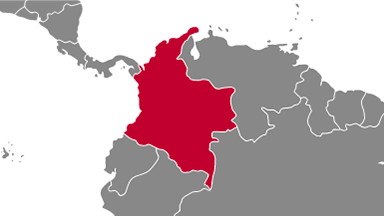
Rural and semi-urban communities in Colombia face persistent economic disparities and unequal access to opportunities, especially when compared to their urban counterparts. In partnership with the Colombian government, this Peace Corps Community Economic Development (CED) project is designed to address these structural gaps by fostering local leadership, inclusive economic participation, and holistic capacity-building among youth, women, and community members.
Peace Corps Volunteers in the CED project (hereafter, Volunteer) are embedded in rural and semi-urban communities where they collaborate with schools, vocational training institutions, and local groups to promote entrepreneurship, financial literacy, vocational skills, and community resilience. Their work supports individuals and groups, especially women and youth, to develop critical life skills, improve economic outcomes, and strengthen community ties.
GOAL:
Community members are empowered and experience improved economic outcomes that contribute to sustainable local development in Colombia.
OBJECTIVES:
Increase personal and economic empowerment of children, youth, community groups and organizations.
Improve individuals’, especially women’s, capacity to manage small-scale businesses.
Increase the capacity of individuals, with special emphasis on women and youth, for sound financial decision-making and money management.
ACTIVITIES:
Collaborate with public high schools and co-teachers to co-facilitate classes and extracurricular activities that build entrepreneurial thinking, socio-emotional skills, vocational orientation, and life planning.
Support the development of after-school clubs and interest-based groups in areas such as sports, arts, journalism, STEAM, and leadership.
Work with women’s groups, youth organizations, and local leaders to strengthen life skills, confidence, and community participation.
Co-facilitate workshops on personal financial management and basic business practices to help individuals and small businesses improve decision-making and sustainability.
Support micro-enterprises, such as informal vendors and small-scale agricultural producers, by strengthening access to information, training, and local resources.
Coordinate with Colombia’s national vocational training agency (SENA) and other partners to enhance technical training opportunities in rural communities.
ADDITIONAL CONTEXT:
Volunteers often work with micro-enterprises that are informal, under-resourced, and operating at subsistence levels. Relationship-building is a critical part of the process, and it may take several months before formal business support activities can begin. Flexibility, patience, and trust-building are essential.
Community needs and opportunities vary significantly between Colombia’s Caribbean and Andean regions, and each placement will respond to local conditions. Activities are expected to evolve over time, shaped by community input, facilitator strengths, and emerging priorities.
Learn more about what Volunteers do in country by visiting our Colombia project page.
Required skills
Qualified candidates will have one or more of the following criteria:
Qualified candidates will have one or more of the following criteria:
• Bachelor of Arts/Bachelor of Science degree in any field
OR
• 5 years' professional work experience
SPECIAL NOTICE ABOUT CITIZENSHIP:
Candidates who are dual citizens of Colombia and the U.S. or who were born in Colombia and became U.S. citizens after July 4, 1991 are not eligible to serve in Peace Corps Colombia. Under Colombian law, anyone born in Colombia who became a U.S. citizen after 1991 or anyone holding dual U.S. and Colombia citizenship is considered a citizen of Colombia, and not of the United States. If an individual faced a legal, safety or emergency situation in Colombia, the Peace Corps' ability to intervene would be limited. If you fit one of these categories, we encourage you to look at Peace Corps Volunteer assignments in other countries.
Language: Spanish
A. Completed 4 years of high school Spanish coursework in the past 8 years
B. Completed college-level Elementary II Spanish semester (Elementary III in quarter system) within the past 6 years
C. Score between 50-62 on the Spanish College Level Examination Program (CLEP) exam in the past 6 years
D. Score Novice-High or Intermediate-Low on official American Council on the Teaching of Foreign Languages (ACTFL) Oral Proficiency Interview (OPI) in Spanish within the past 6 years
Required behavioral competencies
These competencies are essential for all service assignments and are assessed in the application and interview process:
Motivation for and commitment to service
Adaptability and open-mindedness
Problem solving and resourcefulness
Behavioral maturity and professionalism

Photos from Colombia



How you and the community will make an impact together:
COMMUNITY LOCATION & CLIMATE:
Volunteer sites are located in small to medium-sized rural and semi-urban communities in the Caribbean and Andean regions, typically no more than six hours from a major city.
Caribbean: Hot and humid year-round, with frequent power outages and water shortages. Seasons alternate between dry spells and heavy rain with high humidity.
Andean: Cooler, with temperatures between 45°F and 75°F. Rainfall occurs year-round and nights can be cold.
Volunteers may encounter limited infrastructure, unpaved roads, and basic amenities.
HOUSING REQUIREMENTS:
Volunteers live with host families during Pre-Service Training and the first six months of service. Afterward, they may move to independent housing if it meets Peace Corps’ safety, budget, and logistical criteria.
Living with a host family is a key component of cultural integration, language acquisition, and trust-building. Flexibility and mutual respect are essential. Couples live separately during training but may live together independently during service.
TRANSPORTATION:
Volunteers are expected to live primarily in their assigned communities. Travel is limited to school or organizational breaks and Peace Corps events. Daily travel includes public buses, bicycles (with prior approval), and walking, especially in remote or hilly areas.
Driving or riding motorcycles and travel after dark are both prohibited.
DIETARY CONSIDERATIONS:
Local diets are carb-heavy (yucca, rice, corn, potatoes) with meat or eggs. Fruits and vegetables are widely available. Vegetarian or vegan diets are uncommon in rural areas. Volunteers with dietary restrictions must be flexible and able to communicate needs clearly.
INTERNET & TELEPHONE ACCESS:
Internet is available in most towns; some host homes have personal connections. Internet cafés and the Peace Corps office (with Wi-Fi and computers) offer additional access.
Volunteers must have a working cell phone at all times. A basic phone is provided during training. Personal devices should be insured, and backups (USB or external drives) are strongly recommended.
PROFESSIONALISM & APPEARANCE:
Professionalism includes adjusting to community norms around appearance and behavior. Clean, pressed, conservative clothing is expected, especially in the workplace. Business casual to smart casual is the standard. Flip-flops, shorts, sleeveless tops, and visible tattoos or facial piercings are not appropriate early in service.
Volunteers are encouraged to adapt hairstyles, grooming, and clothing to align with local expectations. Personal expression may be reintroduced gradually as trust is built, in consultation with staff or mentors.
CULTURAL INTEGRATION & SOCIAL NORMS:
Colombian social life is vibrant and community-based. In the Caribbean region, music and celebrations are frequent; in the Andes, events are more subdued but equally valued. Soccer, cycling, and other sports are popular. Volunteers are encouraged to engage actively in local customs and build strong relationships to foster integration and project success.
Learn more about the living conditions, including detailed information on culture, communications, housing, and health/crime statistics on our Colombia country page. You can also delve into stories about local communities by reading our blog or Volunteer stories.
Meet a Volunteer in Colombia
Curt C.
Business Advisor
"Joining the Peace Corps is like a box of chocolates. You don't know exactly what you'll get until you bite. Go in with an open mind and see what happens."
See full Volunteer profile
To learn more about serving as a couple in Colombia, visit the country page.
Application process
From application to departure takes around nine months. Learn about the application process for Volunteer opportunities.
Medical/legal clearance
You will need to be cleared medically and legally in order to serve in Colombia. Review information on medical clearance and legal clearance to learn about the process.