An official website of the United States government

Official websites use .gov
A
.gov website belongs to an official government
organization in the United States.

Secure .gov websites use HTTPS
A
lock (
) or https:// means you’ve safely connected to
the .gov website. Share sensitive information only on official,
secure websites.

Search
Connect with the Peace Corps
If you're ready for something bigger, we have a place where you belong.
Apply to the Peace Corps
The application process begins by selecting a service model and finding an open position.


Let us help you find the right position.
If you are flexible in where you serve for the two-year Peace Corps Volunteer program, our experts can match you with a position and country based on your experience and preferences.
Serve where you’re needed mostAdolescent Health Specialist
 Health
Job highlights
- Cameroon is known as “Africa in Minature,” boasting a diverse array ofcultures, languages, and foods. Over 240 languages are spoken in Cameroon, a bilingual country with French (most predominant) and English being the two official languages spoken. EGPAF in the East and South, Regions of Cameroon (funded by Centers for Disease Control & prevention (CDC) Cameroon), have requested the support of a Peace Corps Response (PCRV) to serve as an Adolescent Health Specialist. In collaboration with Peace Corps Cameroon, EGPAF (referred to as “host institution” onwards) are seeking to improve the quality of youth/adolescent programs provided both at the health facilities where they work and at community level through the placement of Peace Corps Response Volunteers (PCRV) in the South, East Regions.
- Cameroon is facing a mixed epidemic, both generalized and concentrated in certain groups of most at risk populations. The overall HIV prevalence among the adult population aged 15-49 is 2.7% according to the latest Demographic and Health Survey (DHS-V of 2018). The DHS 2018, shows that 06 out of 10 regions have a prevalence above the national average (2.7%), namely: South 5.8%, the East 5.6%, Adamawa 4.7%, North-West 4%, South-West 3.2% and Centre 3.5%. Prevalence among adolescents and young people 15–24-year-olds is 1.2%, with a prevalence being nine times higher amongst girls (2.0%) than boys (0.4%). According to UNICEF in 2022, 15 children out of 100 acquire HIV vertically), 43.4% of infants born to pregnant women with HIV were not tested within two months of birth, and 16.6% of pregnant women left ANC clinics without knowing their status. Treatment adherence and retention in care remains the major challenge in adolescent HIV support. Adolescent tailored support is limited in quality and quantity, with staff reporting limited capacity and resources to provide youth-friendly services. Teenage pregnancy remains high, increasing the risk of vertical transmission. HIV testing is lowest amongst youth as compared to other population subgroups.
- In collaboration with host institution staff and community health stakeholders, the PCRV will promote education on anti-retroviral therapy (ART) adherence and retention, psychosocial support, life skills development, youth sexual and reproductive health education, and HIV prevention related activities that mobilize youth into HIV testing services. In addition, PCRVs will support maternal and child health interventions particularly prevention of mother-to-child transmission of HIV, education for teenage mothers, and nutrition education for malnourished ALHIV, pregnant women and children of breastfeeding women. Other interventions include home visits, promoting and facilitating youth-friendly services, “treatment-as-prevention” messaging and safe space creation for youth-tailored education activities. The Volunteer will work in close collaboration with psychosocial support agents, clinical care providers to implement activities with community health agents, community groups, youth associations, and youth clubs. PCV will work to create adapted visual aids adapted for adolescents, organize individual or small group-based life skills, positive living and YSRH activities using participatory methodologies. He/she will support other non-clinical activities as necessary. The goal is to improve ALHIV, teenage pregnant mothers adherence to treatment, demand for HIV testing services and help to build trust as well between service providers and youth.
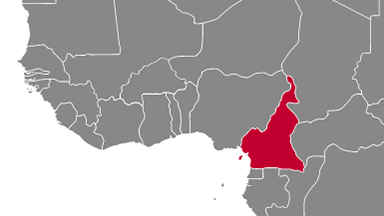
Cameroon • Africa
In partnership with: Elizabeth Glaser Pediatric AIDS Foundation (EGPAF)
Applications are now closed. View current openings.
Apply by
January 15, 2026Know by
April 1, 2026Depart on
August 9, 2026Duration
12 monthsAbout the project
EGPAF supports facility based (clinical) and community-based HIV prevention Care and Treatment interventions in all ten regions of Cameroon. The goal is to achieve epidemic control whereby HIV/AIDS will no longer be considered a public health emergency by 2030. The objective is to achieve UNAIDS’ objectives of 95-95-95. Where:
• At least 95% of PLHIV know their HIV Status
• At least 95% of people who know their status are on treatment
• At least 95% of people on treatment have a suppressed viral load
Lowest coverage is seen amongst children and adolescents across these indicators with a high 33 per 1000 children and adolescents. Implementing partners face similar challenges across the board in reaching more children and adolescents with services. Some of the most outstanding challenges or programmatic gaps include:
Peer pressure, refusal, life skills challenges, stigma, disclosure, lack of family support, limited understanding of disease process, health personnel limited capacity to provide youth friendly or tailored services and limited community engagement in adolescent and youth health.
Key priorities to close programmatic gaps for EGPAF include:
• Improve HIV positive adolescents and youth adherence and retention in care
• Increase demand for HIV testing among adolescents and youth
• Prevent vertical transmission of HIV from mother to child
• Enhance activities or programs that support adolescents in making healthy choices
• Promote proper nutrition for malnourished pregnant and breastfeeding women (PBFW) and ALHIV.
EGPAF is therefore requesting a PCRV to strengthen psychosocial support, positive living related activities tailored for adolescents and youth living with HIV and creating demand for HIV testing by adolescents. Activities are expected to be implemented at various levels particularly at the health facility, in the community, youth centers, and schools.
Each of these organizations have received PCRVs before with some currently in service supporting the same program.
Learn more about what Volunteers do in country by visiting our Cameroon project page.
Required skills
Qualified candidates will have the following criteria:
Competitive candidates must meet all of the following criteria:
Bachelor of Arts/Bachelor of Science degree in Public Health, Nursing, Sociology, Social Work, Child/Adolescent Behavioral Health, Human Development/Family Science, or other relevant degree with a focus on youth/adolescent health
AND
3 or more years of experience implementing youth/adolescent-friendly services programs
Language: French
Required behavioral competencies
These competencies are essential for all service assignments and are assessed in the application and interview process:
Motivation for and commitment to service
Adaptability and open-mindedness
Problem solving and resourcefulness
Behavioral maturity and professionalism

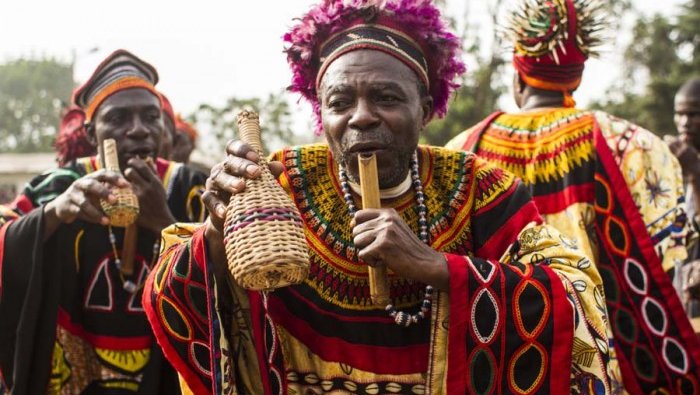
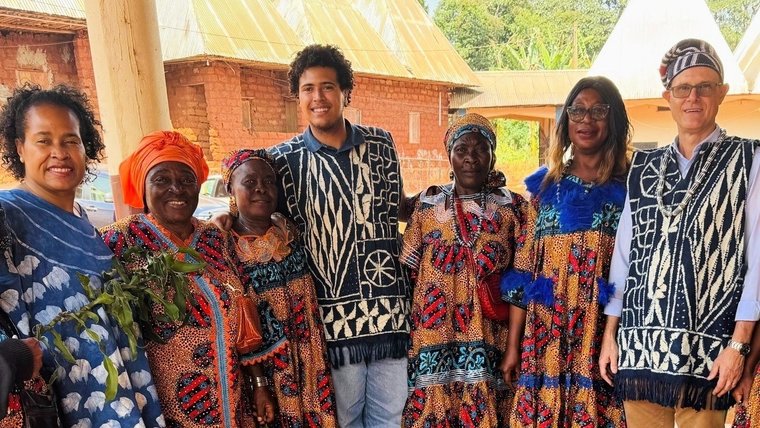
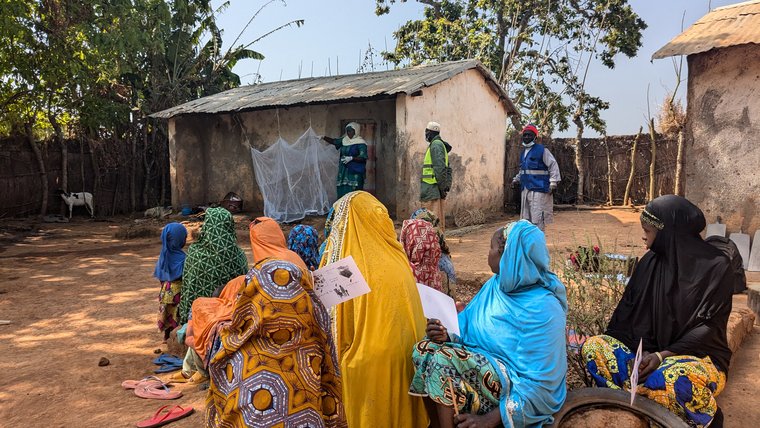
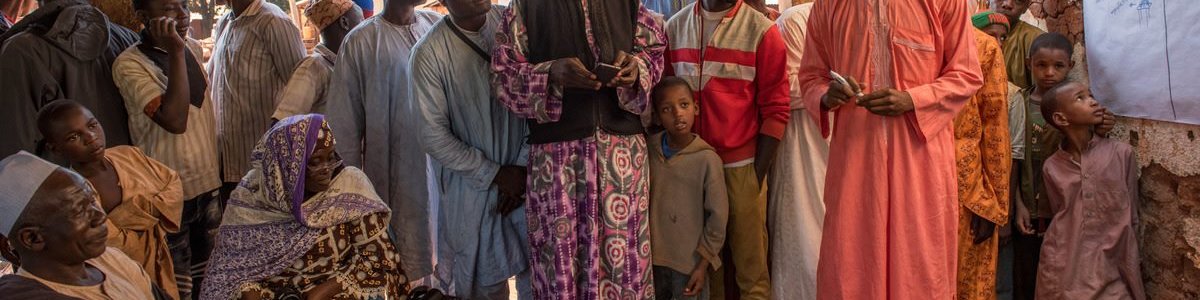
Photos from Cameroon



How you and the community will make an impact together:
In collaboration with host institutions, the volunteer will:
• Carry out adolescent and youth health education sessions on appropriate topics
• Support Capacity development efforts to strengthen adolescent/youth -focused activities implementation
• Conduct home visits as necessary with designated staff or community health agent/worker
• Carryout HIV primary prevention interventions that promote adolescent demand for HTS
• As appropriate, assist with activities related to Prevention of Mother to Child Transmission (PMTCT) for teenage mothers.
• Provide psychosocial support and adolescent-friendly activities for ALHIV to improve their retention in care and adherence to treatment.
• Provide support for data collection, management, analysis and reporting; this could include development and/or implementation of standard operating procedures (SOPs) to support quality data collection and reporting. Other duties may be assigned based on local need, host institution guidance and PCRV experience.
By the end of the assignment the volunteer would be expected to do the following to ensure a smooth transition to an incoming PCRV:
• Initial 3-month workplan in collaboration with supervisor and counterpart.
• Quarterly activity reports for PC and host institution.
• Other reports/deliverables as requested.
NB: PCRV should consider being flexible to support other aspects (in addition to HIV) of global health that align with EGPAF’s programming.
Peace Corps Cameroon will work with your host institution and community to identify housing as close as possible to your work site, ensuring that the lodging meets all of Peace Corps/ Cameroon’s housing requirements. In Cameroon, Volunteers do not live with host families. They live in independent housing, sometimes within a family compound and always with close-by neighbors. Most Volunteers are placed in clusters with the nearest Volunteer within a 30-minute to two-hour travel trajectory. Volunteer housing is modest and varies from site to site and region to region. Houses are usually built with cement blocks and have metal roofs. Houses may have toilet and shower areas inside, but some have nearby or attached access to a private pit latrine and bathing area. Some houses do not running water and electricity may be unreliable. Volunteers may need to use solar lamps for lighting or the charging of electronic devices; water may have to be collected from nearby sources. All water must be filtered before drinking and filters will be provided. While some Volunteers may have only limited access to the internet, all Volunteer sites should have cell phone coverage within the community. A Peace Corps- subsidized local cell phone can be purchased by Volunteers shortly after arrival. Volunteers are encouraged to bring (if possible) an unlocked smart phone and a tablet or laptop. A “settling-in” allowance allows Volunteers to buy furniture and set up their houses. Volunteers must be flexible, resilient, and prepared to adapt to the local living conditions.
Learn more about the living conditions, including detailed information on culture, communications, housing, and health/crime statistics on our Cameroon country page. You can also delve into stories about local communities by reading our blog or Volunteer stories.
Meet a Volunteer in Cameroon
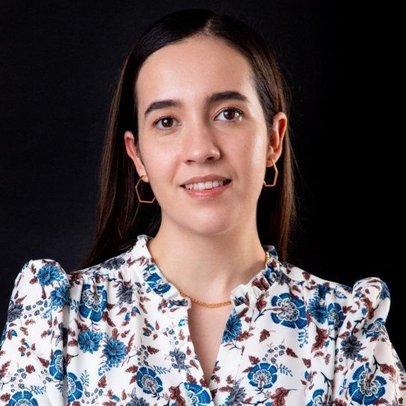
Rebeca C.
High School Teacher
"Agriculture is a big part of life in my village, and getting involved in it has been incredibly rewarding. No matter how much effort I put into lesson plans or projects, being out there working alongside the community speaks volumes."
See full Volunteer profile
After a 2-week orientation on topics such as health and safety, you will move to an urban community where you will collaborate with staff to assess the local needs and develop a work plan in line with their established goals. Peace Corps Cameroon will equip you with French language resources and you may work with a local tutor who can help you build basic language skills to connect with the community.
Only heterosexual couples can be accepted for this program. Each person must apply separately and qualify for a position in a different sector than their partner. Cross-sector couples will live with different host families who may reside in different communities during training. Cross-sector couples may see each other for joint-sector training days or on the weekends but neither are guaranteed. Cohabitating couples are highly encouraged to present themselves as married throughout service due to cultural expectations.
To learn more about serving as a couple in Cameroon, visit the country page.
Application process
From application to departure takes around nine months. Learn about the application process for Volunteer opportunities.
Medical/legal clearance
You will need to be cleared medically and legally in order to serve in Cameroon. Review information on medical clearance and legal clearance to learn about the process.