An official website of the United States government


Tips for serving in Benin from 6 Peace Corps Volunteers
Hurray, you’ve decided to serve abroad! But how to choose from the many countries you could call home during Peace Corps service?
It’s worth learning more about the West African nation of Benin—a place where you can work on diverse projects from food security to English education to health. Read on to learn from 6 Volunteers what life is like in this special place.
The people of Benin
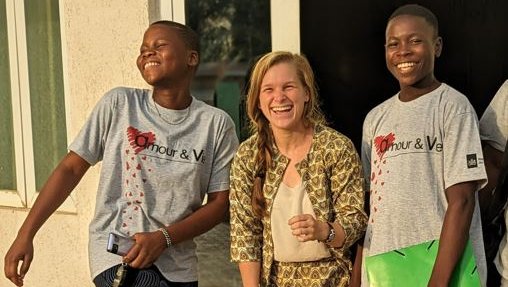
The people are what Peace Corps Volunteers often say they appreciate most about Benin—how warm, friendly and giving they are.
Madeline S. says, “I can’t walk down the road without stopping for at least five conversations that all end in laughter and at least 100 greetings from little kids. On some of my hardest days, I know that if I just work up the motivation to get out of my house, my day will become better. I always return home with a smile on my face.”
Deirdre O. appreciates the generosity of her Beninese community. She says, “Though community members may not have much, they always share what they have, from their company to water to food. It has been incredible to be a part of a tightly knit community. My village is very small and rural and it seems sometimes as though everybody knows everybody.”
Sectors and projects
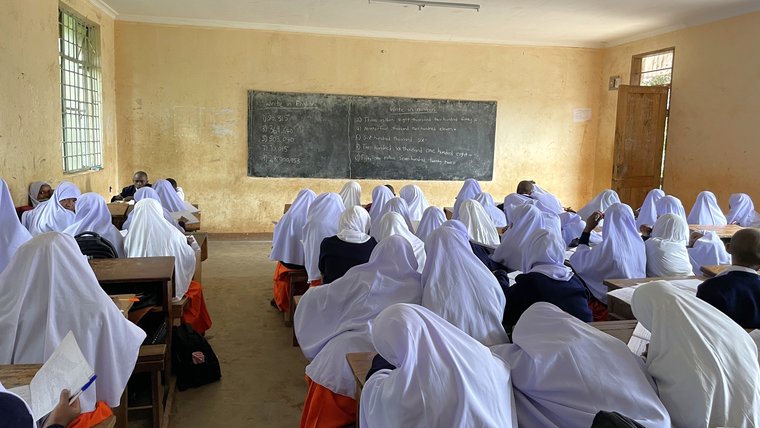
Peace Corps Benin collaborates with in-country partners on Agriculture, Education, and Health projects. Agriculture Volunteers promote food production to support nutritious and sustainable diets in their communities. Education Volunteers co-facilitate English classes or clubs in schools and the community while securing a Teaching English as a Foreign Language (TEFL) certificate. To support maternal and child health and malaria prevention, Health Volunteers promote use of insecticide-treated bed nets and support other activities.
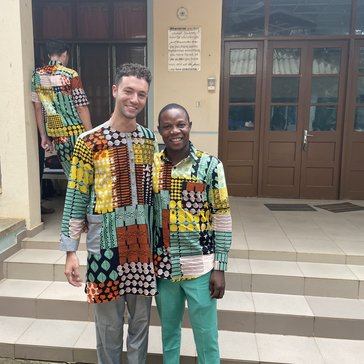
Dalton F. is a Food Security Volunteer whose many projects reach beyond agriculture. He works with his counterpart to promote mangrove cultivation by lakeside communities and directs a gardening and life skills camp with primary school students. Additionally, he says, “We’re already working on projects in financial literacy, to transform local cow’s milk into yogurt, and to transform banana plant stems/trunks into fiber. With another set of community members, I work on public health issues—girls’ empowerment, sexual health, and malaria.”
Rural Health Volunteer Jasmine C. gives monthly nutrition talks and food cooking demonstrations to mothers of young children, hosts a monthly girls’ workshop on health and economic empowerment, and mentors a team of young people who educate their peers about sexual health. She says, “I really enjoy the work we do together and love watching the girls open up or see the spark in a participant’s eyes when they have something to contribute to the conversation.”
Learn more about projects in Benin.
A multilingual, multicultural country
If you’re a language lover, Benin may be for you as it is one of Africa’s most linguistically diverse countries. French is the official language, and most Beninese people also speak one or more of 68 local languages. The region in which you are placed will likely dictate which language(s) you learn.
Language is a key way to get to know your community, according to Jasmine C., who says, “I learned local language salutations so I can always greet people on my morning commute to the health center. During my first few months at the site, I made sure to spend a lot of time in public so people could come up to me and chat. I always rely on my friends to help me with any issues I run into, such as miscommunications, which helps quite a bit.”
Diverse cultures are another special aspect of Benin, and offer a great way for Volunteers to participate—whether it’s dancing, wearing local fabrics, eating local foods, or attending church services, according to Ketura R. In her community in central Benin, near Nigeria, “several families work in both countries, creating a unique mix of Tchabé Beninese and Yoruban Nigerian cultures that I get to experience every day, including music and dance not found in other regions of Benin. Also, central and northern Beninese cultures differ greatly from southern regions (including features such as longer salutations, respectful bowing, and abundant yams). My community has a fair mix of religious practices, including Christian, Muslim, and Vodun groups. Seeing how everyone follows their beliefs yet lives harmoniously is truly amazing.”
What to pack
Dress in Benin is on the conservative side; it’s wise to bring a few modest, professional outfits that you already own, keeping the year-round heat in mind. Also consider your service assignment—Agriculture Volunteers could benefit from packing a sun hat, outdoor shirts, and boots, while Education or Health Volunteers may pack a few more business casual options. Once you get to site, you can check out local fashions and fabrics. Affordable tailoring offers a great way to express your own tastes and explore local styles.
Other items to consider bringing:
- Low-cost electronics with durable covers.
- Durable and comfortable walking shoes or sandals that can be cleaned easily.
- A packable, lightweight raincoat for the rainy season.
- American card or board games that you can play with community members.
See our complete Packing Guidance for Benin.
A transformative experience
The people and customs of Benin leave a lasting imprint on Peace Corps Volunteers. You will be changed by the people you encounter and the projects you help bring to fruition.
Health Volunteer Jordan F. says, “Living here has truly given me a sense of what it feels like to live in a community-based culture. The people have truly changed me for the better.”
Dalton F. says that his service in Benin has caused him to “reevaluate how much I want a high-powered, all-encompassing career and how much I want a career that allows me space beyond work—to be involved in the community and its growth/betterment, for my home garden, and for long bike rides.”
Want to connect with other Volunteers who served in Benin? Find and connect with country groups through the National Peace Corps Association.
Do you want to experience Benin for yourself as a Peace Corps Volunteer? Connect with a recruiter to learn more.