 An official website of the United States government


Featured Volunteer Profile
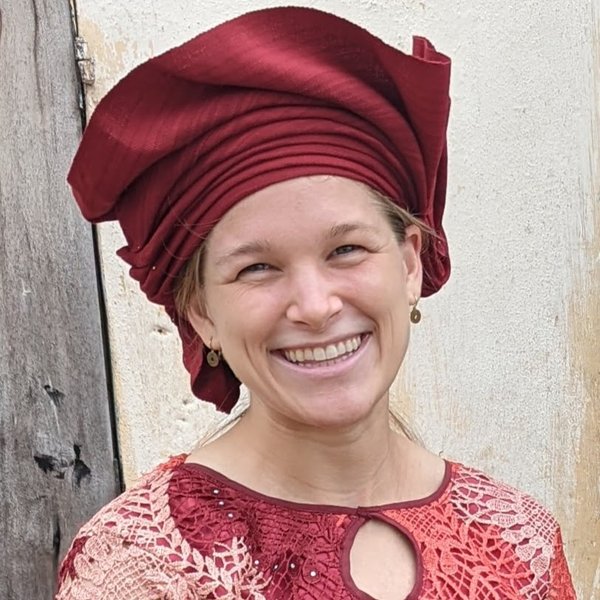
Madeline S.
“[Evening walks have] now become a moment for me to unwind at the end of the day as I greet friendly faces, get high-fives from my favorite kids, and pick up a thing or two that I need to make dinner.”
1. What got you interested in the Peace Corps?
A medical mission to Tanzania in 2009 got me interested in working on the African continent in some capacity. I loved the energy and the warmth that Tanzanian locals exuded and the work we did together felt important. Towards the end of university, when reflecting on how I could work on the African continent in a positive and valuable way, a Peace Corps recruiter came to campus and now here I am.
2. What projects are you working on?
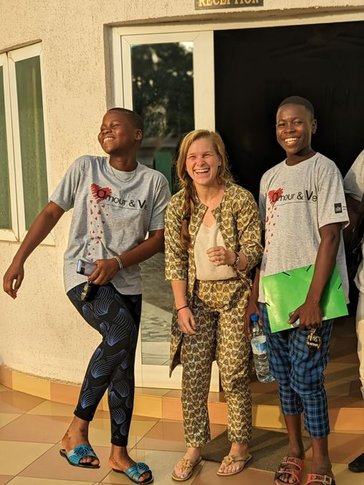
Women’s and men’s support groups have always been a large part of what I do, working alongside my counterpart to share advice and best practices for how to support the healthy growth of children and the community as a whole. Through a national project called “Amour et Vie (love and life),” I support and mentor two young members of my community as they lead educational sessions for local unschooled youth on topics of sexual health.
Three members of my community and I have also recently started an association which will focus on transforming moringa leaves into powder, making the nutrient-dense plant more accessible to members of our community and surrounding areas. This association will create income-generating opportunities for some of our community’s most financially vulnerable women and will also, hopefully, improve health realities for the young children of our community and beyond.
3. What strategies have you used to integrate into your community?
Evening walks have been a huge help in my integration and they’re something I’ve done routinely since the beginning of my time here. When I first arrived, I used them as an opportunity to practice the local language and introduce myself to community members. It has now become a moment for me to unwind at the end of the day as I greet friendly faces, get high-fives from my favorite kids, and pick up a thing or two that I need to make dinner. I’ve also made a point to get as involved as possible in daily life. I get my own water from the well and the pump, chatting with other women as we wait our turn. I help pound yams whenever I am invited and always find a place to sit down and do my part whenever I see a group of people removing kernels from corn cobs, de-shelling peanuts or sesame, or removing leaves from stems in preparation for the next meal’s sauce. Whether or not I am sure of what I’m doing, I jump in and learn as I go; the community always seems to appreciate the effort.
4. What is a highlight of your time in service so far?
During one of my team’s Amour et Vie sessions, my supervisor and a member of the Amour et Vie national administration came to observe our work. The pride that I felt in the two young presenters as I watched them confidently address the group is something that will stick with me for a long time. Remembering where they started, just 6 months earlier, as two soft-spoken 15-year-olds who couldn’t get through an introduction without laughing from embarrassment, I was struck by how much they had learned and grown during our time together and knew they had only just begun to discover their potential.
5. What have you enjoyed most about the community where you are serving?
My community is so incredibly warm and welcoming. I can’t walk down the road without stopping for at least five conversations that all end in laughter and at least 100 greetings from little kids. On some of my hardest days, I know that if I just work up the motivation to get out of my house, my day will become better. I always return home with a smile on my face.
6. What are some of the most important things you’ve learned from your community?
The generosity I see all around me on a daily basis along with the generosity I’m shown is humbling. Here, it is believed that no matter how much or how little we have, if we give, we will also receive. Maybe not immediately, but it will come. My community has also taught me that we don’t have to strive for productivity in all moments of the day. When the sun is at its highest and we’re sweating before we even step outside, it’s okay to find the shade of a good tree and relax for a while.
7. How do you spend time when you are not working on a project?
Once my daily chores are done and my house is clean, I often wander into the center of the community to sit and chat with friends for a couple of hours. I also enjoy accompanying the main wife in my household on whatever errands she needs to run before we come back to the house, where she’ll try to teach me how to prepare dinner for the family that night. Dance breaks with kids are always nice little energy boosts in the in-between moments, too.
8. What are you looking forward to in your remaining time as a Volunteer?
I look forward to watching my projects evolve, deepening my connection with the community, continuing to strengthen my local language skills, and attending ceremonies and celebrations.
Want to learn more about serving as a Volunteer in Benin? Connect with a recruiter today.



