An official website of the United States government


American and Ukrainian Rotarians connect online through the Peace Corps

The streets in Ukraine, which were once brimming with sunflowers and cyclists, are eerily quiet these days outside of unexpected air raids. The ongoing war with Russia has changed Olena Moroz’s beloved home; no longer can she start each day with a peaceful morning run. Despite the rubble and destruction, Moroz, like many Ukrainians, is confident that her resilient country will prevail.
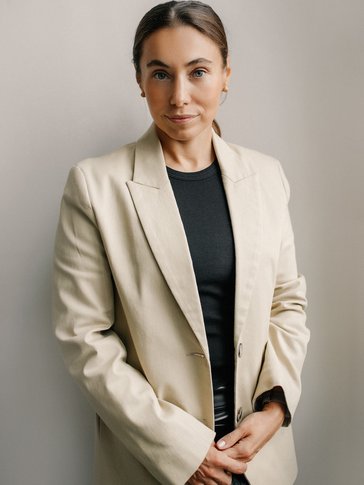
In July of 2023, just three years after officially becoming a Rotarian herself, Olena Moroz was named head of Ukraine’s Rotary Youth Leadership Awards (RYLA)’s committee. Moroz immediately got to work arranging online leadership and change management classes to reinvigorate her countrymen a year and a half into the war.
Moroz was excited to learn that although the war prevented in-person Volunteers from arriving, her community could still receive support through the Virtual Service Pilot (VSP). Moroz developed a 12-week-long virtual engagement for a Peace Corps Virtual Service Pilot Participant (VSPP) to mentor the local youth on ways to adopt and maintain an innovative mindset despite the turbulent times.
“Supporting local youth is an inspiring activity, especially during this difficult war period. Some Ukrainian youth are living in difficult and dangerous conditions. Males over the age of 18 are not able to leave and [they must serve on] the front [lines once] they reach 25 years old. My son, Sergio, turns 15 in September,” shared Moroz.
Geoffrey Glenn, a returned Peace Corps Volunteer (Ukraine 2014-2016) and American Rotarian, quickly expressed interest in the project, his second virtual engagement with the Peace Corps. He was already co-developing fundraising strategies with a nonprofit in Ukraine by identifying potential American donors, designing donor reports, and editing English donation letter requests. Glenn felt eager to do more.
“My [previous, in-person] Peace Corps service was not just about volunteering. It taught me that I could be part of a community anywhere in the world. When I first arrived, I didn’t know what to expect, but it didn’t take long for me to create friends and a real family here. My counterpart from that in-person Peace Corps service, Mykola, remains one of my best friends today,” explained Glenn.

This past March, Glenn and Moroz began co-facilitating weekly discussions on change management with Rotary Ukraine’s staff and a mix of local adults and youth. Topics included personal change and self-awareness, understanding organizational and group culture, and building consensus. Their activities focused on appreciating the group’s diversity and providing a safe space to listen to each other’s personal experiences.
Moroz and Glenn are also developing a long-term mentorship program to ensure their efforts are sustainable. To start, the presentations that kickstart each online discussion will be used to create a course and trainer’s guidebook. Moroz and Glenn are equally passionate about strengthening the youth’s ability to adapt; they believe these skills are paramount for Ukraine to continue navigating the war’s uncertainties and, one day, to rebuild. In spite of the innate distractions and emotions that the war brings, all the participating adults and youth show up on time and are heavily engaged.
Glenn is grateful for the additional opportunity to connect with Ukrainians online and he hopes others will follow his lead. He believes there is no cause too big or too small for his fellow Rotarians. “The main idea of volunteering is to be of service to something greater than yourself. When we give our time, we’re part of something larger. A few hours a week of your time can make a difference for someone. It doesn’t need to be on a national level either. If you don’t like how the world is, change it.”
For her part, Moroz says, “I want to express my gratitude to all Americans for their support. We feel we are not alone; we feel we have a family worldwide. And that is priceless. I have met so many people who have never been to Ukraine, but [they] are doing something to help."
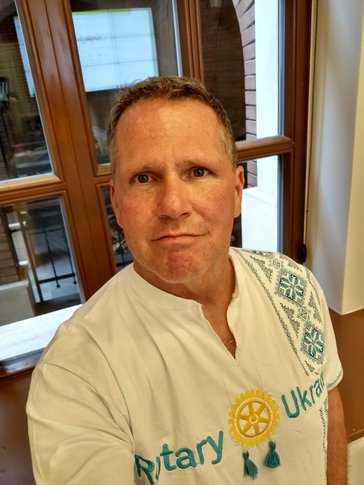
To date, the Peace Corps Virtual Service Pilot has connected 100 U.S. citizens with partner organizations in Ukraine. Over a dozen of these Virtual Service Pilot Participants (VSPPs), including Glenn, have enjoyed donating their time and services that they’ve gone on to support a second Ukrainian partner project. The host country partner organizations have shared an equally positive experience collaborating online. Moroz, for one, is brainstorming what a second engagement with Ukraine Rotary could entail.
Although the Peace Corps launched the pilot back in October 2020 when the pandemic forced the evacuation of all Volunteers, the agency decided to continue fostering online collaborations after observing how short-term, virtual service complements on-the-ground efforts. As seen with Ukraine, virtual engagement enables organizations which would otherwise not receive in-person Volunteers to still receive support. U.S. citizens who cannot serve abroad due to physical or financial limitations can now join the Peace Corps community in a new way.
If you are interested in participating in Peace Corps’ Virtual Service Pilot, you can express interest in a short-term, virtual engagement that suits your skillset and passion.