 An official website of the United States government


The Peace Corps at 65: Still the toughest job you’ll ever love
An enduring opportunity to change lives and transform global communities through service
Many remember the beloved Peace Corps public service campaign that ran for three decades—an invitation to embrace “the toughest job you’ll ever love.” To celebrate its 65th anniversary, the Peace Corps renews its call to serve by inviting all American citizens to challenge themselves to live in a different culture, build lasting bonds, and work hand in hand with communities to transform lives for generations.
By meeting challenges head on, Peace Corps Volunteers extend the spirit of adventure and innovation that made our country, which will this year celebrate the 250th year of its founding.
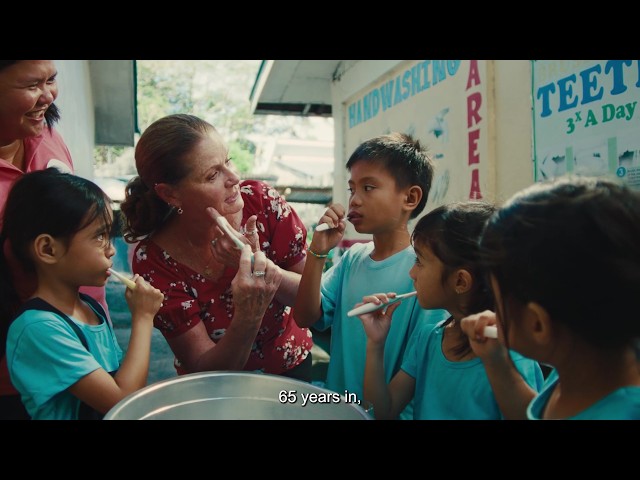
A great deal has been accomplished since 1961, when the first Volunteers took an oath to work alongside overseas communities. Over the past six-and-a-half decades, nearly 250,000 Volunteers have served in 144 countries around the world, collaborating with counterparts and community members in support of community-led development. Today, Peace Corps Volunteers continue to apply their spirit, grit, and ingenuity, building relationships worldwide.
Since the agency’s establishment on March 1, 1961, the Peace Corps has expanded its service offerings with a commitment to the same mission of promoting world peace and friendship through community-based development and intercultural understanding. Eligible Americans can select a service opportunity that fits their needs, whether through more traditional in-person experiences, online engagements that enable individuals to support global communities from home, or shorter commitments that still offer opportunities for cultural exchange and friendship.
To those who have served before, those who have not yet served, and those learning about the Peace Corps for the first time—the agency invites you to be part of something bigger than yourself and participate in the toughest but perhaps most transformative experience of a lifetime.
Here are three ways to learn more:
- Visit our Opportunities page to explore a wide range of opportunities and three ways to serve: Peace Corps Volunteer Opportunities, Peace Corps Response Opportunities, and Virtual Service Pilot Opportunities
- Learn more about the experiences of those who have served in and benefited from the toughest job that is the Peace Corps.
- Take our easy, 10-minute quiz for recommended opportunities based on your interests and skills.
Use this toolkit to share the Peace Corps’ contributions to the United States’ legacy of service with your network.
Peace Corps milestones
October 14, 1960
In a 2 a.m. campaign speech, then-Senator John F. Kennedy challenges University of Michigan students to contribute two years of their lives to help people in countries of the developing world.
“How many of you who are going to be doctors, are willing to spend your days in Ghana?” Kennedy asked, and then stated, “I think Americans are willing to contribute. But the effort must be far greater than we have ever made in the past.”
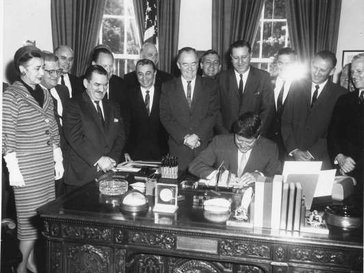
March 1, 1961
President Kennedy signs Executive Order 10924, establishing the Peace Corps.
June 1961
Tanganyika I, Colombia I, and Ghana I begin training for Peace Corps service. Peace Corps training activities are conducted at U.S. colleges, universities, and private agencies. Many trainees head to Puerto Rico, the Rocky Mountains, and other locations for field-training activities.
August 30, 1961
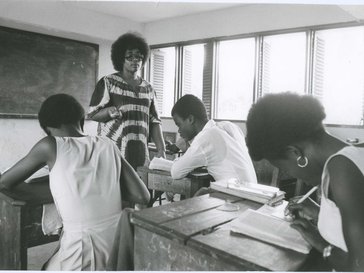
The first group of Peace Corps Volunteers, Ghana I, arrive at Accra Airport and to begin their service as teachers.
September 22, 1961
Congress passes the Peace Corps Act, giving it the mandate to “promote world peace and friendship” through a mission statement that the Peace Corps continues to adhere to and promote.
September 1964
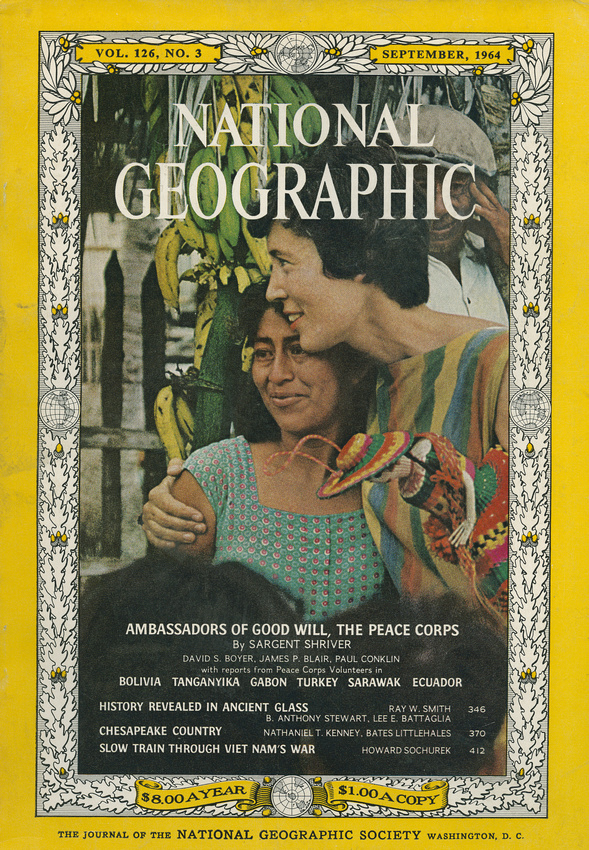
National Geographic magazine features Peace Corps Volunteers on its cover.
June 1966
More than 15,000 Volunteers are serving in the field. Historically, this is the highest number of Peace Corps Volunteers serving at one time.
1971
Peace Corps holds a poster design contest to celebrate the 10th anniversary, and the iconic flag with star graphic was created – a visual which would become the Peace Corps seal.

July 1, 1971
With Executive Order 11603, President Nixon folds the Peace Corps into a new federal volunteer agency called ACTION. However, the Peace Corps' original Congressional mandate remains unchanged.
February 11, 1972
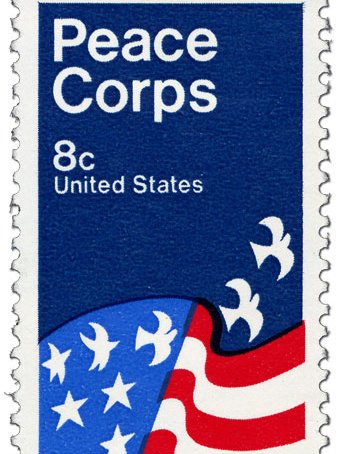
An eight cent Peace Corps stamp is issued.
October 1977
Carolyn Robertson Payton is the first woman and the first African American to be Peace Corps Director.
May 16, 1979
President Carter signs an executive order that grants the Peace Corps full autonomy.
December 29, 1981
Peace Corps becomes an independent federal agency.
January 1985
Peace Corps Director Loret Miller Ruppe signs a letter of agreement with founder Dr. Beryl Levinger establishing the Fellows/USA Program, which was later renamed Coverdell Fellows by Congress after Peace Corps Director and Senator Paul D. Coverdell. This program enables RPCVs to have free or reduced tuition at more than 200 higher education programs across 39 states. More than 5,000 Peace Corps Volunteers have participated in the program since its inception.
September 1985
A first in Peace Corps history, more women enter service than men.
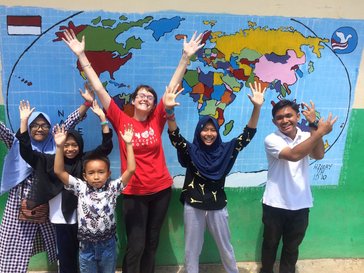
1988
Barbara Jo White (RPCV/Dominican Republic, 1987-1989) creates the first World Map Project. Volunteers continue to use the project as an educational tool worldwide.
1989
Paul D. Coverdell establishes the World Wise Schools program (WWS), now called Global Connections, to connect American students in classrooms with Peace Corps Volunteers around the world.
1990
After the fall of the Berlin Wall, the first group of Peace Corps Volunteers to serve in Central and Eastern Europe depart for Hungary, Poland, and Czechoslovakia (which is now called Czechia and Slovakia).
October 1993
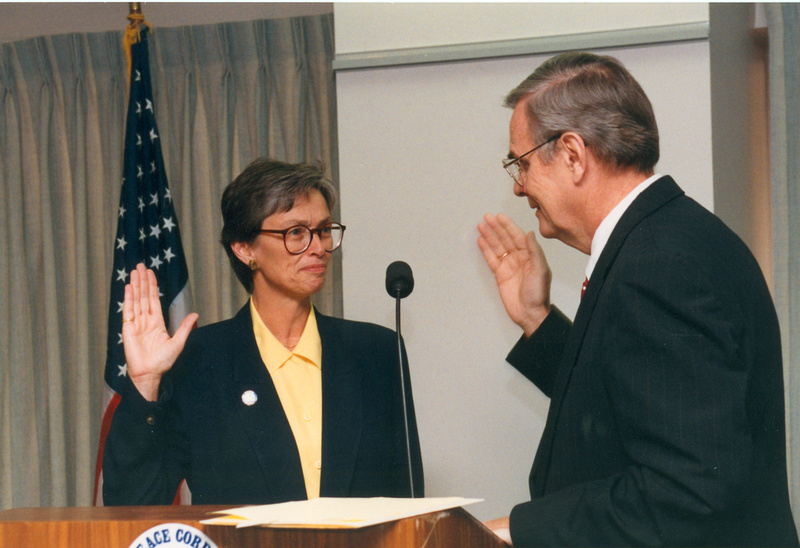
Carol Bellamy (RPCV/Guatemala, 1963-1965) becomes the first RPCV to be appointed as Peace Corps Director.
1995
The first Camp GLOW (Girls Leading Our World) is established in Romania. Camp GLOW continues to encourage young women to be leaders in their communities.
December 1995
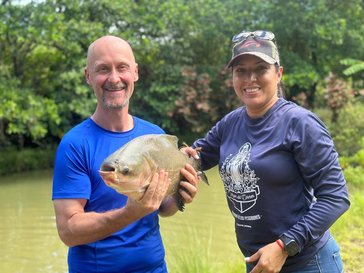
Peace Corps sends three Volunteers to Antigua to rebuild homes damaged by Hurricane Luis. This pilot program, originally known as Crisis Corps, later becomes Peace Corps Response and provides short-term, focused, humanitarian service to countries worldwide.
May 2003
The Peace Corps commits an additional 1,000 Volunteers to fight HIV/AIDS as part of legislation signed into law.
September 2005
For the first time, Volunteers are deployed domestically when Crisis Corps assists relief operations in the Gulf Coast region following Hurricanes Katrina and Rita.
June 2007
Peace Corps launches Peace Corps Prep to help prepare undergraduates to serve as Peace Corps Volunteers or undertake other intercultural fieldwork.
January 2009
After closing the program during the 1994 genocide, Peace Corps returns to Rwanda and Volunteers begin working in secondary education and HIV/AIDS education and prevention.
2009
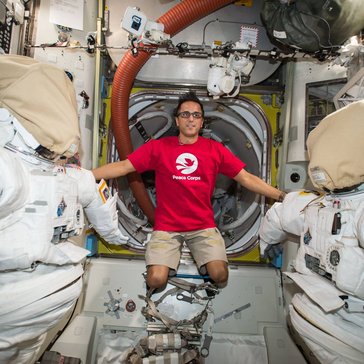
Joseph Acaba became the first Returned Peace Corps Volunteer to serve as a NASA astronaut, making his first trip to space aboard the Space Shuttle Discovery.
Peace Corps re-opens three historic programs in Colombia, Indonesia, and Sierra Leone and surpasses 200,000 Americans who have served as Peace Corps Volunteers.
July 2011
The Peace Corps is one of three featured programs at the free Smithsonian Folklife Festival. The curated exhibition commemorating the Peace Corps' 50th anniversary runs from June 30 – July 11, 2011.
November 15, 2011
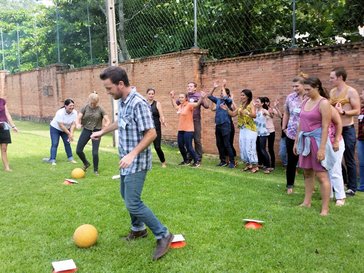
The Peace Corps signs a memorandum of understanding (MOU) that officially partners the agency with Grassroot Soccer in a consolidated effort to make a difference in local communities and combat the spread of HIV/AIDS.
March 3, 2015
The Peace Corps supports Let Girls Learn, a powerful U.S. Government initiative aimed at expanding access to education for girls around the world.
June 1, 2016
The Peace Corps unveils a refreshed brand platform including an official logo and the previous logo became the official seal of the agency.
February 7, 2018
Aboard the International Space Station, Mark Vande Hei and Joe Acaba (RPCV) of NASA discuss life and research on the complex during an in-flight educational event with members of the Peace Corps gathered with students at Washington, D.C. H.D. Cooke Elementary School.
March 2020
Due to the outbreak of the Covid-19 pandemic, all Volunteers and Trainees around the world are evacuated. This marks the first time in the history of Peace Corps that all global operations are suspended.
October 6, 2020
To provide service to global communities during the pandemic, Peace Corps launches a Virtual Service Pilot (VSP) with nine posts and 45 RPCV participants. Since then, the agency has continued to expand the program, working remotely in the areas of education, health, community economic development, agriculture, youth programming and environmental protection.
May 20, 2021
For only the second time in Peace Corps history, Volunteers are deployed domestically for service. Working alongside the Federal Emergency Management Agency (FEMA), 158 Peace Corps Response Volunteers begin three-month assignments helping FEMA in their Covid-19 vaccine distribution efforts.

March 24, 2022
The first 35 Volunteers return to service in Zambia and the Dominican Republic. This group is made up of both first-time Volunteers and Volunteers who were evacuated in March 2020.
December 30, 2022
The Peace Corps welcomes the first-ever Volunteers to serve in Viet Nam, the agency’s 143rd partner country. Nine Volunteers begin training to serve as English teachers in secondary schools in Ha Noi with Vietnamese counterparts and students.
February 5, 2024
Peace Corps announces the reopening of its country program in the Republic of Palau in 2025. From 1966 to 2018, the Peace Corps maintained a two-country program that included Palau and the Federated States of Micronesia.
September 27, 2024
Nine Peace Corps Volunteers take the pledge of service to become the first Volunteers to live and work in El Salvador since 2016.
February 20, 2026
Launch of Tech Corps, a new initiative to deploy skilled Americans to support the adoption of artificial intelligence in Peace Corps host countries.
March 1, 2026
To celebrate its 65th anniversary the Peace Corps invites all American citizens to meet challenges and embrace a world of opportunity living and working with communities around the globe.