 An official website of the United States government




Featured Volunteer Profile
Steven R.
“I always thought I was good at identifying and leveraging assets to meet a goal, but living and working in my community has strengthened those skills. I can’t be everywhere at once, so I look to others to help.”
1. What got you interested in the Peace Corps?
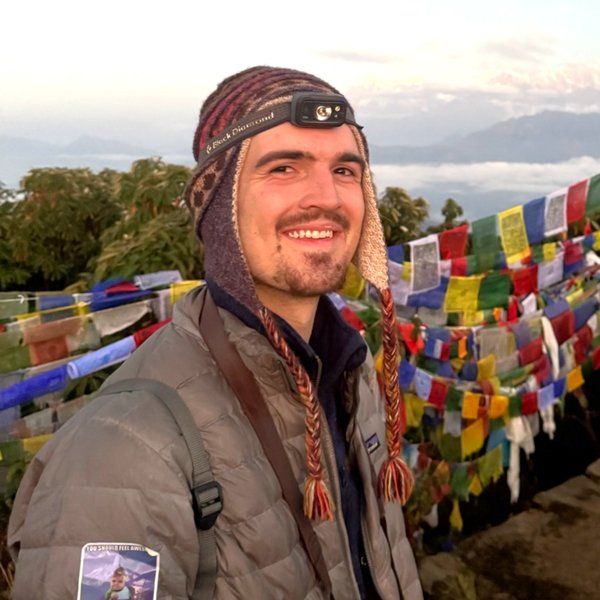
During high school, I had the opportunity to live and volunteer in a community in Ecuador. It was the first time I was confronted with poverty of this type. What I remember most was the generosity, strength, and kindness of the people I met. Despite having very little, their lives were full. I was also moved by the other volunteers who had given up many Western comforts to serve. That experience made a significant impression on me and planted the seed for a life of service.
After that, the Peace Corps became part of my plan. I wanted to apply to serve in Nepal or Mongolia as a Community Economic Development Volunteer after college graduation, but COVID got in the way. I never imagined myself as a teacher, but the thought of starting a 9-to-5 job was even harder to imagine, so I moved to Thailand to teach English. After about a year overseas, a friend serving with the Peace Corps in Madagascar reminded me of my previous goal. I saw that applications were open for my dream post, Nepal, I applied, and the rest is history.
2. What projects are you working on?
My main job is co-teaching English for grades five through seven, often with 40 to 50 students in a class. This can be really challenging at times, so I’ve focused on helping the teachers at my school to bring more activity-based learning into the classroom and introducing ways to use technology to make grading assessments. I’ve introduced a mobile app that can grade multiple-choice tests. We now use microphones and headphones to assess speaking abilities in our computer lab, which was made possible through a USAID grant.
Outside the classroom, I help run two English clubs and an entrepreneurship club. In the English club, my students have connected with peers in the Philippines and at my old high school through video calls and letters. We learn English songs, computer programs, and games. In the entrepreneurship club, I teach students the basics of investing and how to develop plans for their businesses.
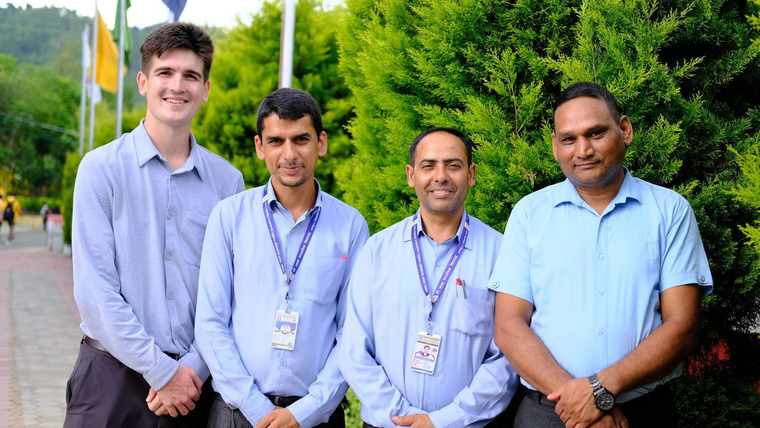
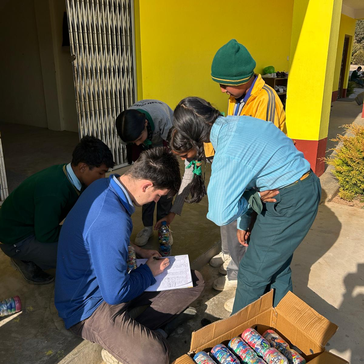
Our school also has a strong animal sciences and learning-and-earning program, which includes cow, buffalo, goat, and chicken husbandry as well as general crop cultivation. I’m working with school leadership to expand these programs into beekeeping, vermicompost, and fish farming. Finally, Nepal has very little in the way of waste management, so I started an eco-brick program to turn plastic trash into building material. The goal is to use these bricks to build an outdoor classroom before my close of service.
3. What strategies have you used to integrate into your community?
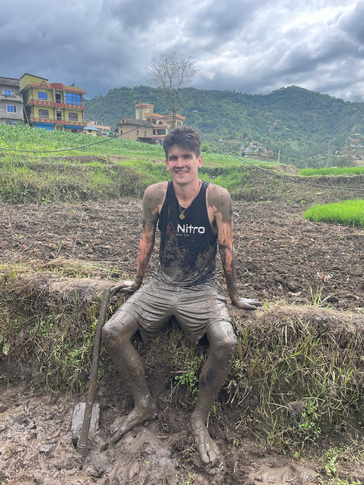
I try to be visible and open. I go on morning walks almost every day and often stop to chat or have tea with neighbors. Small, consistent gestures have helped build trust over time.
Most importantly, I try to say yes as often as I can. Whether it’s a puja (worship), a picnic, a funeral, or a last-minute rice planting, I’ve found that showing up enthusiastically makes a big difference. In Nepal—and maybe in the Peace Corps in general—you never really know what your day will hold. I've learned to go with the flow and embrace the unexpected.
4. What is a highlight of your time in service so far?
Watching my students’ confidence and language skills grow has been the most rewarding part. In just one year, many have made huge leaps in their ability to express themselves in English. The biggest potential for long-term sustainability of my efforts will likely be through my counterpart, Bishnu B., who has adopted many of the methods I’ve shared.
Some of those same students have also become my biggest allies. They’ve taken ownership of the eco-brick program and helped bring technology into the classroom. Some have even trained older peers on how to use computers. My relationship with these kids and the small part I’m playing in their development will be something I cherish far beyond my close of service.
5. What have you enjoyed most about the community where you are serving?
I’m grateful for the leadership at my school. The management team is committed to making the school a center of excellence and they’re very open to new ideas. I’ve been lucky to see many of my suggestions get implemented, like the creation of an English club room and the addition of designated biodegradable, plastic-only, paper waste bins around campus.
I also love the location and vibe of the valley I was placed in. It really does feel like home, and I always smile when my bus makes the final winding turn and the valley comes into view. I already know it’s going to be difficult to say goodbye.
6. What are some of the most important things you’ve learned from your community?
I’ve learned that anything can happen in a day. A project that’s been on pause for weeks can suddenly come together when the right person decides it’s time. All it takes is a leader and a way to spread the word. People will show up. I always thought I was good at identifying and leveraging assets to meet a goal, but living and working in my community has strengthened those skills. I can’t be everywhere at once, so I look to others to help. For instance, I have the students who finish their work quickly, go help their peers. My success in identifying students who could support a project, viewing them as good leaders in their own right, and utilizing their skills allows me to do more projects.
My community has taught me patience and persistence. Things almost never happen on the time scale I plan them to, but they do eventually happen with continued advocacy.
Finally, I’ve internalized the value of community during my time here. It is amazing how people come together to support one another in Nepal. I admire and want to be part of that community-focused culture both here and back home in the States. .
7. How do you spend time when you are not working on a project?
I read, watch movies, and write in my journal to unwind. To stay healthy, I go on long walks and hit the basic but functional local gym. I’ve gotten into birdwatching, which has been a lot of fun. My favorites are the red-billed blue magpie, white-throated kingfisher, the chestnut-headed bee eater, and the black kite.
I also spend time with my host family, my counterparts at the school, and other Volunteers when I can. I catch up with friends and family back home via a messaging app whenever I can.
8. What are you looking forward to in your remaining time as a Volunteer?
I have a few half-finished projects that I want to wrap up in a meaningful way to ensure the students and teachers are able to carry the work forward once I leave.
I also hope to explore more in Nepal, including a 12-day trek on the Manaslu circuit, some time on the Tibetan Plateau, and going on a school field trip to the far east. Our school is a technical school with an academic focus on farming and animal husbandry. Some kids have never been to the Terai either, so I think that could be interesting and educational for them to see a new part of their country.
9. Once you finish service, what will you do differently when you return to the U.S.?
Some of my best memories here, and certainly, the more interesting ones, have come from saying “yes” to unexpected invitations. I want to keep that openness and see what kind of unexpected opportunities that leads to when I return to the States.
I’ll be more thoughtful when it comes to waste. Since I don’t burn my plastics like everyone else, my waste just sits in my room until I cut it up for eco-bricks. That’s made me a lot more conscious of what I consume. I will limit my consumption of plastic as best I can.
Finally, I’ll cook simpler, healthier meals. While I do miss eating meat regularly, a diet of mostly rice, lentils, and vegetables has made me feel great. I want to continue eating healthy and organic food whenever I cook.
Learn more about serving as a Peace Corps Volunteer in Nepal.



