 An official website of the United States government




Featured Volunteer Profile
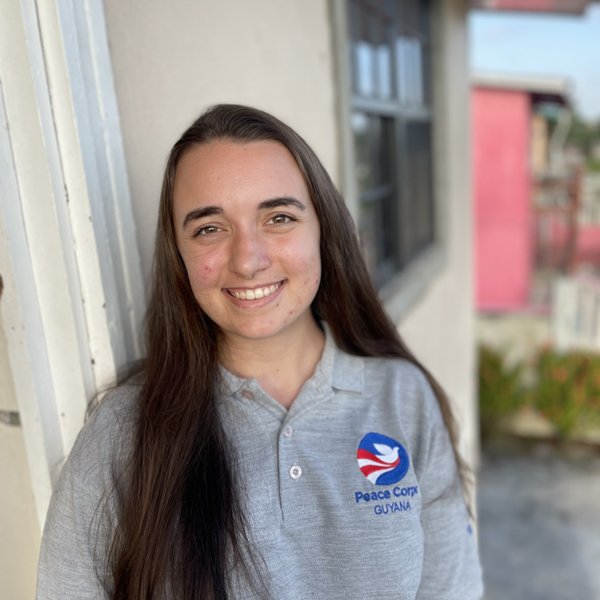
Sophia V.
“Learning to cook Guyanese food has been fun, especially since I started cooking for myself. I try to cook a couple of Guyanese meals a day, and my meals have become a regular topic of conversation in the staff room.”
1. What got you interested in the Peace Corps?
While at home sick with the flu in high school I watched the 1987 film "Dirty Dancing." In the opening scene I learned that the main character was interested in international politics, which resonated with me. She also mentioned that she “wanted to join the Peace Corps.” With my mother’s support, I began my research. It did not take long for me to determine that serving in the Peace Corps would be a goal of mine.
Life went on, I graduated from high school and moved to Northern Ireland for my studies. When I was contemplating what to do after college my mom reminded me of my goal of volunteering abroad.
2. What projects are you working on?
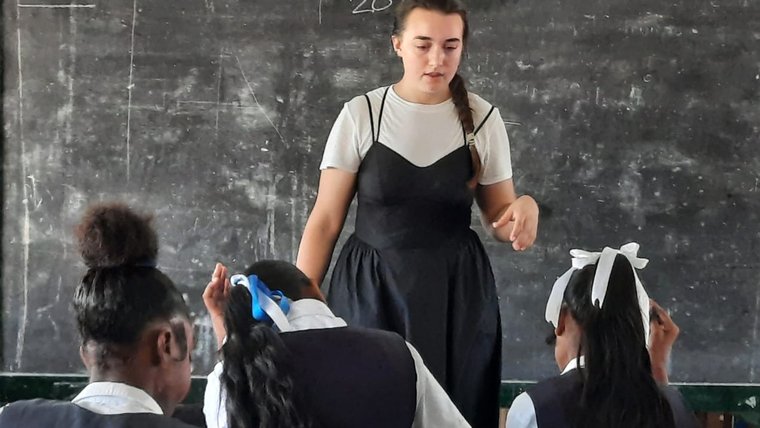
I am working on the Youth Health and Well-being project. My role as an Adolescent Health promoter involves co-planning and co-teaching the Health and Family Life Education (HFLE) curriculum, starting health-focused extracurricular opportunities, and strengthening the link between health centers and schools. Six months into my service, this has mostly involved co-teaching. However, I am excited to begin work in the health center next year and broaden the scope of my work.
3. What strategies have you used to integrate into your community?
Initially, integrating meant spending time with my host family, their relatives, and family friends. Gradually my integration has involved going for walks, watching football games, helping at the outdoor library, and joining in on as many celebrations as possible. I have also worked on committees at my school, which has helped my integration at school. More than anything, I have made myself visible in the community and make a continuous effort to get to know people I frequently encounter.
4. What is a highlight of your time in service so far?
The highlight of my service was helping to organize, and taking part in, the school talent show. Most of all, joining one of my students to sing on stage when she was too nervous to go it alone. It felt really special to help someone overcome a fear and meet their goal. It was a meaningful moment for both of us.
I also got to see so many students come out of their shells and let loose. This was the first time I really got to be myself around them without the pressure of teaching in a structured setting. Getting to take part in something that was all about having fun helped me become more deeply connected to my school.
5. What have you enjoyed most about the community where you are serving?
I have enjoyed making connections with people like my host family and the parents of students. These connections have helped me to feel comfortable in my community—both from a safety perspective and because I feel like I can be myself. I enjoy teaching in a secondary school because I often see my students around the community. There always seems to be someone looking out for me.
6. What are some of the most important things you’ve learned from your community?
The most important thing I have learned from my community is to trust the process and the people around me. I have helped organize and run several school events that initially seemed quite chaotic. Sports competitions, the talent show, graduation, and mashramani did not feel like they were going to come together, and I had no idea how to help. However, they all turned out fine!
Things usually turn out fine because everyone pitches in, even if that happens at the last second. I have learned to trust the process. I tend to get stressed and worry about the smallest things. While that may not change, my community has taught me to stop fretting about the small things and let others help.
7. How do you spend time when you are not working on a project?
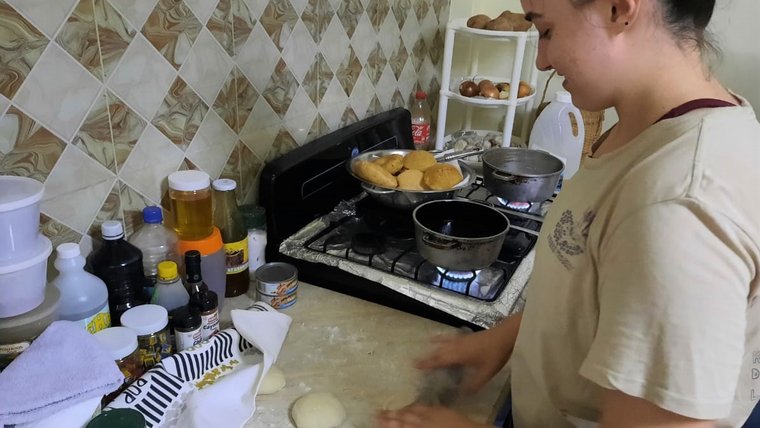
Learning to cook Guyanese food has been fun, especially since I started cooking for myself. I try to cook a couple of Guyanese meals a day, and my meals have become a regular topic of conversation in the staff room. This has brought me closer to my colleagues and gotten me some helpful tips along the way.
Watching football has been a great way to meet more people in my community that I would not have met otherwise. Similarly, I started going to the gym recently which has been a great way to meet new people with similar interests. I am lucky to have a gym so nearby, and going there helps me both mentally and socially.
8. What are you looking forward to in your remaining time as a Volunteer?
I am looking forward to starting a health/HFLE club in my school and thinking about potential projects. I have enjoyed being a part of health-focused assemblies in my school, and I would love to expand on that during the rest of my service.
Apart from teaching and school, I am most excited to see more of Guyana and its beautiful natural areas. I am hoping to travel to Region 9 this year, and maybe next year visit Kaieteure Falls—both of which would be super exciting.
9. Once you finish your service, what will you do differently when you return to the U.S.?
When I finish my service, the first thing I want to do is show my parents that I can make roti. While not the biggest accomplishment, I think they will be impressed. My service has taught me that any food I think I will miss I should learn how to make. I can’t believe it took me this long to learn how to make my favorite foods from scratch. I have now made countless dishes using a coffee mug as a measuring cup and the palm of my hand for a teaspoon. Every time I have produced something edible!
A bigger change is that I will doubt myself less. I will be less reluctant to take a leap when attempting something for the first time.



