 An official website of the United States government


Featured Volunteer Profile
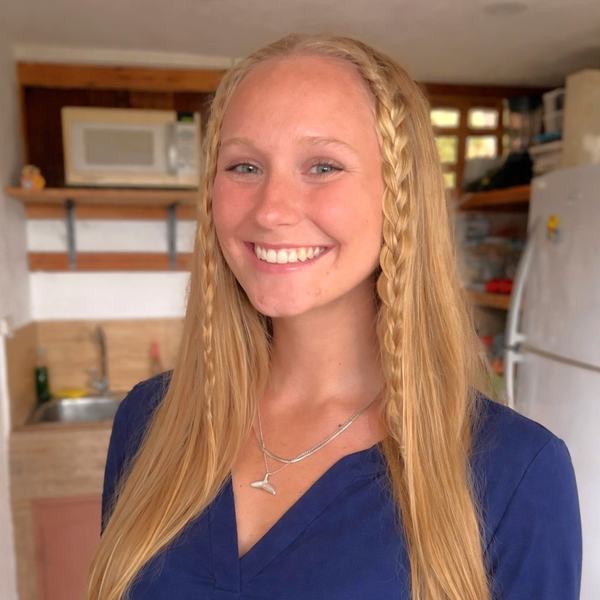
Phoebe L.
“The way people in Costa Rica consistently show up for each other, offer support, and share responsibilities is truly inspiring. There is a strong sense that no one navigates challenges alone.”
1. What got you interested in the Peace Corps?
I’ve been inspired to serve in the Peace Corps since childhood, after seeing how my mom’s service in Honduras shaped her and the Peace Corps community she remained connected to. Growing up overseas in Kuala Lumpur and Kenya sparked my passion for cultural exchange, global education, and meeting people from diverse backgrounds. After college, I was eager to return to an international setting—not just to explore, but to contribute meaningfully. The Peace Corps felt like the perfect way to gain hands-on experience in schools, especially since I hope to work in international education long-term. I also wanted to challenge myself by learning a new language and living independently in a new environment. As a lifelong learner, I saw the Peace Corps as an opportunity to grow personally and professionally. It has truly expanded my horizons and given me lessons I couldn’t have learned anywhere else.
2. What projects are you working on?
I am a Youth Development Volunteer in Costa Rica, where I work in both a high school and an elementary school. In both schools, we focus on helping students build confidence, strengthen essential life skills, and grow into thoughtful, capable leaders in their communities. All projects are developed and implemented alongside local counterparts at each school, and we collaborate closely to make each initiative possible.
At the high school, I support a co-ed volleyball club that promotes teamwork and leadership, a girls’ empowerment club centered on confidence and self-expression, and guidance classes along all grade levels that explore values, inclusion, and healthy relationships. I also collaborate with the special education teachers to provide one-on-one support for students working on emotional regulation, communication, and social skills. In addition, I am co-leading a project with the art teacher and students to create a mural that reflects the school and local community.
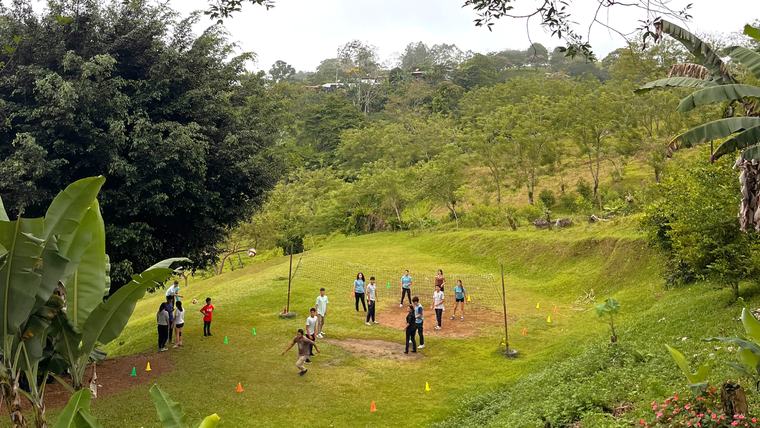
At the elementary school, I teach weekly life skills and recreational activities classes where students practice respect, teamwork, and emotional awareness through interactive lessons and games.
I also tutor individual students who require extra support in reading and writing. I have had multiple workshops (about 1 month long each) with the kindergarten class, in which we work on themes like emotional recognition and regulation, friendship and communication skills, and a values-based workshop. I also work alongside a conduct teacher to support students who need additional help with emotional regulation and family communication.
3. What strategies have you used to integrate into your community?
To integrate into my community, I focus first on listening and observing before acting. I approach each space with cultural humility and openness, recognizing that I am both a guest and a learner. One piece of advice that has guided me is to say “yes” to opportunities outside of my formal role. Many of the most meaningful relationships and learning experiences have come from showing up to community events, informal gatherings, and everyday activities.
I prioritize collaboration and working closely with my counterparts to ensure community-driven and sustainable projects, but also to strengthen relationships and further my integration process. I strive to show up each day with positivity, flexibility, and a willingness to adapt when plans change. Learning the language, asking questions, and inviting feedback have been essential to building trust and helping my integration process. Above all, I have learned that integration requires patience, resilience, and consistently showing up with respect and enthusiasm, even when challenges arise.
4. What is a highlight of your time in service so far?
The relationships I’ve built in my community have been the most meaningful part of my service and have fundamentally shaped my experience. I’ve been fortunate to live with a host family who have made me feel genuinely at home, and my relationship with my host mom has been especially grounding—she offers guidance, warmth, and a sense of belonging that has made this experience feel deeply personal.
Building connections with the high school staff has also been a highlight; spending time with them beyond the classroom has helped me feel integrated into the community and part of a team. At the elementary school, my relationships with the students have been incredibly rewarding—their curiosity, affection, and attention to small details about my life remind me how powerful trust and presence can be. These relationships feel reciprocal; I’ve learned as much from this community as I hope I’ve contributed. The people I have built connections with are, without question, what I will miss most when my service comes to an end.
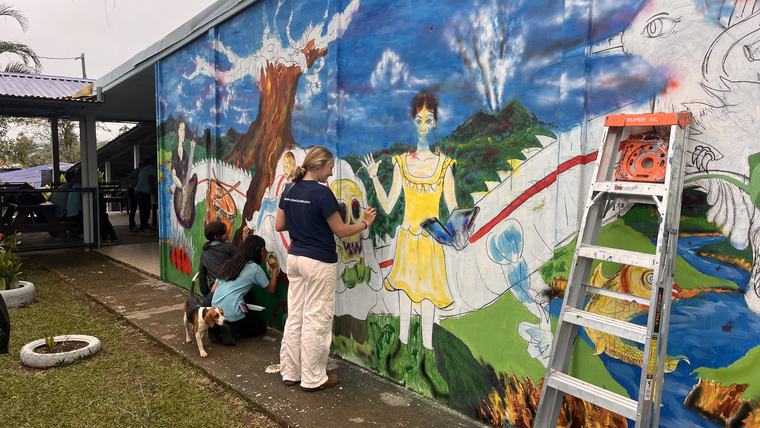
5. What have you enjoyed most about the community where you are serving?
What I have enjoyed most about my community is the people and the deep sense of connection that exists here. My site has a calm, unhurried rhythm of life, and there is something special about living in a place where everyone knows one another. Relationships overlap in meaningful ways—I meet someone in one setting, see them again in another, and then find us all gathered together at a larger community event. That interconnectedness creates a strong sense of belonging and makes it easy to feel included.
I have also fallen in love with the setting itself. It is a breathtaking mountain town, with views of a volcano in the background of daily life. The natural beauty, paired with the warmth of the people, makes even ordinary days feel significant. Over time, what once felt new and unfamiliar has begun to feel like home, and that is something I will always carry with me.
6. What are some of the most important things you’ve learned from your community?
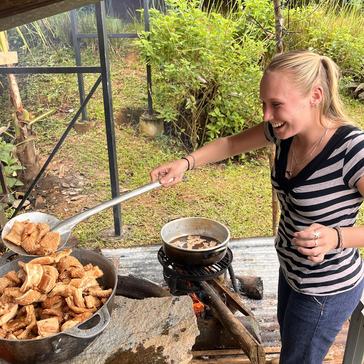
One of the most important things I have learned from my community is the central role of family. Here, family extends far beyond the immediate household—grandparents, cousins, aunts, and uncles are deeply involved in one another’s daily lives. The way people in Costa Rica consistently show up for each other, offer support, and share responsibilities is truly inspiring. There is a strong sense that no one navigates challenges alone.
I have felt this personally through my host family. Whenever I visit, my host mom never lets me leave without a container of food to take home. It is a simple gesture, but it reflects the care and attentiveness that define relationships here.
I have also learned the value of slowing down through what many call “cafecito culture.” Taking time to pause, share coffee, and check in with one another is not seen as a distraction from productivity, but as an essential part of life. Prioritizing connection, conversation, and presence has shifted my perspective and reminded me that relationships are often more important than rushing to the next task.
7. How do you spend time when not working on a project?
Outside of my project work, I spend much of my time outdoors. I often take long walks through my town and neighboring communities, which allows me to stay active, enjoy the natural beauty of the region, and connect with people along the way. It is common for me to wave to passing cars and buses, many of whose drivers I now know by name. These daily interactions, though simple, deepen my sense of belonging and reflect how interconnected the community is. I enjoy exploring the region through traveling to different hiking spots (especially ones with waterfalls) which continue to remind me of the beauty of the place I get to call home.
I have also embraced yoga during my service, appreciating how the slower pace of life here has encouraged me to prioritize mindfulness and self-care. As a naturally social person, I also spend a great deal of time with friends both in my community, and with other Volunteers around the country. In quieter moments, I explore personal interests such as reading, journaling, painting, and a goal of mine is to learn guitar before the end of my service—something I hope to use as another way to bring people together.
8. What are you looking forward to in your remaining time as a Volunteer?
In my remaining time as a Volunteer, I hope to continue nurturing the relationships that have become such an important part of my life—both within my community and with my fellow Volunteers. These connections are what make this experience truly meaningful, and I hope to carry them forward long after my service ends. I also aim to continue improving my Spanish, striving for fluency so that I can communicate more deeply and authentically with those around me.
I want to explore even more of the region and the country, taking full advantage of the incredible biodiversity and natural beauty of Costa Rica. At the same time, I plan to continue pushing myself in personal growth, pursuing passion projects, and embracing every opportunity to learn and contribute. I believe that the experience gives back what you put into it, and I am committed to making the most of every moment—so that I leave not only with memories and friendships, but with growth, skills, and understanding that will stay with me for a lifetime.
9. What will you do differently when you return to the U.S.?
Living in Costa Rica has shaped the way I approach the world, both personally and professionally.
Professionally, I’ve learned how community-driven initiatives are developed and maintained, and I plan to bring these skills into my future work in education. I will return to the U.S. to pursue graduate studies in special education, work in schools, and eventually teach in international schools, applying the collaboration, cultural sensitivity, resilience, patience, and relationship-building skills I developed as a Volunteer.
Personally, living here has reinforced the value of relationships and community in everyday life. I hope to carry the openness, kindness, and curiosity I’ve gained when I move back to the U.S. and to a new city; to help me build relationships and integrate fully into my next community and continue to learn from the people around me. These lessons will guide how I approach both my work and my life moving forward.



