 An official website of the United States government




Featured Volunteer Profile
Lindsey H.
“One thing I love about Senegal is the zero-waste culture. I give my host mom plastic bags to re-use for freezing food and empty drink bottles for her juice business ... I tossed a worn-out hairbrush and found my host mom using it to scrub laundry.”
1. Tell us about a moment that sticks with you from the first week at your site.
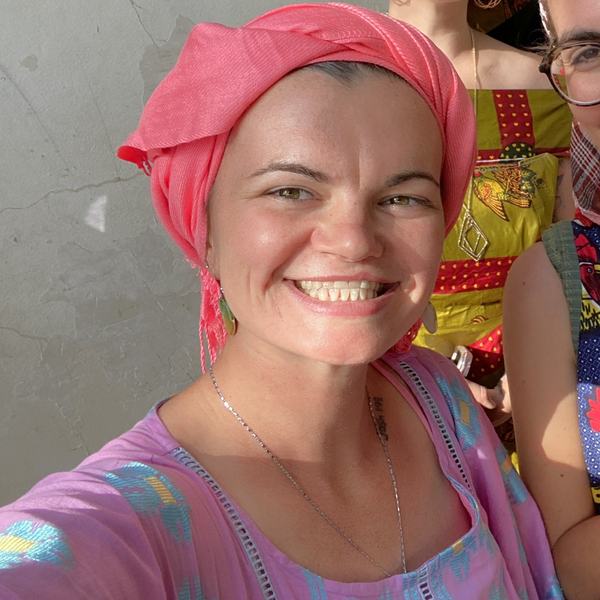
My first week at site, I was feeling very nervous and shy because I didn’t know much of the language. I spent the first few days hanging out inside the family’s compound reading my book because I was overwhelmed by not being able to understand what anyone was saying to me. My host mom invited me to go to a wedding with her in town. On the walk over, I decided to practice my Seereer on her to build a little confidence before arriving at the event. As we walked over there, my host mom spoke slowly and used words I already knew to help me understand, which no one else had done. She was so patient person with me in the beginning and helped explain things plainly to me, which I was very grateful for.
2. What projects are you working on?
As a Health Volunteer with a strong interest in the environment, I have split my time between working at the health post and the school. At the health post, I assist with weekly childhood vaccinations and baby growth monitoring. I also help with bookkeeping: taking inventory of vaccination days and digitizing monthly health post reporting for the Ministry of Health.
A big part of my service has been mural painting. I have done three educational murals at my health post about nutrition, vaccinations, and growth monitoring. I also assisted with three murals at other Volunteer sites in my region, one at a high school library which was re-opening.
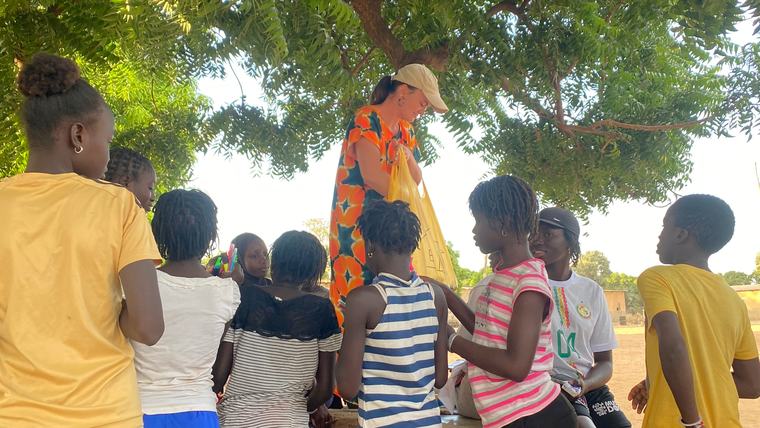
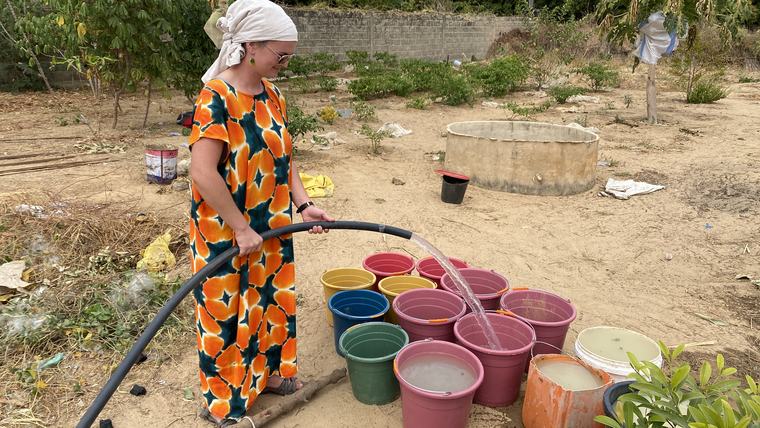
At the middle/high school in my village, I run a health and environment club. We had a unit on handwashing, tree planting, and most recently eco-bricks: plastic trash packed densely into plastic water bottles that we can be used as bricks to build things. My recent grant project funded a solar-powered well pump and irrigation system to water the trees we planted, as well as materials to build a bench using eco-bricks.
3. What’s a typical day like for you?
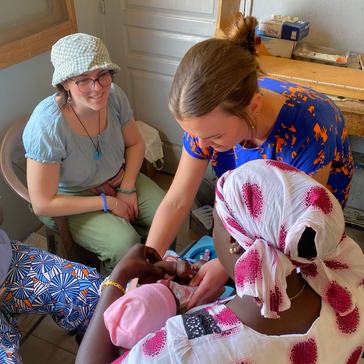
No two days are the same, but I typically spend the morning working either at the school or the health post. I go to the health post every Tuesday to assist with vaccinations. Other days, I help a little bit in the pharmacy or I bring my laptop to work on grant planning. At the school, I’ve been checking on what is needed to implement my grant, such as labor for the well renovations and irrigation system installation. I usually go home and take a little nap before lunch with my host family. In the afternoons, I spend time in my room either working on my laptop or doing hobbies during the hottest part of the day. Once the heat breaks in the evening, I might have work to do at the school, such as meeting with the school club to work on our eco-bricks project. Or I might take a walk out in the bush. Once it starts to get dark, I take my bucket shower and sit outside reading my book or chatting with my host family. We eat dinner around 9 p.m. and then I get ready for bed shortly after.
4. What is a highlight of your time in service so far?
A highlight has been working on my grant project. At the beginning of service I never thought that I would be capable of carrying out a full grant project in the local language. I thought I would need a work partner who spoke English to translate things for me or have my Peace Corps supervisor help me with everything. I’m really proud that I am doing the whole grant project in Seereer with minimal translation support: shopping for materials with my counterpart, calling plumbers and technicians to schedule labor, asking questions to make sure I am clear on what we are doing. My counterpart has always been easier to talk to because he slows down while talking so I can understand, and that has been essential. I am also running the school club meetings for the eco-bricks part of the grant and managing large groups of kids. The kids have been phenomenal in their work ethic and interest in the project, and that has been really inspiring and fulfilling. Even on days when I really didn’t feel like going to school, the kids showed up to help me and turned my day around for the good. The excitement and support from the school administration and all the help and participation from the students has been really rewarding.
5. What are some of the most important things you’ve learned from your community?
One thing I love about Senegal is the zero-waste culture. I give my host mom plastic bags to re-use for freezing food and empty drink bottles for her juice business. I collect plastic water bottles from Volunteer hangouts and give them to shop owners for re-use selling liquids. I tossed a worn-out hairbrush and found my host mom using it to scrub laundry. They aren’t shy about leftovers, either. If I cook too much pasta, I give the last bit to my host sibling instead of throwing it away. If I can’t finish my sandwich, I give it to the guy sitting on the bench next to me. If I don’t want the rest of my coffee, I offer it to my taxi driver. People don’t own a lot of unnecessary things, and they don’t throw anything away that could serve another purpose. In the U.S., we throw too many things out because they aren’t new and beautiful anymore, and we don’t offer things to other people because that be perceived as strange.
6. How do you spend time when not working on a project?
I have a lot of hobbies. I brought a ukulele and a foldable electric keyboard, so some afternoons I break one of those out and practice for a while. I also like drawing; my favorite drawing is a portrait of my favorite baby at the health post, which I gifted to his mom. I like to go on walks out in the bush or do a weight workout in my room. I also spend a lot of planning trips for after service. And lots of reading.
7. Tell us about the strongest relationship you’ve developed while in country.
One of the strongest relationships I’ve developed in country is with my host brother. He was 13 when I moved into the household, and now he is 15. I only had one older sister growing up, so it has been really fun to experience being an older sister to a brother. When I first got to site, my host brother was shy, but he soon realized we had similar senses of humor. We spend time playing card games, kicking a soccer ball around, watching movies, and saying silly things that crack us both up. We watched “Ratatouille” in French and now call each other “petit chef” (little chef). He’s just like an American teenage boy in every way until he starts speaking Seereer instead of English. I sometimes help him with his English typing skills on my computer, and he even gave my ukulele a try. He might be my hardest goodbye because I know we will miss each other a lot.
8. What are you looking forward to in your remaining time as a Volunteer?
My time is coming to an end with just 2.5 months left. The latest cohort arrived a few months ago and I have gotten to play a part in their training and get to know them. The beginning of service was very challenging for me, and I hope to impart some wisdom and emotional support to the new cohort before I leave. I plan to have a closing ceremony of sorts for the school club and celebrate the hard work the students did, as well as share some motivational thoughts with them. There are also a couple religious holidays coming up that are a big deal around here, so that’ll be a nice way to spend time with my community before leaving.
9. What will you do differently when you return to the U.S.?
I now have a new confidence that I truly am capable of more than I thought. I overcame mental and emotional challenges that seemed insurmountable, and that is something written into my sense of self now. I feel more sure of myself and won’t allow my self-worth to be questioned by others. I feel a lot more capable of doing hard or intimidating things, even if I don’t feel completely prepared. I think I will be less fazed by challenges I encounter in the U.S. because I know that everything will somehow work out. In Senegal, even if things don’t go entirely according to plan, I have always been able to adapt and find a way to make things happen. My new confidence and adaptability, plus all of the people skills I’ve gained, will be valuable to my life after Peace Corps.
Learn more about serving as a Peace Corps Volunteer in Senegal.



