 An official website of the United States government




Featured Volunteer Profile
Lauren P.
“My work is extremely rewarding. I get to work with an incredibly dedicated team and be involved in real, current conversations with teachers across the region. I believe I have the best job in the world.”
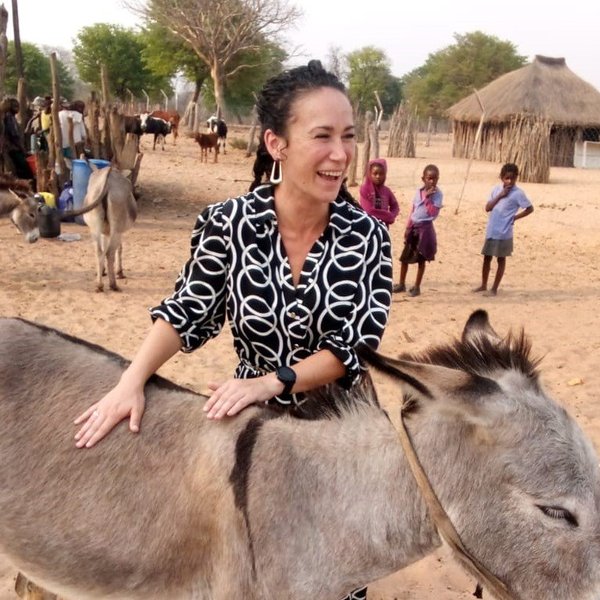
1. What got you interested in the Peace Corps, specifically the Response program?
Like a lot of Peace Corps Volunteers, I was introduced to the program through my family and grew up listening to stories from abroad and the influence that other cultures had on my family. Because I idolized them, I also idolized the Peace Corps. However, time was never on my side. When I graduated from college, instead of applying to the Peace Corps, I took a job and was immediately swept away with it.
Years went by, but my goal of serving in Peace Corps never went away. Through a series of unfortunate events that turned out to be lucky as far as my Peace Corps plans, I finally had a window of opportunity to be a part of the program. At that point in my career, I wanted to move into a position that allowed for higher impact than a standard Volunteer. I was very pleased to see that Namibia’s Response program did not require prior Peace Corps experience to apply. Naturally, I applied!
2. What projects are you working on with your community?
I work as a senior education officer (SEO) at the Directorate of Education, Arts and Culture in the Professional Development, which oversees English education for grades 4-12 in the Kavango West Region of Namibia. This means that I monitor, guide, and provide support in any way that will benefit the Namibian child. My team aims to visit 60 schools within the school year, host workshops focused on specific teacher needs, as well as set and moderate regional examination papers. On top of this, I evaluate and create teaching materials whenever I have a moment of free time. My work is extremely rewarding. I get to work with an incredibly dedicated team and be involved in real, current conversations with teachers across the region. I believe I have the best job in the world.
3. How have you leveraged your previous professional experience and skills in your service?
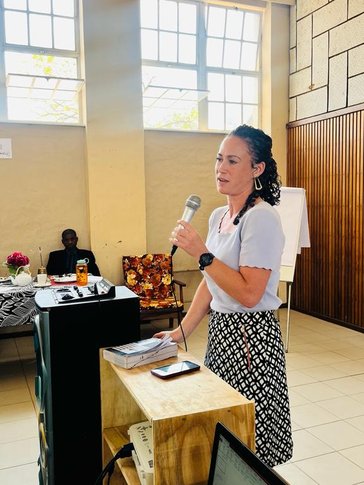
Prior to service in Namibia, I had taught for 10 years and completed several degrees. Life as an SEO requires a very intimate knowledge of pedagogy and best teaching practices. On top of having a deep understanding of education as a whole, I also prepared for the position by reading every government document I could get my hands on about Namibia’s educational system, challenges, and preferred pedagogical ideology prior to leaving. This way I became deeply familiar with the educational history of the country and what the nation was expecting to achieve in the near future. My team expected that I would hit the ground running, and I don’t believe I would be able to keep up with the pace if I didn’t have this foundational background.
4. What is a highlight of your time in service so far?
I don’t even know where to start. When I started, I didn’t have tangible expectations, but I did expect to have the time of my life—and that has become a reality.
A lot of the highlights involve trying new food. After a school visit a few weeks ago, I found myself in a dress and heels roaming through a wild field looking for fruits that I had never heard of prior to that morning. They were yummy! They tasted like a mix of coconut and mango.
Becoming a part of the culture has also been a major highlight for me. Wearing a traditional dress, heading to the open market, and speaking the local language gives me such a real feeling of belonging and community, which is something that I think every Peace Corps Volunteer is after.
4. What strategies have you used to meet the challenges of a Response Volunteer experience?
The biggest challenge I have faced is realizing how short one year really is. Can you really create sustainability in one year? Will all your work be thrown away the second you leave? If you’re thinking of joining Response, it’s because you want to make a lasting impact on the community and work towards sustainability. While Peace Corps Volunteers have two years of service, Response has one (or less). To address this challenge, I’ve been working very hard. Can I keep this pace up? Probably not for more than a year, but then again, I only have a year!
5. How will the skills you are developing help you in the future?
I used to really struggle with procrastination, and I’ve been finding as the months go by that I’ve gotten much better at eliminating this from my life. I it’s because my to-do list is packed so tightly that I simply don’t have one second to push an item off until tomorrow. Every task needs to be done at that very moment, otherwise I worry that the entire region will suffer.
Want to learn more about Peace Corps Response or serving in Namibia? Connect with a recruiter today.



