 An official website of the United States government


Featured Volunteer Profile
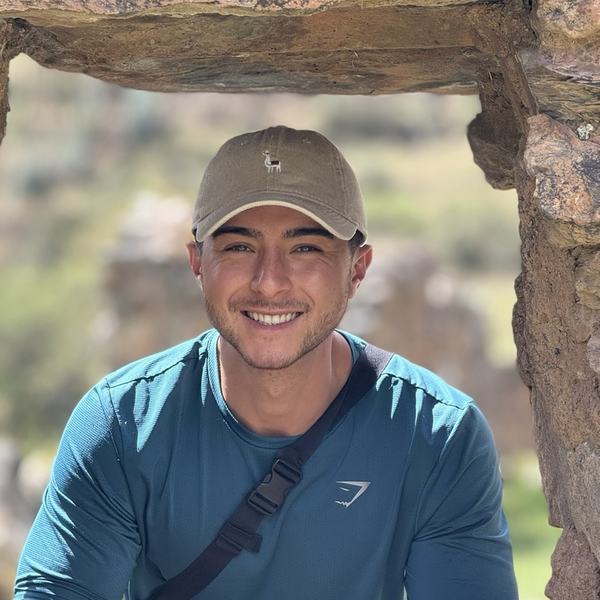
Kenzo M.
“Here, I have learned that there is great meaning in presence itself. Sitting with mothers over a cup of lemongrass tea, sharing gossip in a language I never imagined I would speak, has become one of the most profound rewards of my time in service.”
1. What inspired you to apply for this Peace Corps position?
I’ve always believed that growth happens when personal development and service come together in a shared purpose. We rise by supporting others, for in every act, we become both student and teacher. That belief is what drew me to the Peace Corps and made it feel like the right place to put that principle into practice.
I first learned about the Peace Corps through a friend who served in Zambia. At the time, I knew very little about the organization (I even pronounced the “p” in “Corps,”), but I was shocked by her willingness to leave behind the familiar, travel halfway across the world, and commit herself to a new community.
Since then, I was certain that I wanted to follow a similar path. I hope to contribute where I am needed, immerse myself in the daily life of the community I serve, and learn from the people around me. For me, service is not only about helping others, but also about listening, adapting, and growing alongside them.
2. Tell us about a moment that sticks with you from the first week at your site.
The first weeks at my site were at once the most exhilarating and the most uneventful.
I turned to my journal often, filling its pages with everything swirling through my mind, at times overwhelmed by the newness of it all, the unfamiliar sounds and faces, of a place that was not yet home. One afternoon, the most purposeful thing I did was buy a bucket and go fishing. On others, I simply sat in the plaza, hoping that curiosity might draw a neighbor to sit beside me and share a word or two. More than anything, I reminded myself that those first weeks were not about doing, they were about becoming a sponge, absorbing everything I could before saying a single thing.
3. What projects are you working on?
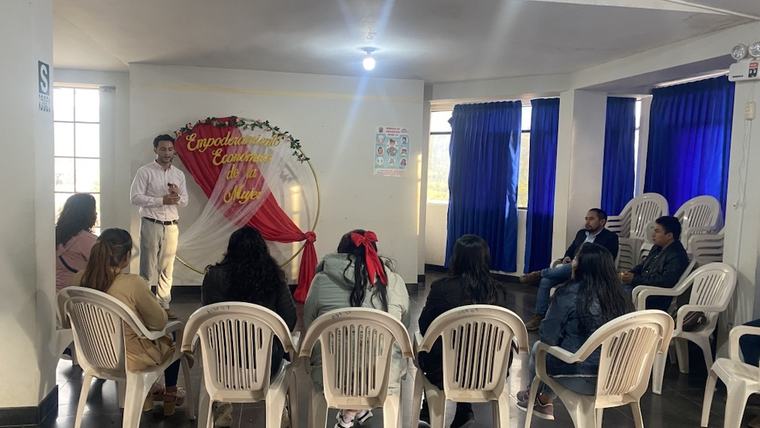
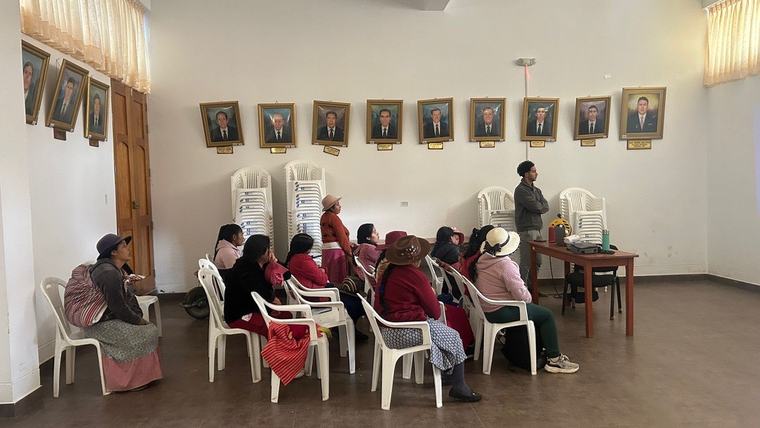
My main role as a Community Economic Development Facilitator is to help strengthen the economic capacity of my community by working alongside local stakeholders. In this role, I facilitate women’s savings groups, teach financial literacy, support small business development, and design workshops focused on economic empowerment for women and youth.
Since Peru’s school year is currently on break, I have also been helping lead vacation classes in the community. From January through March, before the academic year officially begins, we offer programs for students of all ages, including an English course, a financial education course, and a girls’ soccer team.
The girls’ soccer team has become one of my favorite projects. As a former player and lifelong admirer of the sport, I feel especially grateful to stay connected to it while creating opportunities for others. When I first proposed starting a girls’ team with the local municipality, there was some resistance rooted in rural gender stereotypes. After several weeks of conversation and advocacy, we were finally approved to begin with a small group that now meets weekly for practice.
Experiences like this remind me that the most meaningful service often lives at the intersection of personal passion and community impact.
4. What strategies have you used to integrate into your community?
When I first arrived two years ago, I made it a point to accept nearly every invitation that came my way.
That openness brought me to baby showers, baptisms, weddings, wildfire response efforts, and countless shared meals featuring dishes I couldn’t always identify. Saying “yes” helped me become visible in the community, but more importantly, it allowed me to experience its traditions, generosity, and the community firsthand.
Over time my approach to integration has evolved; navigating life in a completely new community, in a country and continent I had never known before, I often faced moments of internal turmoil. At times I felt frustrated and questioned why certain things were done the way they were in this place I was beginning to call home.
I eventually came to understand that many of those frustrations stemmed from the lens I had brought with me from the United States. I had been interpreting this new environment through a worldview shaped elsewhere, measuring it against assumptions and expectations that didn’t necessarily belong here. In many ways, my own preconceptions kept me from fully seeing the community on its own terms.
Now, when I encounter something unfamiliar or challenging, I try to pause before judging; I pay attention not only to what is happening, but also to how and why it unfolds within the pace and context of my new community. That shift, from comparison to curiosity, has been one of the most important strategies in helping me integrate more meaningfully.
5. What’s a typical day like for you?
My alarm goes off when the roosters do.
A typical day doesn’t really exist, which is either the best or worst part of this job. Some mornings, I’m at the market talking with a woman who wants to turn her tamale side hustle into a long-term business, helping her sketch out a simple cost-benefit breakdown. Some afternoons, I’m sitting in a circle with primary school students, counting coins, recording contributions, and watching our savings club take shape. Some evenings, I coach a girls’ soccer team that seems to have nothing to do with community economic development, and yet somehow has everything to do with it.
In between, there are classes to teach, workshops to plan, and plenty of WhatsApp messages to answer. There are days when nothing goes as expected, and others when something small but meaningful falls into place. I drink a lot of tea, eat a lot of rice and potatoes, go to bed early, and wake up to do it all again.
6. What is a highlight of your time in service so far?
Service can be a rollercoaster. I have never found those words to be truer or more understated.
The highlights of my service have come from both the extraordinary and the everyday. Some of the moments I treasure most are the tranquil, ordinary ones, such as sitting on a curb with a neighbor, talking and simply existing together with no agenda beyond the conversation itself.
Coming from the relentless pace of city life, I used to resist moments that seemed to lack purpose. I often felt the need to make every second productive, to turn each moment into something bigger or more meaningful than it already was. But here, I have learned that there is great meaning in presence itself. Sitting with mothers over a cup of lemongrass tea, sharing gossip in a language I never imagined I would speak, has become one of the most profound rewards of my time in service.
More than anything, learning to value connection for what it is has been my greatest highlight.
7. What have you enjoyed most about the community where you are serving?
Two years ago, I stepped off a grueling 26-hour bus ride into Peru’s Amazonas region, a northern part of the country that defies what its name might suggest. It is still an eight-hour drive and a two-day boat journey from the Amazon basin that people often romanticize. Peru is a country of striking contrasts, stretching from bone-dry coastal deserts to towering mountain peaks. Here in Amazonas, mornings arrive wrapped in cloud forest mist, with jagged ridgelines cutting across an open sky. I have never lived so closely surrounded by nature.
Somewhere between the first week and the hundredth, this place stopped feeling unfamiliar. Now each morning follows its own pace: farmer boots slapping against the cobblestones at dawn, a wave from the doorway of someone who no longer needs to ask my name, the señora at the market sliding a chirimoya across the counter before I've opened my mouth. These small, unremarkable moments are what a daily routine looks like when it is built in a place that was not yours to begin with, and then, gradually, is.
8. What are some of the most important things you’ve learned from your community?
One of the most important things I have learned from my community is the meaning of community itself; in a beautiful, loving, strange, and interconnected way, it breathes as one.
Growing up in cities, I learned early to protect my time, my space, and my energy. Community often felt like something you chose to participate in, but here, it’s something you’re born into and held by, whether you choose it or not. That shift, from community as an option to community as a given, undid something I had spent years building.
On the anniversary of my Japanese grandfather’s passing, I spent the entire day searching for flowers and came up empty. My neighbors noticed that something was wrong and asked; I told them I’d been looking all day, that it mattered, and that on that day of all days, I needed them.
A few hours later, I found a fresh bouquet outside my door; I had no idea where it had come from. The next morning, my neighbor greeted me with the usual buenos días and asked, almost as an afterthought, what the flowers had been for. Later, I learned that they had hiked up the mountain to their family farm just to cut them for me.
They never asked why; they simply saw that I needed something and went.
That kind of unconditional generosity opened me in ways I hadn’t expected, and it reminded me that the kindness that exists in this community, in this country, and across the world, is greater than we often stop to notice — I feel incredibly fortunate to have witnessed it so closely.
9. How do you spend time when not working on a project?
In my free time, I run and read—two anchors I have carried with me from California. I arrived expecting stillness and quiet, and I found it, but rural life is remarkably good at filling itself in.
Some days, I help downstairs at the restaurant my host family runs, carrying dishes or keeping my host mother company while she cooks. In the process, I have slowly started learning to make dishes like lomo saltado and ají de gallina, which have become one of my favorite parts of the day.
On weekends, I like to go on trips in the area with a fellow Volunteer, visiting waterfalls hidden in the cloud forest, stumbling across ancient ruins, and adding even more places to a list I know I unfortunately won’t finish before my time here ends.
10. Tell us about the strongest relationship you’ve developed while in country
It has to be my host mother, who is the matriarch not only of the family, but in many ways of the entire community.
When I first arrived, she took care of me in the most natural and generous ways. She cooked for me without asking whether I was hungry, corrected my Spanish without ever making me feel small, and laughed with me through the many cultural misunderstandings I stumbled into, which in those first weeks felt like nearly every day.
Over time, our relationship grew into one of the most meaningful connections I have built here. We support each other in small daily ways and larger ones. She has helped me better understand the community, offered me guidance when I felt overwhelmed, and made me feel at home in a place that was once completely unfamiliar.
We spend time together in the kitchen, talking while she prepares meals, and I help however I can. Through those everyday moments, I have not only learned more Spanish, but also stories, humor, and ways of caring for others that I know I will carry with me long after I leave.
11. What are you looking forward to in your remaining time as a Volunteer?
As my service draws to a close, I find myself wanting to slow down and simply be here, fully and unhurriedly. The schedule and commitments I have taken on have kept me busy and pulled me in many directions, and somewhere along the way, the art of just being present in my community took a backseat.
In these final months, I want to reclaim that. I want to sit with neighbors without an agenda, visit fellow Volunteers scattered across the region, and soak in as much of my community as I can. More than anything, I want to be present enough to appreciate these last months, as time I am still lucky enough to have here.
12. Tell us your favorite phrase in the local language.
“Así es la vida,” which means, “That’s the way life goes.”
Of all the words and phrases I have picked up over two years in Peru, this is the one that has stayed with me the most.
I have used it in more situations than I can count. I drop and shatter a mug in the kitchen — así es la vida. I leave for a morning run under clear skies and come back thirty minutes later completely soaked by Amazonian rain, only to spend the next three days sneezing — así es la vida. I spend weeks planning a community workshop, only for three people to show up — así es la vida. And yet, those three people turn out to be exactly the right three people, and something meaningful happens anyway.
To me, así es la vida is the art of loosening your grip on how you imagined something would go and finding peace in how it actually unfolded. Two years in Peru have taught me that this may be one of the most transferable skills there is, more useful than any technical training and more portable than any language. Life, in every country and every language, has a way of going exactly as it pleases, and the wisest thing you can do sometimes is nod, smile, and let it be, así es la vida.
13. What will you do differently when you return to the U.S.?
When I return to the United States, I will move through life more slowly. The U.S., like much of the world, moves fast, and I say that as someone who once loved that kind of city energy. But two years in the Peruvian Andes have recalibrated something within.
Here, a meeting that starts 40 minutes late is simply part of the way things are. I used to find that maddening. Now, I think it might be a healthier relationship with time. When I return, I want to practice flexibility beyond a coping mechanism, but as a philosophy. I want to hold plans more loosely, treat detours as opportunities, and resist the urge to measure the value of a day by how much I managed to cross off a list.
Beyond flexibility, I know I will listen differently. Living in a community where I was, for the first time in my life, the one who did not fully understand the language, the customs, or the unspoken rules, taught me that the most important thing in any room is often not being said out loud. I will be more comfortable sitting in silence, and I will ask more questions before offering answers; I will remember that competence and certainty are not the same thing.
And perhaps most simply, I will call my family more. One of the lessons of living far from home is relearning, slowly and repeatedly, just how much home means.
14. What would you say to someone thinking about joining the Peace Corps?
Do it. Send it. And don’t wait until you feel ready, because that day may never come.
There is a version of you waiting on the other side of this experience that you cannot yet imagine, and that is exactly the point. The Peace Corps will not ask whether you are comfortable. It will not check whether the timing is convenient, whether your Spanish is good enough, or whether you packed all the right things. It will simply place you somewhere unfamiliar and ask you to show up anyway. And somehow, impossibly, you will.
I boarded my flight to Peru just six months after ACL surgery, with a knee that was still adjusting, a walk that was still slightly off, and more than a little uncertainty about whether my body, let alone my mind, was ready for what lay ahead. It was not the ideal condition in which to uproot my life. But I went anyway, and that decision changed everything.
The universe has a strange way of rewarding people who are willing to step beyond what is familiar and comfortable. Peace Corps service will ask a great deal of you, but it will also give a great deal back. In the end, you may find that you gain even more than you give.
Learn more about serving as a Peace Corps Volunteer in Peru.



