 An official website of the United States government


Featured Volunteer Profile
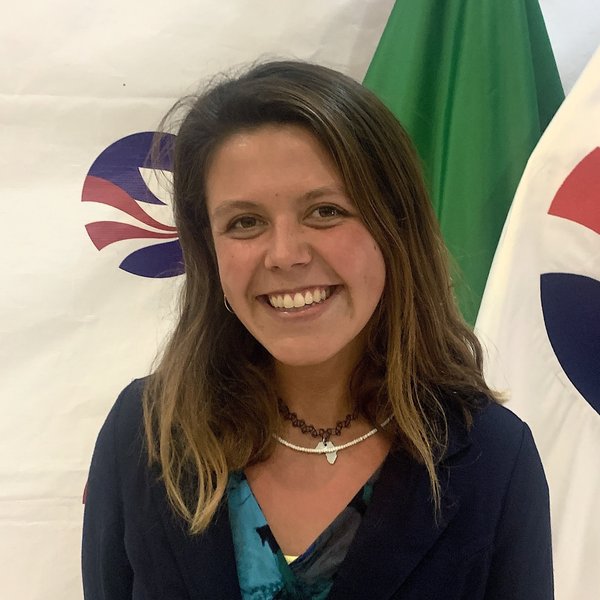
Katia G.
“Mexico may be the country with the most parties on earth, so showing up to local events, holidays, and parties has been the most valuable tool for integration in my service.”
1. What got you interested in the Peace Corps?
I'm the proud daughter of a teacher and am serving thanks to wonderful educators who inspired me to live a life of service, especially several teachers who served in the Peace Corps. Since I learned of the Peace Corps in middle school, I had my eyes on the website and did research to compare the organization to other international service opportunities. I stayed true to my vision and instead of applying to domestic jobs, applied solely to the Peace Corps upon graduating college. It took an extra year and half to get through the application due to the pandemic, but I took the leap of faith to come here, and my life is forever changed because of it. After investing so many years and so much energy to graduate from a tough undergraduate program, I felt it was time to give back and focus a few years of my life in service. I was willing to serve in any Spanish-speaking country, but Peace Corps Mexico's Environment program was the best fit.
2. What projects are you working on?
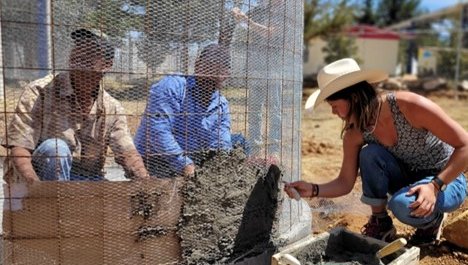
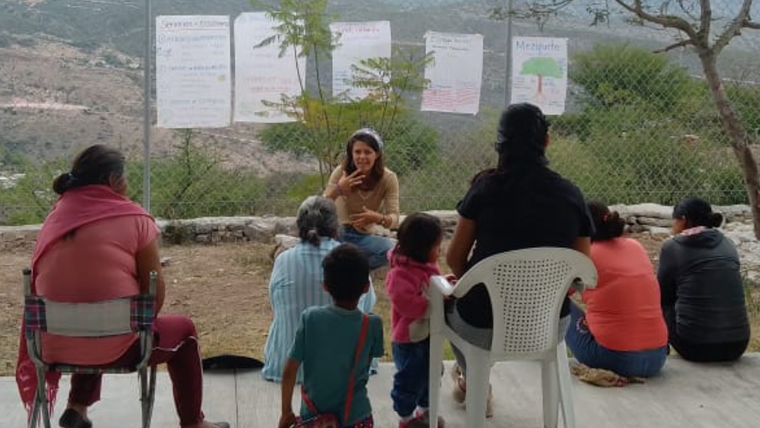
Day to day, I work closely with the local schools, municipality, and environmental conservation groups to bring fun environmental workshops and a culture of sustainability to my rural town in central Mexico. I am working on a grant project as part of a World Wildlife Fund initiative that addresses biodiversity and water conservation. Alongside my counterparts, I’m training community members to build two rainwater storage capture systems that will provide water for protected native plant species, particularly during the long drought months. Additionally, community members will help rehabilitate a greenhouse to further support an endangered plant species. We are also building two concrete biofilters that will recycle the greywater from sinks at two local high schools. Finally, we are hosting an environmental art contest that will enable four lucky winners to paint a mural in the town center as a permanent testament to how this community is learning to be resilient and sustainable in the face of environmental change. This project will be carried out in the coming months, and I am excited to see what else I can fit in before my service ends.
3. What strategies have you used to integrate into your community?
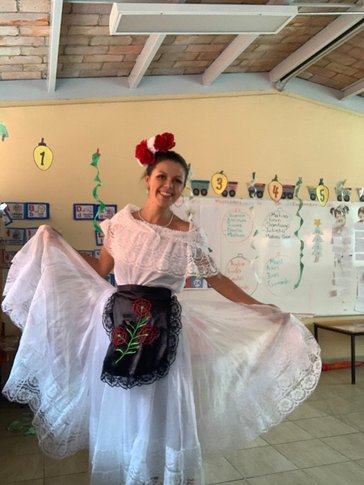
cannot understate the value of music, which has brought me together with my community through dance classes and local folkloric dances known as huapango. Coming from a Mexican-American family, I have danced ballet folklorico (regional Mexican dance) my whole life, so joining a dance group in Mexico to continue this lifelong hobby has brought me full circle. Mexico may be the country with the most parties on earth, so showing up to local events, holidays, and parties has been the most valuable tool for integration in my service. I started as a member of the folklorico dance group in the local community center, then became an English teacher there, and now I am using my connections there to help run an environmental art contest! Every hola and buenos días has come back to serve me and help gain trust in my sweet community.
4. What is a highlight of your time in service so far?
For Earth Day in 2023, I collaborated with the town government, local environmental leaders, and fellow Volunteers to host an eco-fair with the participation of 150 members of the public in our town square. Young children, teens, parents and older adults came and engaged with different tables that had environmental games, information about local environmental initiatives, and the opportunity to take home an endemic tree species with the commitment to care for it. The icing on the cake was a local huapango group playing music throughout the Sunday event, which brought in even more people and made for a very fun, educational, and sustainable day! This event highlighted exactly what my service in Peace Corps Mexico is about—using my strengths, identifying a local need, and bringing together diverse audiences to celebrate environmental action and conservation.
5. What have you enjoyed most about the community where you are serving?
I love witnessing the local religious-indigenous traditions, which the town has been celebrating for hundreds of years with great pride. I feel so fortunate to experience this culture that has withstood the conquest of the Spanish; many folks still speak the indigenous native language, dress in artisanal handmade clothing and shoes, perform rituals for the sowing season, and honor their many saints throughout the year. Unlike much of Mexico, my community is not on the tourist map (although it has plenty to brag about!), so it has been so lovely to just enjoy Mexico beyond the beaches, resorts, and stereotypes.
6. What are some of the most important things you’ve learned from your community?
I've learned how environmental work can be prioritized amidst so many other needs—like family, health, work, and recreation. It can be difficult to motivate community members to show up for a workday or to invest time or money in something as abstract as “environmental change," but my counterparts have shown me how they can incorporate this work in people's everyday lives. It has been a process of learning how we can make people feel accountable, educated, and empowered to respond to environmental change. For example, the largest party of the year happens over several months in my town, and the same people that lead the party are required by local leaders to conserve the very plant used in their parties (it’s an endangered species that is overharvested; it has been interesting to work at the intersection of culture, identity, and environmental conservation).
Further, I've observed how "eco-tecnicas" (sustainable home installations), are just as much about the environmental as they are about health and well-being in most rural homes. With new rainwater capture systems and greywater biofilters, people not only obtain more water to last through the dry months, but they also prepare their households to be resilient to environmental change. I come from California, a place infused with a culture of sustainability, and have been really humbled to see how the environment is discussed and acted on in a rural town in Mexico, where residents and farmers have no choice but to protect the diminishing natural resources around them.
7. How do you spend time when you are not working on a project?
I love seeing so many sides of Mexico, the fifth most biodiverse country and my favorite country on earth! While I learn about my Peace Corps site through work and daily life, I use my free time to learn about the nature and culture of different Mexican towns and states, which makes me fall in love with this country more every day.
In my free time, I read and learn about the incredible history of the Mesoamerican people and then travel a few days a month to see what remains of these fascinating civilizations. I have been racking up as many "pueblos magicos" and archaeological sites as I can see, mere hours from my doorstep! Mexico has so much sunshine and fantastic weather and most days are perfect for being outside and exploring.
8. What are you looking forward to in your remaining time as a Volunteer?
It's my first time managing a big grant project and every day really keeps me on my toes and teaches me so much. The intensity of the project requires me to network with the hardworking people in my community, who lend me a hand or help make the work easier down the road. I am excited to learn alongside my community and help them become more resilient so that they can continue to harvest their crops, thrive in their semi-desert region, and practice their traditions. I also am going to enjoy every huapango dance I can until I leave!I
9. Once you finish your service, what will you do differently when you return to the U.S.?
Peace Corps has opened so many doors for me! I am swimming in possibilities and very open to working in the field in national parks and outdoor recreation, going back to school to get my teaching credential, or continuing my time abroad either with the Peace Corps or another international organization. Peace Corps has really made me a global citizen and I think I am just beginning a career of grassroots community organizing, hopefully in places that need my help the most! I am so happy I took the risk to do Peace Corps as my first post-college work experience, as it has set me down a path that will challenge and inspire me and expose me to wonderful co-Volunteers and coworkers that I hope to have in my life for a long, long time.



