 An official website of the United States government


Featured Volunteer Profile
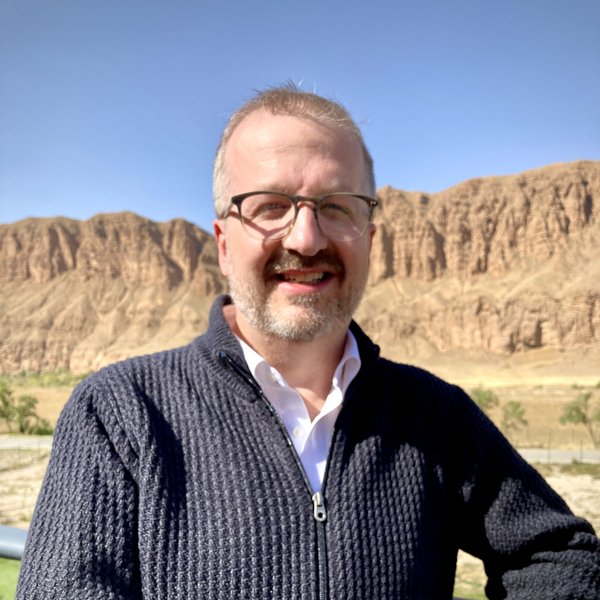
David E.
“I greatly enjoy the diversity in my community and seeing people respect and befriend each other. In addition to Kyrgyz people, there are people with Turkish, Russian, Dungan, Kazakh, Uyghur, Lezgin, Azerbaijani, and Korean ancestry who live in my village.”
1. What got you interested in the Peace Corps?
For many years, the Peace Corps intrigued me. I always wanted to be involved in something humanitarian in nature, and I remember the commercials from years ago with the slogan, "The toughest job you'll ever love." While I was working as an English language teacher in Prague, I decided to see if there were Peace Corps opportunities that matched my skillset. I was pleased to see that English teaching was a common volunteer position. So, I took the plunge and applied.
2. What projects are you working on?
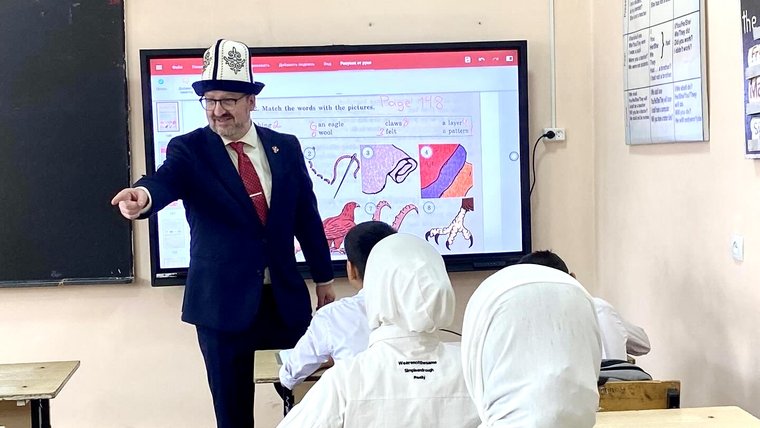
My community recognized the need to modernize their classrooms with technology to better engage students and incorporate modern lessons. I collaborated with the school director and a local English teacher to procure two interactive smartboards for two classrooms. Our project planning included training all teachers and many students on smartboard usage. To accomplish this, I had to raise a substantial amount of money from friends, family, and members of the American public. The project was a resounding success. The smartboards are in constant use, and both teachers and students find them to be of great value.
3. What strategies have you used to integrate into your community?
In pre-service training we learn a lot about cultural competency—the ability to observe, learn, respond effectively and sensitively to new situations. This has been valuable for cultural integration. I also took the opportunity to attend and be involved in local celebrations and holidays. People like it when you respect their customs and traditions. I think what helped my integration most of all was building rapport with students. From the start I took time every day and walked the halls of my schools to interact with my students, and visited them in their classrooms between classes.
4. What is a highlight of your time in service so far?
I hold a FLEX prep club for three hours a day, five days a week during the summer for students who intend to apply to the U.S. FLEX exchange program. I have seen incredible gains in the English language skills of these highly motivated students. I've also become very close to them and will certainly keep in touch after my service to offer encouragement throughout their application and selection process. I'm incredibly proud of them.
4. What have you enjoyed most about the community where you are serving?
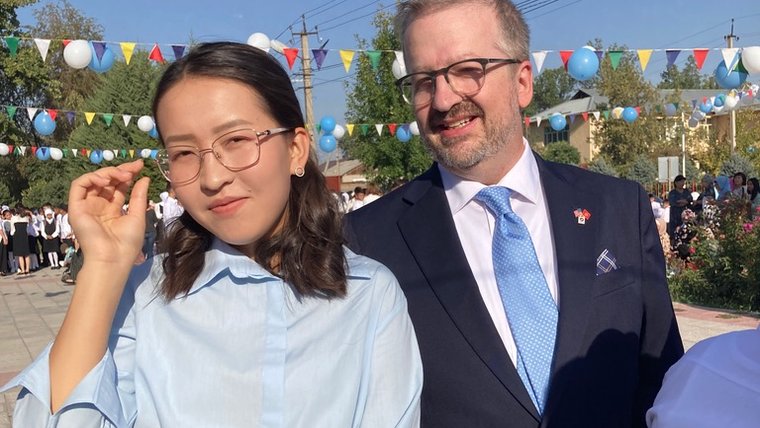
I greatly enjoy the diversity in my community and seeing people respect and befriend each other. In addition to Kyrgyz people, there are people with Turkish, Russian, Dungan, Kazakh, Uyghur, Lezgin, Azerbaijani, and Korean ancestry who live in my village. Additionally, because of my school's proximity to the capital, Bishkek, families from all over Kyrgyzstan moved to my village. My current host family is originally from Osh in southern Kyrgyzstan.
5. What are some of the most important things you’ve learned from your community?
In my community, and Kyrgyz culture in general, events, meetings, and gatherings don’t often happen at the scheduled time (school start/stop times being an exception). They typically happen later than scheduled, and events gradually come to fruition instead of starting all of a sudden. While this may not seem intuitive to some people, it has its benefits. It’s a much more relaxed way to live, and results in less pressure on the individual. It accounts for individual needs, and creates community harmony. I’d like to adopt this way of scheduling where possible back home in the U.S.
6. How do you spend time when you are not working on a project?
On weekends, I often meet up with other Peace Corps Volunteers. Peace Corps Volunteers share a unique understanding of the shared experiences of their service, and getting together to talk is therapeutic. I also am quite active on social media. I actively share my Peace Corps experience on social media, allowing my friends and family back home to gain insights into Kyrgyzstan and Kyrgyz people through my perspective as a Peace Corps Volunteer. I frequently post photos and videos showcasing my service, including videos of my interactions with community members, information about Kyrgyz holidays, culture, dress, and cuisine. My friends and family are fascinated by my experience. I also wrote an article for the local newspaper outlining my journey to becoming a Volunteer, my experience as a Volunteer, details about my secondary project, and how others could contribute to the project.
7. What are you looking forward to in your remaining time as a Volunteer?
I am close to ending my service in a few weeks, and I'm working steadily up to the very end. The FLEX prep club mentioned earlier ends just a few days before my service ends. I have also been invited to serve as a Peace Corps Response Volunteer in Moldova and will be working towards completing any required tasks for my upcoming service there. I will also be saying my goodbyes to people. While I'm not looking forward to saying goodbye to the people I have grown so close to, I'm already looking forward to seeing them again someday.
8. Once you finish your service, what will you do differently when you return to the U.S.?
I know that I'll be talking about my service to anyone who will listen. I'll also be leveraging my increased cultural competency I gained while serving in Moldova. Culture encompasses more than just the shared traditions and beliefs of people from another country. I may also encounter work culture, corporate culture, campus culture, regional culture, and will be re-integrating back into my own culture. Given my experience, I am now especially adept at navigating these scenarios.
Want to learn more about serving in the Kyrgyz Republic? Connect with a recruiter today.



