 An official website of the United States government




Featured Volunteer Profile
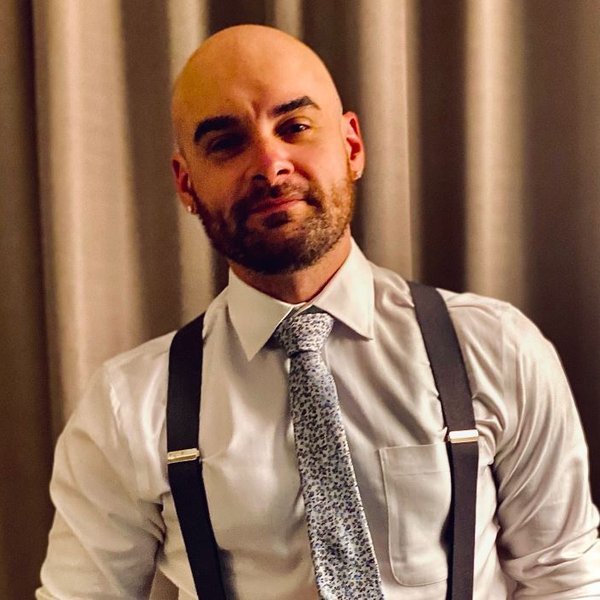
John A.
“The first two things I aimed to say in my site’s language were “Can you teach me something about this?” and “Help me understand this, please.” These break the professional barrier and create a catalyst for friendship.”
1. What got you interested in the Peace Corps?
When I served in the United States Navy between 2010 and 2015, I stood a lot of watch at sea. The water makes you think about your career a lot, especially when you are watching it for 8 hours at a time. After seeing much of the world, I decided I wanted to embark on a career that contributes to solutions around the world, especially among those who are displaced by conflict. In addition, my family is from Bangladesh, and I was the firstborn in the United States for my generation. Because of my background, my thought and curiosity about various countries in the world grows more and more every day with every dollar earned and every book studied.
I have always been very passionate about nutrition, mental health, and the migration of displaced people in the world and, when I put these things together, I decided to study cultural anthropology and Arabic with hopes of building a career along those lines.
I began a career in behavioral health working with people in need of acute crisis stabilization in inpatient behavioral health hospitals, then in transitional housing for houseless teenagers, and I became an instructor in suicide prevention. I worked at various nonprofits and volunteered in disaster relief and tutoring refugees on the side, but eventually decided it was time to aim for a higher impact. Peace Corps allows me to do that in more ways than one while allowing me to prove myself in the field of development as well.
2. What projects are you working on?
Primarily, I teach English to primary one through three using evidence-based techniques such as phonics.
I am also collaborating with my counterparts here at a primary school in northern Uganda to learn how the nutrition program works at the school. Out of 2000 students, about 200 are eating a day as a result of poverty. The idea taking shape is to begin a club of students to grow food here at the school as an effort to bridge an agricultural education with the student body’s nutrition and subsequent higher test scores!
This has many moving parts. We have to complete a survey of the land available for crops, count the number of students willing to participate in the club in addition to a needs assessment to reveal those with the highest vulnerability to then adjust the budget with the PTA to triangulate the best options for produce relative to nutrition and cost. Firstly, this includes engaging the community with a newsletter about student nutrition and the importance of eating during the school day, in which we will have students write about how they feel when they study on an empty stomach. As of writing this, I am about 62 days away from the next school year beginning and there is still plenty to do for this idea, all on top of lesson planning!
3. What strategies have you used to integrate into your community?
When I was working in behavioral health, I had many clients who had very big problems. Building rapport is the first step in conversing about needs and support with someone in need, and breaking through the tension of the extreme circumstances that they were experiencing to build that rapport is not easy. I have three tips.
First, you have to feel comfortable with being an empty glass with plenty to learn. When someone is in need and seeks support, a paradox occurs where those in a position to provide support are seen as superior through the obvious power dynamic. As someone holding the key to many possibilities, people tend to fear saying the wrong thing, especially when cultural relativity comes into play. So, what do we do? We ask questions. We present ourselves as ever curious and, in ways, kind of stupid! The first two things I aimed to say in my site’s language were “Can you teach me something about this?” and “Help me understand this, please.” These break the professional barrier and create a catalyst for friendship.
Second, it is important to allow ourselves to make mistakes and be silly. Let them laugh at you and, if it is in your skillset, make them. Especially in this situation, where language and cultural barriers hide the punch line of a joke, body language is such a huge part of this. Make funny faces, especially with the kids! Exaggerate with your hands a bit when you are confused. Make a longing noise when you express that you are a little tired today. It is more important to be yourself than it is to present as some sort of magical expat with superpowers in development. I am here to collaborate for solutions and the first step to collaboration is friendship.
Third, healthy communication is integral. I remind myself to set boundaries and to ask about someone else’s. I always make sure to speak clearly when using English and that my body language is inviting and inquisitive. Mirror someone’s excitement. Nod so that they see you actively listening. Be honest about your feelings and avoid passive aggression. Because of the language barrier, the one thing I can add to passionately studying their language is making sure that I am patiently using my own.
Though it is more obvious, learning the language also has to be taken seriously. I have to I remind myself that improving my ability to use the language is not only a necessity of the task I have been given but also a sign of respect in the community. There is no universally right way to do it—just do it.
4. What is the highlight of your time in service so far?
The highlight of my service so far has to be my host family. After all the traveling I have done in my career, I still never thought it was possible to connect so deeply with strangers. I am incredibly lucky and grateful to have met each one of these people. They will be in my life forever, and It is surreal to be able to type those words after only knowing them for a few months. The experience was seamless as if I had known them for decades. The first night was one of laughter and deep discussion about the world, politics, economy, and God. We taught each other to cook. We poked fun at one another. It was as if I had returned to a home.
5. What have you enjoyed most about the community where you are serving?
I love the school that I am serving in and the community it is settled in. The town is near Gulu City, the largest city in northern Uganda. It recently developed into a township and is quickly developing economically. Development is in the air as you meet people and walk through the market, and I love experiencing the excitement and energy through conversation. Everyone here exudes simultaneous humor and relaxation. It has never been easier for me to make friends.
6. What are some of the most important things you’ve learned from your community?
I am learning more about cultural relativity, difference, and reflexivity than I ever learned studying cultural anthropology back in Portland, Oregon, and that is saying something beyond the obvious. Northern Uganda is the ultimate place to learn these things firsthand because everyone is so kind and excited to meet you. Peace Corps rips the training wheels off, but Ugandans keep holding you up while you pedal.
7. How do you spend time when you are not working on a project?
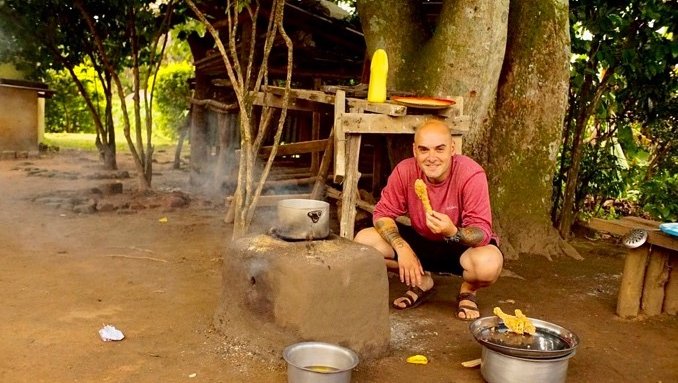
As mentioned before, I am half Bangladeshi, and Uganda has a large population from the sub-continent. All of my family's favorite spices and veggies are present, and I have been lucky enough to be placed in a site abundant with all my favorite foods. I have been cooking my butt off and experimenting with many different techniques in making curry, chapati, and more.
I also write a great deal, make music, read more than I ever have in my life, listen to news podcasts to keep up with the globe, and tend to my house plants and kitten. I am currently growing two bonsai trees, tomatoes, and chili peppers, and am germinating a handful of orange trees for my community to harvest from when I leave Uganda. I named my kitten after Juba Highway, where I found her. Juba is a good companion as it tends to get lonely out here.
8. What are you looking forward to in your remaining time as a Volunteer?
I am looking forward to showing everyone, including myself, what I am capable of. Time moves slower than my ambition and determination so, this early on, I am getting antsy. I concentrate my time on brainstorming and studying the language, and I love watching myself progress. My entire career before the Peace Corps has been one of changing lives, and I am itching to get back to that. Almost game time.
9. Once you finish your service, what will you do differently when you return to the U.S.?
I have been thinking about this question constantly, though I have not been here long. As an anthropologist by discipline and an American born to a Bangladeshi family, I tend to think about positionality, capital, and my world of abundance a lot as it is, but the thoughtfulness and self-awareness I will have after this experience will be exponentiated by the time I have to go home. I will certainly be more conscious of my food waste and consumption. I will certainly be more conscious of my water use.
Most importantly, I will be more conscious of the economic, political, and social miracle that the United States currently presents to the world. Frankly, as a military veteran, I have taken advantage of my particular right in the judgment and criticism of my country in the past, but I am realizing now how narrowly the planets have to align for a place like that to exist. To have well-regulated roads, clean waterways, an insurmountable food supply, and, obviously, a functioning democracy, everything has to fall into place and function as a whole. Without one functioning system, another cannot function, which affects the next, and the next, and so on. I am in awe of how much my fellow Americans and I take for granted as we enter such uncertain, shifting moments in our country’s history. We have plenty to apologize for historically and contemporarily, no doubt, but there is plenty to be grateful for at the end of my criticisms, and living in a foreign country has already taught me that.



