 An official website of the United States government




Featured Volunteer Profile
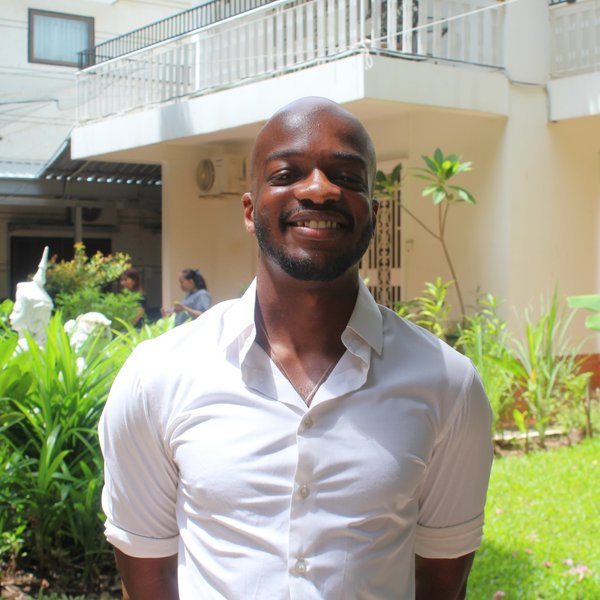
Jelan W.
“Rural Cambodians may have less in terms of material wealth, but they are abundant in community. People here are grateful for what they have and what they do, and are appreciative of the people in their lives.”
1. What got you interested in the Peace Corps?
I became interested in the Peace Corps at a career fair I attended during the pandemic. A recruiter who was also a Returned Peace Corps Volunteer from Madagascar held an online informational session and I was able to learn from him about his experience, which informed my decision to join the Peace Corps after graduating from college. The Peace Corps sounded like a good organization to be part of for several reasons. Its positive impact on the world through serving the needs of the communities it supports was a primary reason to join. Being able to experience a different culture, language, and way of life were also appealing reasons. Joining the Peace Corps presented a great opportunity for growth, while at the same time allowing me to see more of the world and expand my horizons.
2. What projects are you working on?
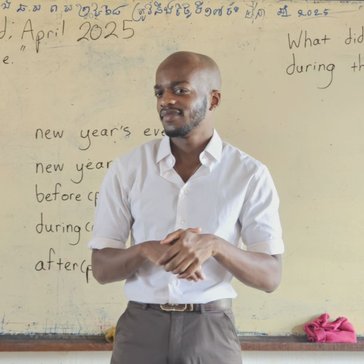
Working as a Volunteer in Cambodia involves teaching English and promoting educational development in my community. I work in a secondary school, teaching students in grades 7 through 11. My role aside from teaching is to support my co-teachers with lesson planning and building skills. I've attended seminars with my co-teachers that have enabled them to implement projects of their own beyond those I’ve specifically supported. I'm most grateful for having such a great intercultural exchange, where I share my experiences, be it in music, cuisine, movies or my family. In turn, I've also learned a lot and have gained much insight into Cambodian culture.
3. What strategies have you used to integrate into your community?
The best way I've found to connect with people is by being friendly and participating in community activities. Attending meetings with teachers at school (despite the heat and the fact that I don't understand half of what anyone says) gives me an opportunity to better connect. Spending time with community members helps me better grasp the Khmer language and become more familiar with people. It's an incremental process but it's often the small moments that build strong relationships over enough time. I’m always game whenever the village kids call me to play badminton with them. Primary school kids would come by my house every day, expectantly waiting with notebooks and pencils at the ready, so I started tutoring. Most recently we had a lesson about colors, and we drew rainbows. Frequenting the market and making small talk also familiarizes me with and connects me to community members. Attending weddings and ceremonies at the pagoda with my host parents lets me meet more people in the community as well. All you have to do is get out there and talk to people. At this point in my service I’m well integrated into my community.
4. What is a highlight of your time in service so far?
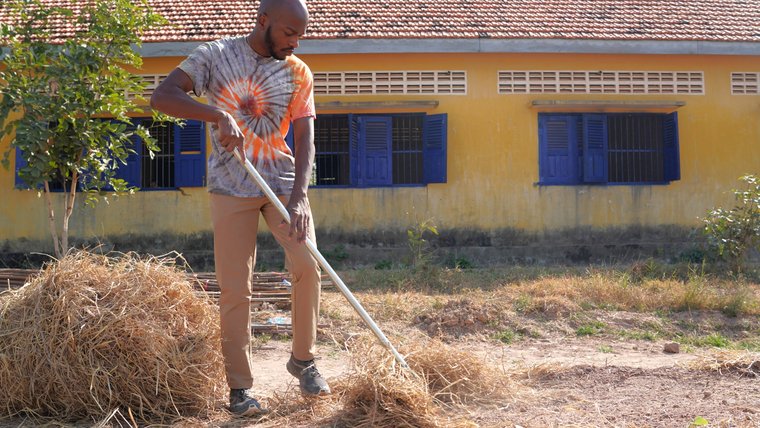
I was fortunate to be part of a gardening seminar where fellow Volunteers and counterparts came together to learn how to implement a garden project at our respective schools. It was nice to meet the counterparts of fellow Volunteers and see their passion and interest. All of us were educated by agricultural experts and were able to learn new techniques and put those new skills into practice during the seminar by assisting with the development of a new garden at one Volunteer’s school. I’m grateful for the opportunity to learn and collaborate with motivated people, not only for myself but my counterpart as well, who went on to educate staff at our school and will hopefully implement a garden project one day.
5. What have you enjoyed most about the community where you are serving?
There’s comfort in community. What I’ve appreciated most about where I serve is how everyone is so connected with one another. Instead of people keeping to themselves, neighbors will be invited to come for dinner, tea, or just to chit-chat. My host parents are well known in the community, and are often visited by friends and family alike, so many that it can be a blur of people coming and going from the house. Seeing kids running around and playing outside every day, intermixed with elders laughing and joking among themselves, never fails to bring a smile to my face.
6. What are some of the most important things you’ve learned from your community?
Life’s most fulfilling moments can be derived from a true appreciation of its simplicity. The possession of material abundance doesn't equate to having fulfilment and overall life satisfaction. Rural Cambodians may have less in terms of material wealth, but they are abundant in community. People here are grateful for what they have and what they do, and are appreciative of the people in their lives. What’s really hit home for me, having met so many wonderful Khmer people in my community and outside of it, is that the most substantive part of a life well-led is strong relationships and gratitude. The people in my community embody these fundamental truths very well, and I have the utmost respect for that.
7. How do you spend time when you are not working on a project?
I spend my time either exercising, reading, writing, drawing, listening to music, watching YouTube, doom -scrolling Instagram reels, or losing my mind from playing chess online. Losing at chess can be very infuriating.
8. What are you looking forward to in your remaining time as a Volunteer?
The rest of my service shall be spent being of service, to the best of my ability, until it is time to depart. The experiences I’ve had thus far have been instructive and the relationships I’ve cultivated have been impactful. I welcome all what is left to come and beyond Peace Corps, I hope to take these valuable lessons and apply them to how I conduct myself in this life going forward.
Learn more about serving as a Peace Corps Volunteer in Cambodia



