 An official website of the United States government


Featured Participant Profile
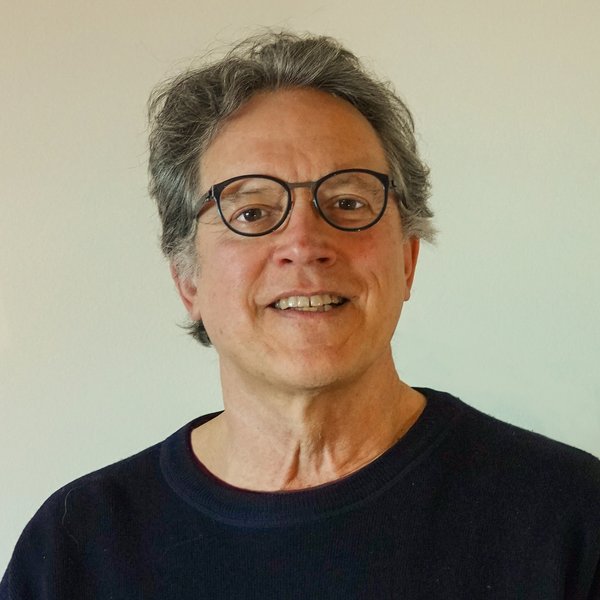
Jeff M.
“... It was very satisfying to return to the place I started my teaching career (at least virtually) with a lot more in my toolbox to offer the students. I got to teach and go deep with something that I never approached as a 2-year Volunteer.”
1. What got you interested in the Peace Corps, specifically the VSP program?
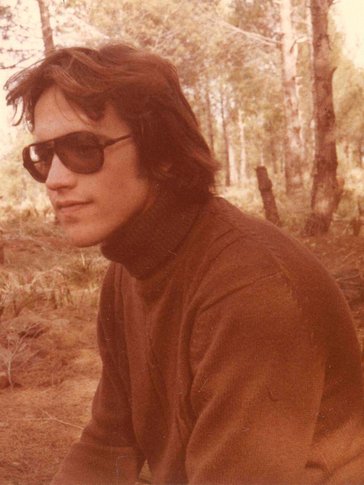
For my first VSP assignment in southern Morocco: A friend from Peace Corps Morocco days (1978-80) sent me the VSP announcement. I checked it out and decided it was a wonderful chance to combine many interests. The chance to teach digital storytelling, the chance to go back to Morocco, and the chance to work with young people again (after having mostly done teacher training the last 10 years of my university life). What cinched the deal was hearing that one of my Peace Corps trainers who was a legend in South Morocco in the late 70s had just signed up for another 2-year stint as a Volunteer in Thailand—at the young age of 71. I was much younger than that; I was only 67.
For the second assignment, about a year later in a city in northern Moldova, just across the Dnieper River from Ukraine: While at the University of Oregon I’d done online orientations for Fulbright scholars headed to Eastern Europe and had gotten to know many of them. Moldova was frequently mentioned as a warm and welcoming place. English language teaching assistants placed there frequently spoke about how dedicated and talented the teachers were. The strategic location and beauty of the country intrigued me, and the professional environment sounded quite conducive to online teaching and learning.
2. What projects are you working on?
In Moldova, I’m working with the English Language supervisor for the region, Alina. She works directly with approximately 30 middle school and high school teachers. We meet weekly to discuss materials, curriculum, and assessment. Once or twice a month we have large or small group training sessions on Google Meet, which have a very practical focus. The last one, for example, dealt with the importance of “warm-up activities” and featured presentations from 4 teachers, the supervisor, and me. The camaraderie among the teachers was moving.
In Morocco I worked with a youth development NGO that specialized in programming for the arts, media, and technology. They wanted someone to teach a summer course for 20 in digital storytelling to youth between 17 and 22 that focused on language, local lore, and technology. Together with my program manager Salma, we selected the students and developed a curriculum and course activities on Zoom that resulted in 4 short documentary films and podcasts about their respective neighborhoods.
3. What were the results of your collaborative work with the community?
One of the explicit goals for the youth development NGO in Morocco is leadership training. The region has historically been cut off from the centers of education and commerce in Morocco, and this has resulted in a great deal of “brain drain.” Young people feel they have to leave this desert and mountain region to succeed. By partnering on this English course in digital storytelling, Peace Corps and the partner organization were able to provide young adults (ages 18-21) with training that honors their home region and culture, gives them hands-on experience, and makes them more likely to become involved citizens as adults. It also was the first time that the agencies had worked together. Since then, the two organizations have cooperated on other programs, mostly focused on leadership skills.
4. What was a highlight of your VSP experience?
The fact that every Sunday morning I logged into Zoom at 7:30 a.m. and between 10 and 20 students in Morocco were doing the same was a highlight. For most, connectivity wasn’t a huge issue.
The most memorable moment was the day the participants presented their “My Neighborhood…” films to each other. Even though they’d seen several iterations of the work previously, their feedback and interest was honest, supportive, and moving.
5. What strategies did you use to meet the challenges of a short-term and remote experience?
With Moldova, my work requires a lot of listening and background reading to understand what they’re trying to achieve and the challenges of their various contexts. Plus, I’ve never taught middle school: lessons on topics like personal hygiene require research!
With Morocco, I used lots of planning. The start date and the actual assignment itself got pushed back a month and that gave me more time to work on the course itself and do interviews and surveys with folks at Peace Corps, the NGO, and the participants themselves.
6. What did you bring away from your experience as a VSP Participant?
In Morocco: On a personal level it was very satisfying to return to the place I started my teaching career (at least virtually) with a lot more in my toolbox to offer the students. I got to teach and go deep with something that I never approached as a 2-year Volunteer.
I was particularly touched by how well they supported one another. That was modeled by leadership: the Peace Corps youth development director and the NGO’s project manager who was only 21, a couple of years older than the participants, whose virtual door was always open for storytelling and tech assistance. It was practiced by the participants who made films in pairs—some were friends, most were not, and many lived far from their class partner.
7. How did the VSP experience compare to your previous service?
I noticed that in Morocco, things have changed for young women, especially in education and employment opportunities. Most of the students in my course were female, and they were studying for a university education or living abroad. They were smart, confident, good researchers, and optimistic about the future. That wasn’t the case 45 years ago when they only comprised about a quarter of the class by the time they were seniors in high school. At that time if they were headed to university, it wasn’t to become engineers, doctors, or filmmakers.
8. What would you say to someone considering the Virtual Service Pilot?
These VSP jobs are carefully crafted, and you’ll be selected for it by a team of people who want you to succeed and are very present (if you want them to be) when you have difficulties.
If you‘ve never taught or coached or performed online, it’ll be harder at first. Find ways to get more experience with virtual learning/collaborating before you submit interest for one of these positions. You don’t need to be a computer wizard—in both Morocco and Moldova I worked with partners who can co-facilitate or at least help with technical issues. The challenge is really one of mindset: you have to believe that virtual exchanges can be meaningful for your participants, and you have to have confidence that you will acquire the skills to make them so.
For a relatively small investment of time, each of my VSPs has been truly rewarding, reawakening, and rejuvenating.



