 An official website of the United States government


Featured Volunteer Profile
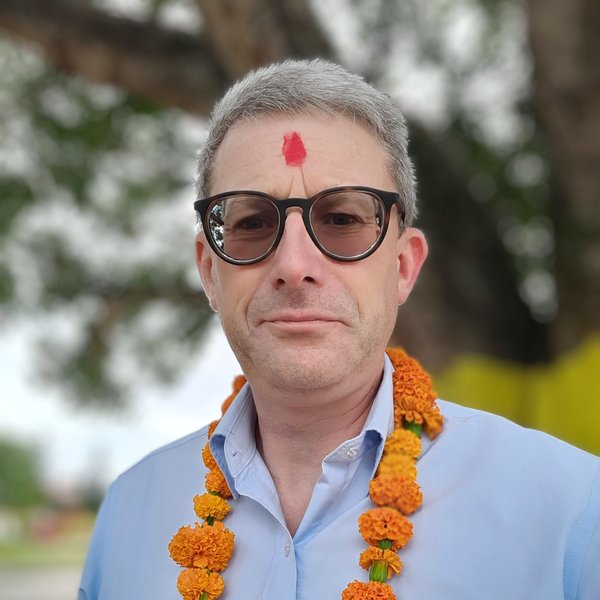
Jeff A.
“... I see this time as the capstone to my teaching career. I couldn’t possibly imagine a better way to pass on what I’ve learned and feel good about my work before trying something new!”
1. What got you interested in the Peace Corps, specifically the Response program?
This is my gap year. I started teaching at twenty-one and both the pandemic and the persistence of gun violence in schools prompted me to think about doing something different. I always kept an eye on the Response program after volunteering in Morocco and I asked some friends if I was crazy to volunteer again at mid-life. They told me I was crazy and that was all the more reason to try it. I am fortunate that I am in a position to have this experience before starting a new career, and I see this time as the capstone to my teaching career. I couldn’t possibly imagine a better way to pass on what I’ve learned and feel good about my work before trying something new! Being a Response Volunteer in my forties has been much better than being a two-year Volunteer in my twenties; I have so many more valuable skills to share now.
2. What projects are you working on with your community?
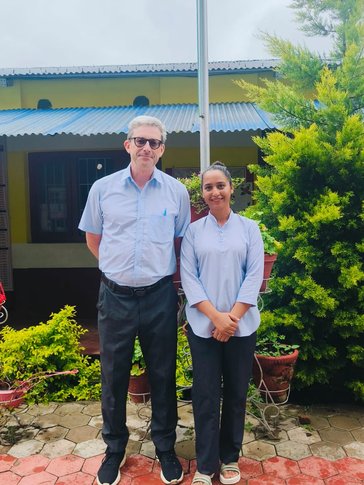
I'm at a multi-campus school that includes K-12 students as well as college students in a town two hours from Nepal's capital, Kathmandu. In the secondary school, students can elect to study either the traditional curriculum taught in Nepali or English, animal sciences, or hotel management. We support approximately 1250 students across the entire school.
Our community has secured two SPA grants that have purchased about 16,000 educational learning bricks (e.g., LEGOs) for classroom use in STEM education. The initial project was conducted for high school STEM teachers and was so popular that primary school teachers requested similar blocks for younger students. Participating teachers had 2 hours of hands-on training in using manipulatives for STEM learning.
Building a school website with a custom domain was a priority for the school, which we achieved in the first two months. School leaders picked the domain name and I trained our computer technician in basic website design. He now manages the website by himself.
Training has been a major priority for the school. I mentored my counterpart, the school’s computer teacher, to work through the “Google Educator” online certification. After two months of preparation, she passed the test—no small feat. We are now expanding that training to two other teachers. In addition to the 1:1 training, I have also conducted workshops for all faculty to use Google Drive, Google Sheets, and accessing electronic resources that support the Nepal National Curriculum.
Using a participatory process inclusive of school stakeholders, we prepared an Information and Communication Technologies Roadmap (ICT) for the school for the next five years. School leaders evaluated current trends in digital learning and the current state of affairs in their district to identify reasonable and measurable ICT goals for their school community.
I’m currently helping to organize a multi-school spelling bee, which is proving to use many more of my classroom skills than I anticipated. I’m glad to do the work, but I’m surprised at how much of my time the bee is taking!
With three months left, I look forward to:
- Sharing Thanksgiving and Christmas with my family and school
- Begin reading English stories to primary students on Fridays
- Continued teacher training in Google Docs and Google Slides
- Preparing the school for a district-wide spelling bee
4. How have you leveraged your previous professional experience in your service?
With a two-year TEFL Volunteer also assigned to the school, we delineated our roles from the beginning. I focus on teacher training and Steven acts as an English teacher. We collaborate and work well together. With 24 years of experience as a teacher, I see my role here entirely as a coach. I support teachers in classes and suggest ways that they can integrate different technology into their classes. I couldn’t do that without my years of professional experience.
I know first-hand that teaching teachers is difficult; in many ways, we’re the worst students. Having real, professional experience makes the instruction I give to teachers much more informed and practical. I’m able to encourage teachers by saying “try this” or “students might respond better to this,” which I really wouldn’t be able to do without my prior experience.
I also frequently draw on my previous experience as a Peace Corps Volunteer in Morocco. Certainly that experience has helped with grant writing, but it has been especially important utilizing the PACA tools for asset-based community development. My prior Volunteer experience enabled me to hit the ground running, and I’m very glad for it.
5. What is a highlight of your time in service so far?
I love the 15 minutes each morning when students arrive at school. I stand in the same spot every morning and often the same teachers and students greet me, but sometimes new students greet me, too. Music plays over the loudspeaker before we gather to sing the national anthem and hear announcements. My personal goal has been to memorize the Nepali National Anthem so I can sing along with them in the morning. While many differences separate U.S. students from Nepali students, their morning meandering and socializing is the same if not universal. I loved those early morning greetings at home and I love them here in Nepal, too.
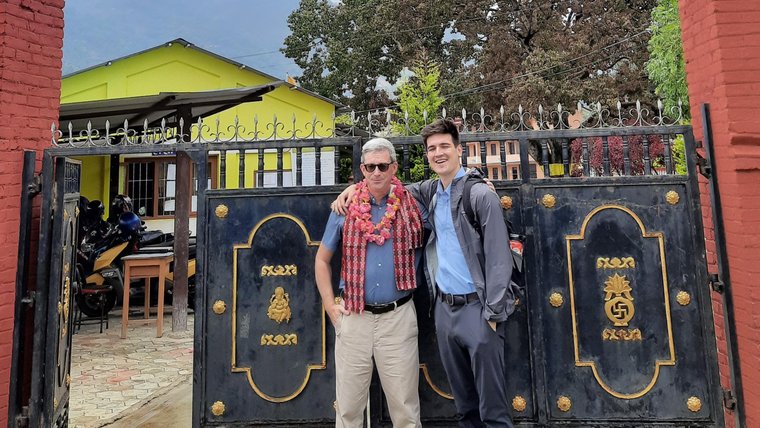
6. What strategies have you used to meet the challenges of a Response Volunteer experience?
My previous service has given me a far greater sense of what’s important in the Peace Corps experience. In my twenties, I saw myself as Super Volunteer capable of doing almost everything efficiently and effectively. The truth is, in practicing more gratitude and humility, I’m so much more efficient and effective than I was almost 20 years ago. Knowing myself and knowing what I do well, and where I also need to grow, has made me a better Volunteer than in the past.
7. How will the skills you are developing help you in the future?
I find myself looking back on how I got to this place—the people and circumstances that got me here—rather than looking ahead. I bring with me lessons from my teachers and colleagues to campus every day. I only have the vaguest idea of what life after Nepal looks like and it only worries me a little. I’m so engrossed in my work that I applied to be a member of the next cohort of Response Volunteers in Nepal and they’ve accepted me, so I’m grateful to look forward to extending this experience a whole year. Beyond that, I have no idea.



