 An official website of the United States government


Featured Volunteer Profile
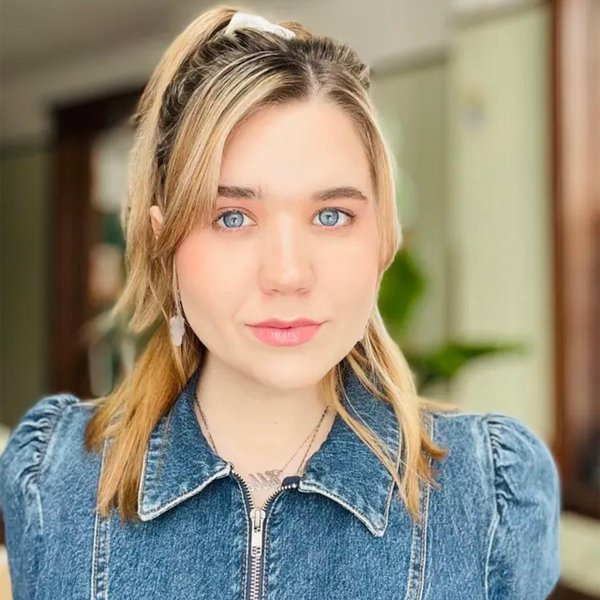
Ella B.
“The most important thing I’ve learned from my community is that nothing is accomplished alone. Collaboration and teamwork, even for the most menial tasks, are necessary.”
1. What got you interested in the Peace Corps?
I have been interested in the Peace Corps as long as I can remember. My mother dreamed of joining the Peace Corps, so those values were instilled in me from a young age. During my senior year of university, I began researching more about the Peace Corps and how it aligned with my goals. I got in contact with a Returned Volunteer who was in the first Peace Corps cohort to return to Sierra Leone after its civil war. When he told me his Volunteer stories I was in awe of his personal growth and the challenges he faced. I knew then and there I would volunteer in Sierra Leone.
2. What projects are you working on?
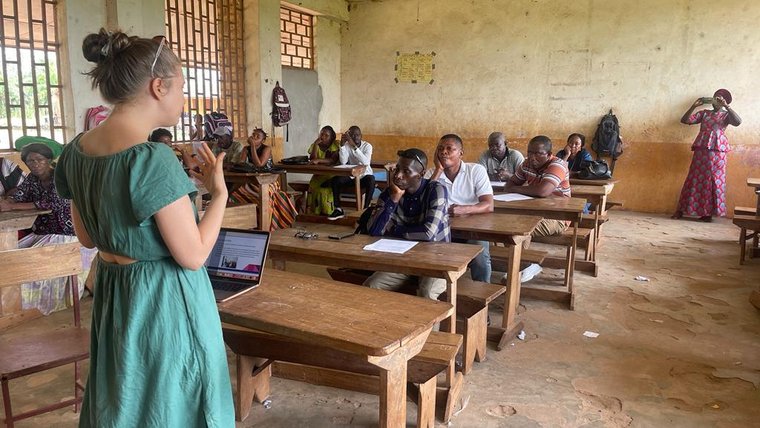
I am a teacher in a primary school. I also collaborate with administrative staff to implement monthly teacher trainings and workshops. Every month I hold multiple sessions or workshops on various topics, in and outside the classroom. One of the most beneficial workshops has been grant writing. Another outcome was the creation of a unified lesson plan structure.
3. What strategies have you used to integrate into your community?
Learning the national and local languages has helped me integrate into my community the most. During pre-service training, I spent as much time with staff as possible and practiced my language skills consistently.
Another strategy is just showing up. If your community has a program, event, or gathering of any type, show up. It means the world to them and helps create trust between you and the community.
4. What is a highlight of your time in service so far?
The highlight of my service so far is the fact that I can honestly say my site is my home. I have built friendships, families, and communities that will continue to grow and thrive long after my close of service. Sierra Leonean nationals are what make my service worth it. They are the most welcoming and generous people you will ever meet. My supervisor and my neighbors took me in as one of their own family members, and that kindness has been permanently imprinted on my heart.
5. What have you enjoyed most about the community where you are serving?
The people in the community are so welcoming and have your back in any situation. This makes service a lot less difficult. Implementing programs and projects have been easier because my community is always standing behind me and lending a helping hand whenever needed. Whenever I travel away from my community I always rush to get back. I miss the people so much! Whenever I return, there is always a party of kids to welcome me back.
6. What are some of the most important things you’ve learned from your community?
The most important thing I’ve learned from my community is that nothing is accomplished alone. Collaboration and teamwork, even for the most menial tasks, are necessary.
I have learned that there is always room to learn, even if it is something you think you’ve mastered. Before arriving at my community, I thought I knew how to cook. But I have learned so many tips and tricks in the kitchen from my students!
7. How do you spend time when you are not working on a project?
The majority of my free time is spent with the neighborhood kids. All of the children love to come to my house to read, write, and dance. My name in the community for children is either “mama” or “padi,” which is the Krio word for "friend." I even host a remedial class on my front porch for any students who would like to learn outside of school hours. If I am not with the kids, I am behind my house working in my best friend’s garden!
8. What are you looking forward to in your remaining time as a Volunteer?
I am really looking forward to the close of service conference, which is a celebration within our cohort and our communities. It is so rewarding to know that we have made it through two years of service. It wasn’t easy, but it was definitely worth it. I would do it all over again in a heartbeat.
I am also looking forward to connecting with my community about how I can continue to contribute even after my close of service. Just because my Peace Corps journey is coming to an end doesn’t mean my journey with my community will stop.
9. Once you finish your service, what will you do differently when you return to the U.S.?
I hope to maintain the mindset that nothing is ever accomplished alone, and bring home my motivation to strengthen whatever community I’m in. America has more of an individualistic culture, whereas Sierra Leone is all about collectivism. There is a lot to be learned from the Salone culture and how it moves as one. Anything done here is completed with the whole community's support and interests. I hope I can maintain those values in my everyday life wherever I go next.



