 An official website of the United States government




Featured Volunteer Profile
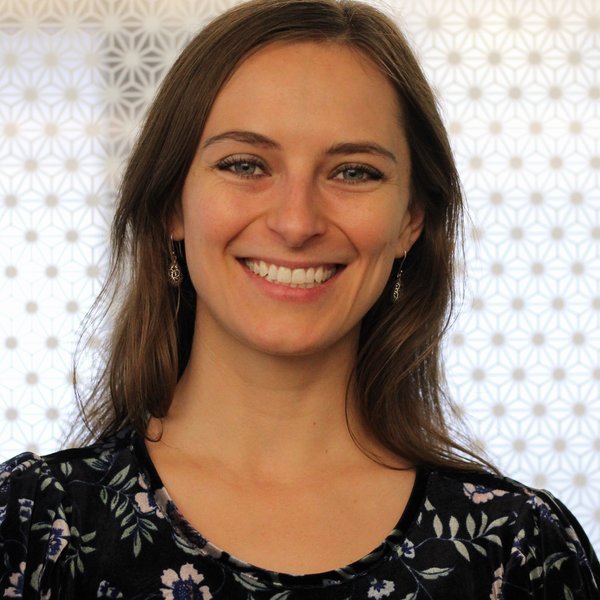
Brianna B.
“If you have a specific skillset you want to test in a high-pressure environment, do it in the Peace Corps!”
1. What inspired you to apply for this Peace Corps position?
Over the last decade, I have spent several years living and working abroad, and I genuinely value the challenge of adapting to new cultures and environments. Despite having never visited the African continent, I decided to apply for the Peace Corps in Togo in order to push beyond my comfort zone and learn more about the world. After having spent the last several years in one location, I was feeling ready for a new challenge that would test my resilience while allowing me to serve as a genuine value-add to a host community. Furthermore, this role perfectly aligned with my professional specialization and goals: Monitoring, Evaluation, Research, and Learning (MERL) for community-based healthcare. I was drawn to the opportunity to apply technical data systems to real-world health outcomes in a complex, albeit resource-constrained, environment. This position represents the intersection of my passion for global health and my commitment to data-driven organizational learning. In sum, I hoped to apply my existing skills in a way that fostered sustainable, measurable impact for local health systems.
2. What projects are you working on with your community?
As a MERL Fellow, I primarily focus on evaluating ongoing health programs to ensure they are meeting performance targets through data-driven analysis. For instance, my current projects include evaluating the performance of a smartphone app that community health workers use to collect patient data and improve clinical decision-making. I am also engaged in a deep dive into the performance of a women’s leadership program designed to confront the prevalence of gender discrimination in rural communities. I also provide technical support for a range of research initiatives related to increasing uptake of malaria vaccinations and modern contraception for family planning. It is rewarding to assist my Togolese colleagues in such a wide range of critical projects.
3. How have you leveraged your previous professional experience in your service?
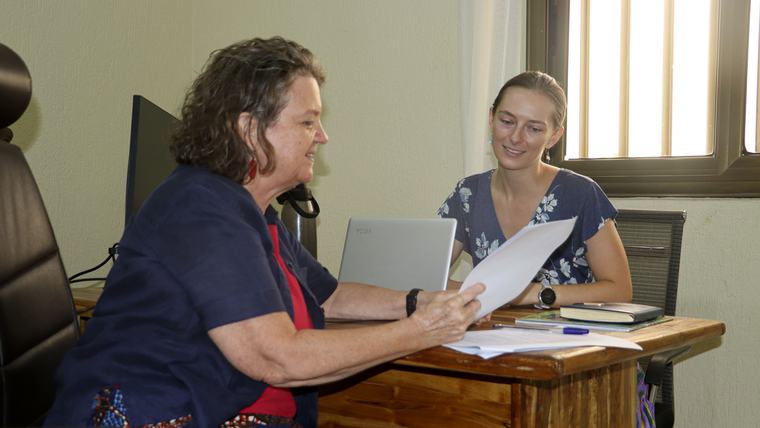
I bring to Togo a background in independent qualitative research from India and experience designing performance monitoring systems from the ground up in the South Pacific. These global experiences provide me with the foundational framework that I can then apply to the specific needs of the Togolese Health sector. For instance, I have used the skills developed during my fieldwork in India to analyze focus group discussion transcripts here in Togo. Furthermore, having been through the pitfalls of designing a monitoring system from scratch allows me to anticipate potential data collection challenges in advance. In MERL, success often depends on asking the right “what if” questions in order to anticipate problems before they emerge in the data collection cycle. My experience doing exactly that in another context has helped me figure out which “what if” questions may be relevant in Togo and Guinea.
4. What is a highlight of your time in service so far?
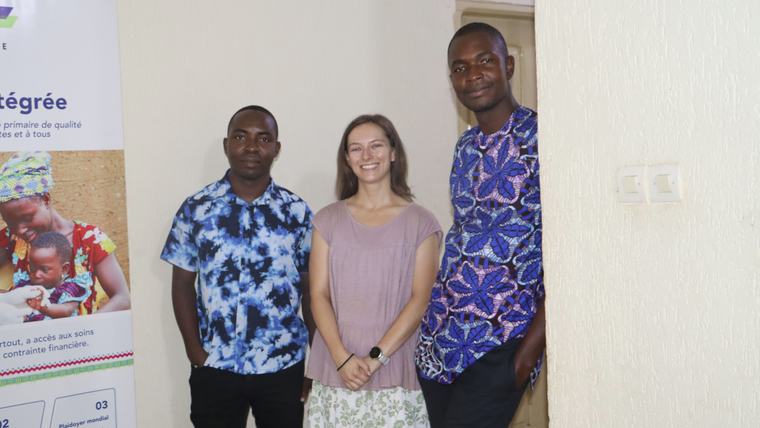
The primary highlight of my service has been the relationship I have developed with my counterpart here in Togo, who also happens to be my next-door neighbor. We function well as a professional team, but we can also easily transition from technical discussions to chatting and laughing together. He has been an invaluable guide to my integration in Togo, explaining aspects of culture and life that I would have struggled to understand otherwise. Surprisingly, he is also a guide to American R&B music! This partnership is based on mutual respect and commitment to the mission of our work, and it has been the most fulfilling aspect of my service so far.
5. What strategies have you used to navigate challenges during your service?
There is no question that Peace Corps service comes with challenges. On the days that feel particularly gritty, I maintain focus by leaning into the variables I can control: the quality of my own work, my personal health, and my daily routine. I have developed a disciplined schedule that provides a sense of structure and calm in a place where things still often feel so unfamiliar. I look for the small wins – a successful conversation in French with a neighbor or securing the phone number for a reliable taxi. My approach has allowed me to view whatever daily frustrations that arise as discrete data points rather than personal setbacks. As a result, I know these challenges are helping me to develop the flexibility and openness necessary to a career in international development.
6. How has your service shaped what you will do in the future?
My service in Togo thus far has acted as a powerful confirmation of my commitment to a long-term career in international development and M&E for health. Immersing myself in the logistical realities of Togo has given me a perspective that simply cannot be replicated in a Washington, D.C., office. On a technical level, I have used my time here to become certified in Alteryx, allowing me to become adept in the specific data-blending tools that my team here uses the most. In a resource-constrained environment, the ability to efficiently clean and analyze complex datasets can be a force-multiplier for program impact. Additionally, this experience has not only sharpened my existing skills but has also brought to the fore why this work matters on a human level. Living in Togo allows me to directly see the types of improvements that foundational grants, individual donations, and governmental commitments make possible for the local community.
7. Tell us about someone who’s impacted you during service.
For me, the strongest impact has not been any one person, but the general sense of community as a whole. During the first month of my service, I lost my keys while out on a run after work. By the time I returned home, the sun was beginning to set, and I frantically began retracing my steps to look for them. Along the way, I ran into some coworkers who immediately joined the search. In total, six people became involved to help me look for my keys and contact a local carpenter to assist me in getting into my home when they keys were not found. While I was terribly embarrassed, I was also deeply touched that people who barely knew me at the time would pause their evening to help. This was the first of many lessons in the depth of relationships and hospitality in Togo. It was also a reminder that while I am here to provide technical expertise, I am also here to learn from a culture that prioritizes people over schedules.
8. What is the most interesting thing you’ve learned about your host country?
There is something really wonderful about not having clothing stores. Togo has a truly massive textile industry for the brightly patterned fabrics called pagne. This is the traditional fabric of Togo, and the magic is that you will almost never see the same pagne twice. Rather than relying on the fast fashion model of mass-produced, off-the-rack clothing, the process here is individual and artisanal. In Togo, you buy several yards of pagne and take it to a tailor to get a custom, beautiful outfit for a fraction of what a single mass-produced item would cost in the U.S. Pagne is sold on every corner, in nearly every shop, even outside people’s front doors. Togolese fashion is a kaleidoscope of bright colors and bold patterns and puts a boring black suit to shame any day of the week.
9. How have you shared the culture here with family and friends back home?
I enjoy sending regular photos and updates to my family and friends in the U.S. and around the world to share the reality of my life in Togo. While they have spent a frigid winter in the snow, I tease them with my photos of palm trees set against the sunset – though, I don’t think they envy the 100 °F days that come with them. It is particularly rewarding to share stories about local staples like tchouk, a home brewed beer made from sorghum, or wagash, the cheese made by the tribe of herder nomads. My goal is to demonstrate that while life here is often significantly more challenging than in the U.S., it is also deeply rooted in community, resilience, and a slower pace of life. Through unvarnished updates, I can provide my network with a more honest and nuanced view of the place I currently call home than what they would find through a Google search.
10. What would you say to someone thinking about joining the Peace Corps?
If you have a specific skillset you want to test in a high-pressure environment, do it in the Peace Corps!



