 An official website of the United States government




Featured Volunteer Profile
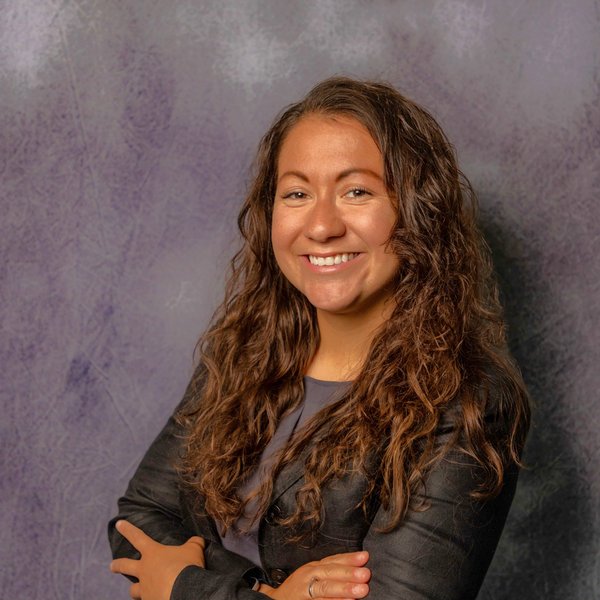
Dani M.
“What I love the most about the community I serve in is that people and relationships take precedence. I love that 'we' comes before 'me.'”
1. What got you interested in the Peace Corps?
I was 16 years old, sitting in my social studies class and listening to my teacher, Ms. Carrillo, telling us about the Peace Corps. To this day, I can close my eyes and see the picture she showed us of her bedroom, with the mosquito net, and her treasures from the U.S. I wanted to be like Ms. Carrillo, a strong, independent woman. While listening to her speak, I remember thinking that I too could become a Volunteer. She taught us about serving others and opened our minds to new cultures, languages, and ways of life. She shared the life-changing moments she had while living in Africa and how the Peace Corps changed the trajectory of her life. Fast forward 13 years, and I am finally living out a dream I had for so long.
2. What projects are you working on?
In the community where I am completing my service in Costa Rica, the citizens have expressed the need for more recreation, activities that take kids away from cell phones, and the need to address the problem of drugs and alcohol among youth. I will launch three projects to address those areas of growth once the school year starts. In collaboration with the sports department, I plan to start a basketball league during the school week. Together with the staff and administration of the high school I will create a “school/workshop” for parents, where guest speakers will discuss areas of growth we have identified in the community. Lastly, the school counselors and I will introduce an “activity of the week”—a new idea, game, challenge, sport, or lesson—that kids can participate in during their free classes or orientation classes. The goal of this last project is to lower cell phone time and promote movement, healthy habits, creative thinking, and a healthier lifestyle.
3. What strategies have you used to integrate into your community?
Integrating into my community has been a fun process that is constantly changing and has challenged me to be very flexible. The most important strategy is to be present in the community. I show my face at soccer games, community events, school activities, and birthday parties, and accept invitations that are offered to me. When I attend social gatherings I am curious and interested. I want my community to know that I want to be there. Above all, when words and conversations aren’t possible, I make eye contact, smile, and say a simple “hola.” To my surprise, this has taken me a long way!
4. What is a highlight of your time in service so far?
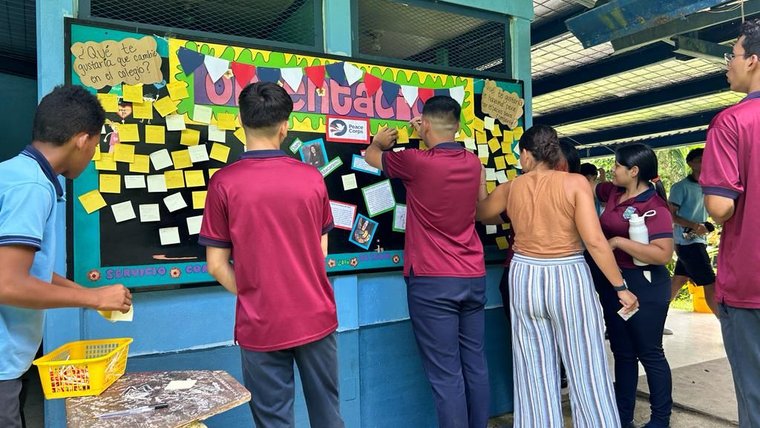
One of the highlights of my service so far has been getting to know Costa Rican culture. My host family holds Costa Rican traditions very near to their heart, and I’m able to experience them with my family often. I learned how to make fried green plantains (patacones), decorated a Christmas tree, watched several holiday parades, and walked 13 miles from San Jose to Cartago in a religious event called “La Romeria.” The list goes on. I love to see how Costa Ricans live their life, like how people enjoy coffee in the afternoon with a cookie. Another activity that’s become part of my routine is having tea with my host parents before we go to bed. I love being part of it because it symbolizes the importance of family time in Costa Rica.
5. What have you enjoyed most about the community where you are serving?
My community contains a lot of knowledge and resources. They are very family oriented and want the best for those around them. The town exemplifies the saying, “Love your neighbor.” Everyone knows each other. If someone needs something, they ask for help, and help is given as people are able. What I love the most about the community I serve in is that people and relationships take precedence. I love that “we” comes before “me.”
6. What are some of the most important things you’ve learned from your community?
The pace of life here is different. In the past, I tended to overbook my time. I spent many days rushing from one thing to the next, with a certain anxiety in my step. My Costa Rican community has shown me that that type of lifestyle is not necessary, and quite frankly, not healthy. The pace of life here is a lot slower and things happen when they happen. I have learned to adapt and not worry as much about how I used to define productivity. I am now able to enjoy the process more than the product.
7. How do you spend time when you are not working on a project?
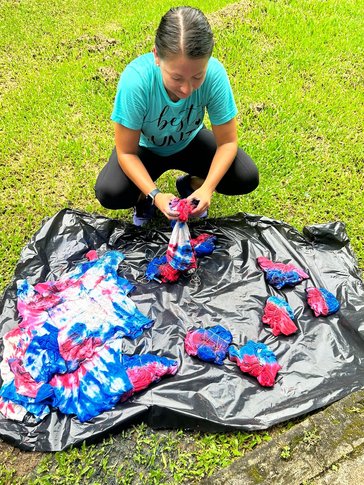
When I am not working on a project, I spend time with my host family, go to the gym, play basketball with a local league, visit Volunteers who are close by, or participate in a community event. I try to spend time out and about because I enjoy being active. During Peace Corps service, I feel that it is extremely important to find time for yourself and take care of your mental health. I try to pick an activity daily that allows me to have alone time to recharge my social battery. These activities include yoga, reading, and taking walks. This allows me time to call family and friends back home, to share with them my experience and teach them about Costa Rica (Peace Corps’ third goal).
8. What are you looking forward to in your remaining time as a Volunteer?
I want to continue to build good relationships with youth in this community. I want to be a positive role model for Costa Ricans. I want to continue learning every day about what motivates people, and why they live the way that they do. By learning more about the people here, I will be able to better gear my projects to their needs. That is my goal, and what I am most looking forward to.
9. Once you finish your service, what will you do differently when you return to the U.S.?
As a Volunteer I love serving people, sharing knowledge, and utilizing resources effectively. When I return to the US, I want to find an agency that allows me to continue to serve as I do here. I would also like to incorporate the pace of life in Costa Rica into my life in the US. I want to put people and relationships first. I want to create a culture in my life where I spend time with people and value connections above all else. That is the thing I love most about Costa Rica, and I would like to hold that close to my heart and show it through my actions for the rest of my life.



