 An official website of the United States government


Featured Volunteer Profile
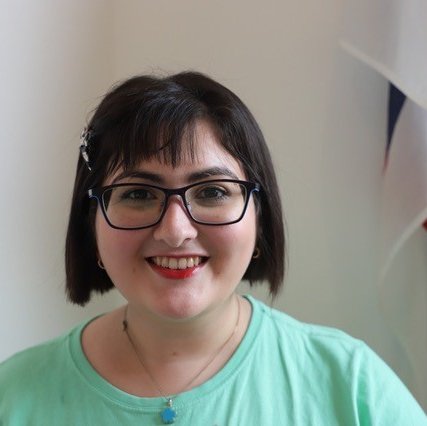
Corinne S.
“Being a Peace Corps Volunteer is the first job I've had that has lasted for more than a year, and it has been different than any other job I could imagine. It’s not just an occupation; it permanently changes you as a person.”
1. What got you interested in the Peace Corps?
Before applying to the Peace Corps, I saw a Volunteer as an ambassador of the United States who also participates in the economic development of nations. Personally, I saw the Peace Corps as a window of opportunity for what would come next in my life: I have always wanted to work in policymaking, and through both my own background and my Peace Corps experience I feel like my dream may well come true.
I have lived by myself in other countries before, but I feel the Peace Corps approach to development is different. I wanted an opportunity to live in another part of the world while challenging myself to learn to live the way locals do. My Peace Corps service has also been a great opportunity to gain practical skills.
2. What projects are you working on?
The project I’ve been most invested in is a playground my counterpart and I are building for the primary school where I work. Our plan has changed a lot since we first began working on the project half a year ago, from using parts from a junk shed next to my classroom to using a design from a supplier in the capital. Before becoming a Peace Corps Volunteer neither my counterpart nor I had never written a grant before, so it has been a learning process.
In July of last year, my cohort and I received training on how to be a coach for Grassroot Soccer, a nonprofit organization focused on the eradication of HIV/AIDS in young people across Africa, which offers an evidence-based intervention project called Skillz. I had a lot of fun learning to be a Skillz coach, and it was fulfilling to be able to implement the project at my primary school. My counterpart and I are planning to start the project up again this quarter.
3. What strategies have you used to integrate into your community?
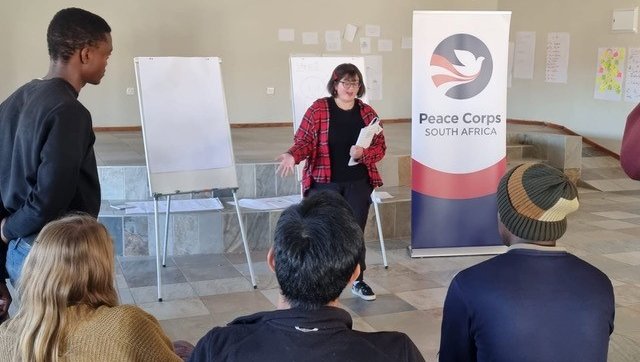
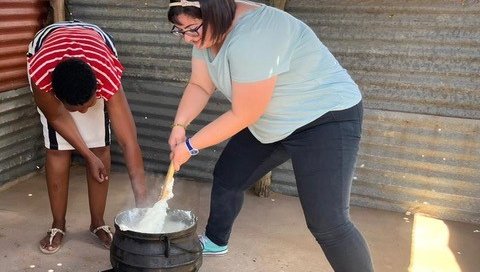
At first, I was prepared to use the same strategies I had used to “integrate” into homogeneous societies in which I had lived prior, which mostly consisted of pretending to not exist. This was easier when I knew the local language. But as I began to integrate into the South African village where I was assigned, I began to recognize that integration did not mean laying low—quite the opposite. The way people greet each other and connect in South Africa has been a challenge for me to get used to but has helped me integrate. I began to sit in church and greet everyone at gatherings—actually acknowledging and speaking with every single person. I’m still getting used to this, as I tend to be an introvert.
4. What is a highlight of your time in service so far?
I struggled to get to know people initially. My host mother introduced me to a lovely woman who became my first Setswana tutor. We got to know each other pretty well, but she was planning to leave to take a job elsewhere so I had to find another counterpart. I was very worried about not having a counterpart and let my host brother know of my challenge. He introduced me to his best friend who ended up being my very competent and capable counterpart. He is not only my counterpart but my Setswana tutor and my best friend. It has been such a pleasure getting to know him, and he has played the biggest role in helping me integrate in the village.
5. What have you enjoyed most about the community where you are serving?
My village is in the Mpumalanga province in northeastern South Africa. It is a hub for many Volunteers who currently serve in the province. I am less than an hour and a half from towns where I shop as well as the capital, which means I can plan a day trip rather spontaneously.
6. What are some of the most important things you’ve learned from your community?
I have learned never to take things for granted, especially convenience, as well as the ability to buy items I need. For almost half of my life I lived in a large American city and was always able to buy necessary items. Being able to simply travel anywhere outside the village is a privilege, let alone having the cash to buy items such as sunscreen, which, I have learned, is a must.
7. How do you spend time when you are not working on a project?
I used to believe that Volunteers could become bored easily, but this is certainly untrue for me! There are always things to do. Daily house chores keep me busy, like cleaning and doing laundry. Much of what I do depends on the schedule for “load shedding” (certain hours of the day when electricity is out). When not doing chores, I read or watch informative videos online. I make an effort to keep learning almost every second of the day, particularly studying Setswana (the local language). I meet up with my counterpart once a week to review my progress.
8. What are you looking forward to in your remaining time as a Volunteer?
I am looking forward to traveling more during my second year. I want to visit a few places in South Africa and Mozambique. I have enough experience as a Volunteer and traveling in general to keep myself and others safe. It feels good to be a tourist after such a long time not traveling outside the U.S. and Canada, and I look forward to making lots more memories.
I am also looking forward to starting my career. I am the youngest member of my cohort and have limited work experience. Peace Corps service has given me invaluable skills, and I hope to use these skills to start a career in the U.S. foreign service. I have been studying for a couple years now, and am looking to take the exam in June of this year. Peace Corps staff have been very supportive and helpful in guiding me and giving me solid advice.
9. Once you finish your service, what will you do differently when you return to the U.S.?
I wholeheartedly believe that if you integrate into a new culture, you carry habits from this culture throughout your life. However, one sensibility that was difficult for me to integrate is “African time.” I am a punctual person and expect others to be, but here “African time” is real and respected. I will bring back to the States a much greater sense of patience.
Being a Peace Corps Volunteer is the first job I've had that has lasted for more than a year, and it has been different than any other job I could imagine. It’s not just an occupation; it permanently changes you as a person.



