 An official website of the United States government


Featured Volunteer Profile
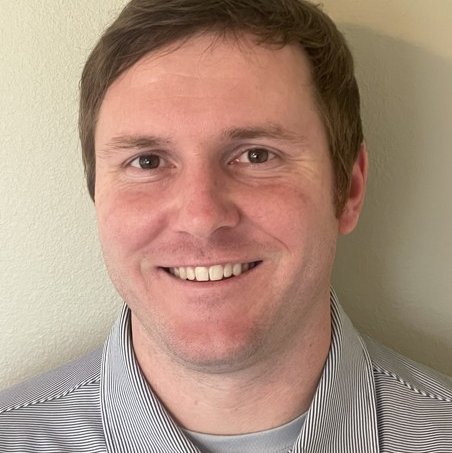
Brad N.
“I’m from a big city back home so moving to rural Jamaica has been an adjustment and a change of pace for me. I am learning the value of being part of a strong, tight-knit community at my site.”
1. What got you interested in the Peace Corps?
Serving in the Peace Corps had always been in the back of my mind, even when I entered the workforce after college. The idea of a program that is focused on service that allows volunteers to live in a different part of the world and integrate into a new culture appealed to me. Peace Corps is a unique opportunity to use your personal knowledge and skills to partner with community members in your host country to benefit the world as a whole. It truly provides an experience that you can’t find elsewhere. Volunteers don’t just get to temporarily visit another country but get the opportunity to be part of a community and be immersed in a new environment that can be both challenging and rewarding. I joined with hopes of making an impact on a community that requested assistance while possibly learning some new skills that would benefit me after service. So far, joining has been one of the best decisions of my life and I am so proud to serve!
2. What projects are you working on?
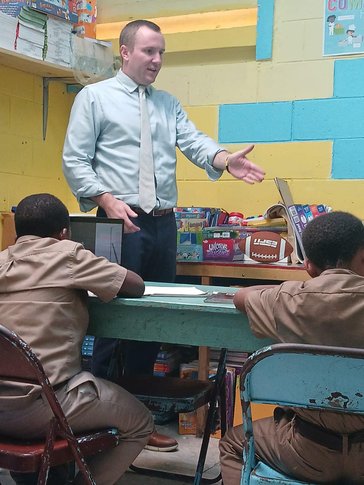
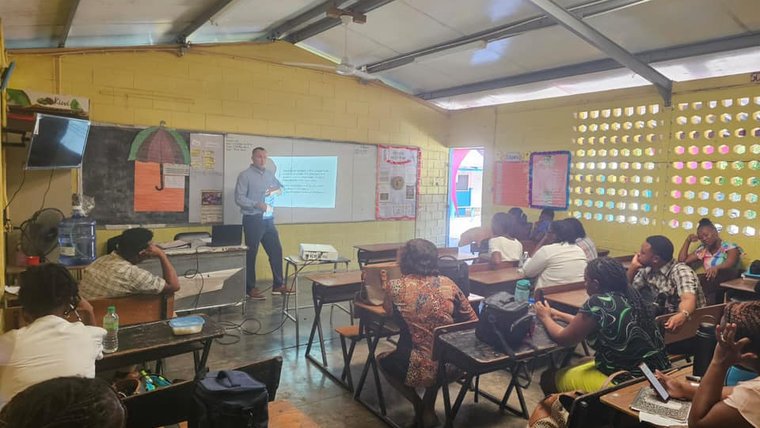
My primary project is increasing literacy rates among the students at the primary school at my site. I help support struggling readers by doing group pull-out sessions, individual tutoring, extra lessons after school, teaching summer school, and classroom co-teaching. In addition to this, I am involved in extracurriculars at my school. I co-moderate environment and scout clubs and serve as part of the literacy and school improvement team on campus. One of my major projects is the construction of a covered pathway that connects the infant school to the primary school where I work.
Outside of school, I helped create a youth club in my community that meets every other Saturday and focuses on community service and building self-esteem. Drawing upon my experience as a high school football coach in the U.S., I am partnering with the National Tackle Football Association in Jamaica to help expand American football across the island. We offer a flag football league for both boys and girls as well as a tackle football league in the secondary schools. Recently, we played the first ever all-Jamaican all-star game and will be hosting the first ever international all-star game in Jamaica this December.
3. What strategies have you used to integrate into your community?
At first, I used my host family as a resource to introduce me to as many people in the community as possible. I make it a point to say hello and greet everyone and make myself visible in the community. A simple smile and a friendly wave can go a long way. Finding time for social activities and functions outside of school has really helped with integration. When community members see you among the people and not just going to work and going home they feel like you are more approachable. Being flexible and open to new experiences is a big part of success in the Peace Corps and will help tremendously with integration if you keep reminding yourself of this.
4. What is a highlight of your time in service so far?
Last summer, Hurricane Beryl hit Jamaica and left much of the island damaged and without electricity. Even though my site faced adversity, we made the most of it using the resources we had. I assisted with a weeklong youth summer camp in my community that focused on increasing literacy, making smart choices, and building self-confidence. The student turnout was great, and attendance increased every day as word of the camp spread. The support from community members who offered to help was amazing and it was really cool to see everyone come together for a common purpose. We are currently planning the camp again for this upcoming summer and hoping to make it an annual event in my community.
5. What have you enjoyed most about the community where you are serving?
I feel lucky to be a part of the community in which I’m serving. The people have been welcoming and have gone above and beyond to make sure I feel safe and protected. The students and teachers I work with on a daily basis are hard-working and eager to learn. My supervisor supports me when I need help and gives me enough space and freedom to create my own projects.
6. What are some of the most important things you’ve learned from your community?
I’m from a big city back home so moving to rural Jamaica has been an adjustment and a change of pace for me. I am learning the value of being part of a strong, tight-knit community at my site. I’ve also learned to lean on others and to seek out assistance when it comes to community projects. I’ve learned new practical skills such as handwashing clothes, preparing Jamaican dishes, and how to properly raise goats, just to name a few.
7. How do you spend time when you are not working on a project?
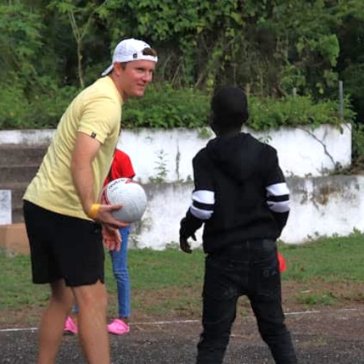
When I’m not working, you might find me chilling with friends under the mango tree in my community, on my veranda with my host family, or maybe at the community center playing soccer or basketball. I like to travel when I have free time and explore new parts of the island. I enjoy the beach, rivers, and going out with friends. Music is a big source of entertainment for me so I like to attend concerts and festivals when I can.
8. What are you looking forward to in your remaining time as a Volunteer?
I’m looking forward to continuing to build relationships with others while I’m here and watching them grow. I’m also excited to see some of my projects like the construction of the covered pathway and the computer lab renovation at my school be completed. The expansion of American football in Jamaica will also be a fun thing to focus on in my second year as I have seen it grow so much in just one year. I just want to take in as much of the experience that I can and add value where I see an opportunity.
9. Once you finish service, what will you do differently when you return to the U.S.?
I think I will have more patience when I return to the United States. The Peace Corps is not always easy and things don’t always work out the way you envision. This experience has taught me to be patient and find ways to overcome adversity. I also have learned to do more with less resources which will help me when returning to work in the United States. I feel I’ve become more adaptable and creative from this experience. This will benefit me in a number of ways when I return home.
Learn more about serving as a Peace Corps Volunteer in Jamaica.



