 An official website of the United States government


Featured Volunteer Profile
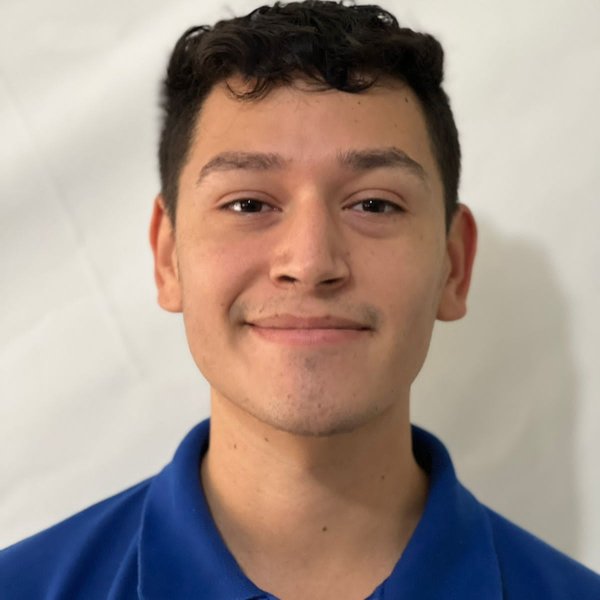
Aaron C.
“I love the tranquility and the peace of living in the countryside, surrounded by beautiful mountains with dense forest. My walks to school, up and down the mountains, are tiring and beautiful at the same time.”
1. What got you interested in the Peace Corps?
I wanted to gain more experience in the education field and travel the world. The Peace Corps was the perfect opportunity to do both. As a second-generation Mexican American, I learned how to speak Spanish on a basic level, but I always wanted to speak fluently and naturally. The moment was perfect given that I just graduated from college, so I applied to a Latin American post with an education sector.
2. What projects are you working on?
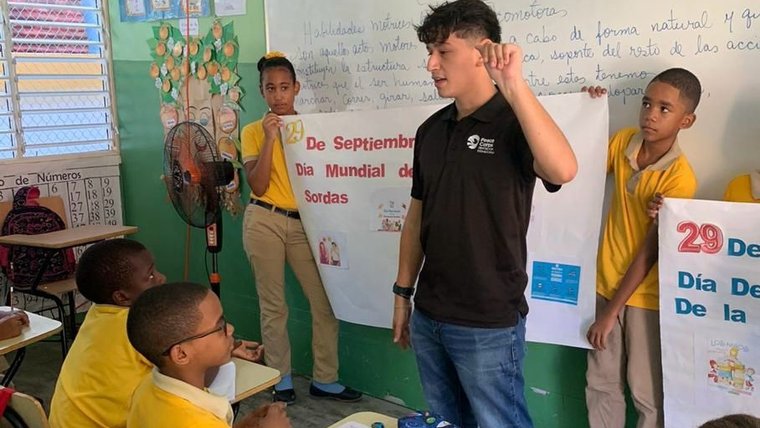
I promote Spanish literacy to K-3 students in a primary school. It’s a unique program in the Peace Corps because I am teaching students to read in their native language rather than English. It’s rewarding to know that the skills that I'm teaching will help students for the rest of their lives. Being a Literacy Promoter means working with students, teachers, and staff to promote a culture of reading among those who are behind in their reading level. I also collaborate in leading staff trainings where we collaborate and strategize on new methods of learning and resources. The school and I are planning to put libraries in the classrooms to motivate and inspire the students to read or learn how to read.
3. What strategies have you used to integrate into your community?
A common custom in the Dominican Republic is gathering on the front porch of the house drinking cups of coffee fresh out of the greca (coffee maker). Day or night, Dominicans love their coffee. When I’m walking from school or from running errands, greeting neighbors and friends along the way, I often gladly accept invitations to sit down and drink some coffee. There is something calming and amazing about sitting and talking for hours on end with friends, neighbors and family. You get to really know people and their life stories, and have a chance to share your own story, all while enjoying coffee. This routine has been the basis for creating bonds with my community, learning about Dominican culture, and improving my Spanish.
4. What is a highlight of your time in service?
One time I visited the hometown of my host parents in the province of La Vega, an agricultural province with rows and rows of rice fields. The occasion of the visit was to give condolences to a family friend whose mother passed away, but we also visited the families of both my host parents. My host grandma stuffed me with her delicious cooking. Then, my host cousins, host aunt and I went for walk in the neighborhood where they once grew up and swapped stories about their childhood. We ended the night in front of the family house, dancing and singing to the neighbor’s bachata blasting from the window. That day I felt part of the family.
5. What have you enjoyed most about your community?
I love the tranquility and the peace of living in the countryside, surrounded by beautiful mountains with dense forest. My walks to school, up and down the mountains, are tiring and beautiful at the same time. At a certain point, you reach a hill and can see the entire town with its colored wooden houses and people running errands, washing clothes, and just living life. I always stop to enjoy that view and catch my breath. I also love the delicious food of Cibao region. And of course one cannot forget the compassion and the kindness of the Puertoplateños.
6. What are some of the most important things you have learned from your community?
The ability to live in the moment and enjoy life. Taking time out of the day to stop and let loose and have fun—whether that is going to the river to swim or blasting some bachata and dancing a little.
I have also learned how to get by without a lot of water, how to plant chinola (passion fruit), cook Dominican food, and appreciate the little things in life.
7. How do you spend time when you are not working?
I usually spend time with my host family, playing board games like checkers or chess, or card games like Uno. I’m also trying to finish reading the Harry Potter series in Spanish (on book #3!). I put bachata or reggaeton on the radio or I simply sit in the rocking chairs with the family and talk.
8. What are you looking forward to in the upcoming year?
I want to see more of what the country has to offer such as Pico Duarte (highest peak in the Caribbean), get some Larimar stones from the province of Barahona, and enjoy Carnaval in the province of La Vega. Last but not least, seeing my students getting better in school and reading.
9. Once you finish your service what will you do differently when you return to the U.S.?
I will take with me the resourceful thinking and skillset that I have learned here, such as thinking on my feet and taking the initiative. Also, I want to stop to enjoy life and put aside time for family and friends. Additionally, I want to bring back recipes of as many delicious Dominican dishes from my host mom. Most importantly, I’m bringing back a greca to have my cafecito in the morning and share a cup with others.



