 An official website of the United States government




Featured Volunteer Profile
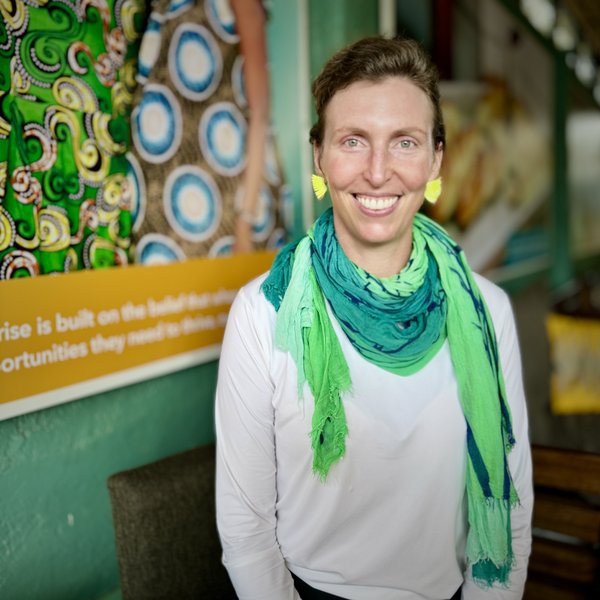
Markey C.
“The Peace Corps was my launching pad to start The Women’s Bakery, a social enterprise that empowers women and nourishes communities.”
1. What were your primary responsibilities during service?
I taught English as a foreign language to students in a rural secondary school, and I worked as a Health Care Volunteer in a rural maternity and nutrition ward.
2. What projects did you collaborate on with your community?
I helped to build rain harvesting water tanks at both the local school and health center. I also helped build a library and computer lab at our school. Finally, I worked with a group of women to bake and sell bread.
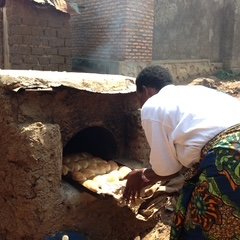
After making my first loaf of bread, a group of women I worked with at the health clinic wanted to learn how to bake too. I began hosting regular bread-making sessions at my house in the afternoons. I saw that this group of women brought their bread home to their kids and realized that bread could be a powerful way to address malnutrition. So, these women and I began creating new recipes, fortifying our breads with local proteins and micronutrients. We had a simple goal: a nutritious snack for children.
After a few weeks of baking, however, these women told me they’d just successfully sold their fortified breads in the nearby market, meeting local demand with local supply. That’s when I realized that something as simple as a loaf of bread had the power to create access to opportunity – bread could create jobs for the women, bread could improve community nutrition, and bread could spark local economic growth. And the seeds for The Women’s Bakery were sown.
3. How did Peace Corps service influence your professional path?
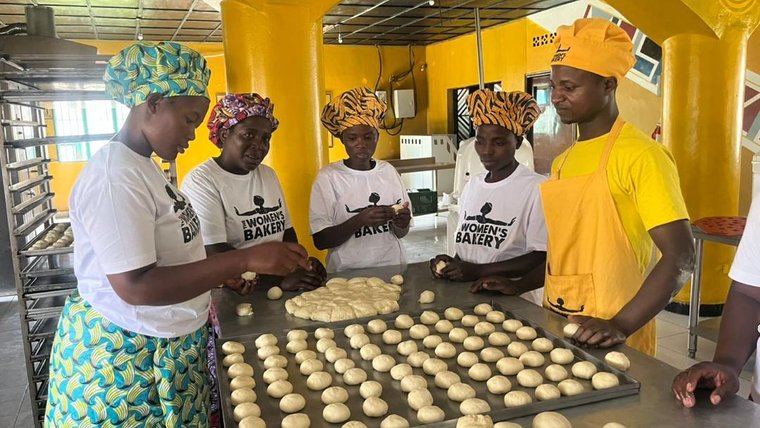
The Peace Corps was my launching pad to start The Women’s Bakery, a social enterprise that empowers women and nourishes communities. Working with a group of women to bake and sell bread grew into a viable social enterprise—we now own and operate 3 women-powered commercial bakeries in Rwanda and serve nearly 30,000 primary school children nutritious bread every school day.
4. How do you use skills honed during service in your current job?
Because I still work in the country where I served, I tap into a lot of Peace Corps skills — especially knowledge of the national language. I help advance all three Peace Corps goals, with particularly emphasis on the third goal as I’m often invited to present about The Women’s Bakery at conferences in the U.S.
4. How have you shared the value of Peace Corps service and communities abroad with people in the U.S.?
I cite the Peace Corps in every presentation I make. Without the Peace Corps, I wouldn’t have (accidentally) started The Women’s Bakery.
5. What Peace Corps benefits have been useful to you?
There are Peace Corps benefits?! ;-) I think Peace Corps Volunteers gain a unique skillset during service for many applications later. For me, I have found that my service helped me navigate the start-up world when building The Women’s Bakery.
6. How have you remained involved with the Peace Corps community following service?
I work with fellow Returned Peace Corps Volunteers (RPCVs) and have a community of RPCVs in Denver. One team member at The Women’s Bakery was my neighbor during my Peace Corps service.
7. What’s your favorite phrase in the local language of your host country?
"Ugiyehe?" It means "Where are you going?"
8. What would you say to someone thinking about joining the Peace Corps?
Do it! It is so tough and so fulfilling.
Learn more about serving as a Peace Corps Volunteer in Rwanda.



