 An official website of the United States government


Returned Volunteer Profile
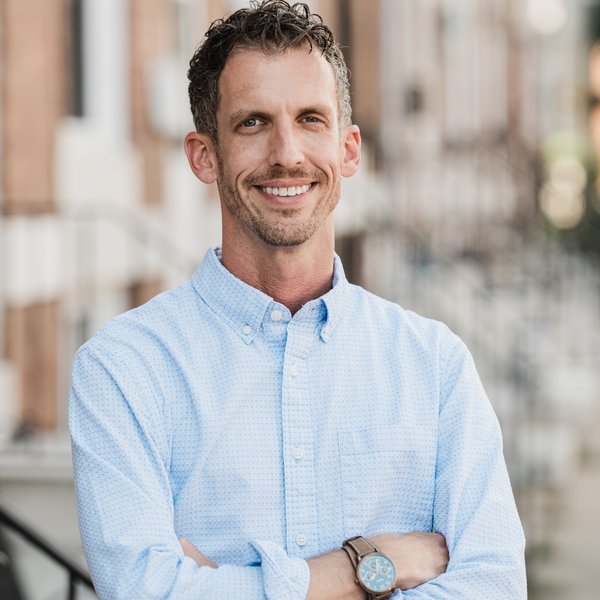
Mark F.
“While I was initially focused solely on professional development, I experienced so much unanticipated personal growth that it’s almost difficult to compare my initial motivations with the wonderfully unanticipated outcomes.”
1. What got you interested in the Peace Corps, specifically the Response program?
I wanted to do Peace Corps again, almost immediately after ending service in Guatemala in 2011. Fourteen years to the date of leaving for Guatemala, I left for South Africa. Between applying to serve again and my departure date, 4 years had passed. The pandemic continued to delay Volunteer re-entry for months.
My motivations for doing Peace Corps Response were different within those 4 years. Initially, my motivation was to gain more experience in adult learning and training. The pandemic inspired me to explore e-learning. When I got to South Africa, instead of working in e-learning my role pivoted to knowledge management. While I was initially focused solely on professional development, I experienced so much unanticipated personal growth that it’s almost difficult to compare my initial motivations with the wonderfully unanticipated outcomes.
2. What was your role, and what project(s) did you work on?
I partnered with a research nonprofit that managed education projects for local partners. I worked in knowledge management, where I focused on writing, copyediting reports, communications and social media, and web design. Strengthening capacity, partnership, and sustainability were essential, so I developed staff writing workshops that were tailored to different writing skills relating to their work.
3. How did you leverage your previous professional experience?
I never realized how much writing in school and for work would help me in my Peace Corps service, particularly in consolidating the nonprofit’s long project reports. My previous web design experience from American University helped me support the nonprofit redesign their website, and it helped me efficiently communicate with the designer. My education and previous Peace Corps services all factored into the work we did.
4. How did your collaborative work with your community create lasting impact?
Peace Corps Response in Johannesburg, an urban community, was unique. We worked solely in an office setting. Given that the office became the “community,” I prioritized in-person collaborations even though hybrid-work was an option. Working in person gave me time to connect with different people during the day.
Halfway through my service, my counterpart changed to a new staff member. Helping her acclimate to the office, gave us time to focus on relationship-building, which sparked creativity. We began to rely on each other and inspire new ways of working and living. I also had the chance to create a fun intercultural project with a local staff member and a U.S. intern, sharing music and history from the U.S., South Africa, and other global contexts. That project grew our collective friendship. It became a project to unite both colleagues and culture.
5. How did the skills you developed during service enrich your professional development?
I learned more about communication than I would have imagined. Despite English being our common language, our approaches to problem-solving and work turned out to be more distinct than I had anticipated. I had to relearn how to greet people, relearn how to craft an email, and relearn the parts of a conversation to invest in more heavily. Having a deep understanding of people’s lives always helped us collaborate. While “Hello, how are you?” is a phrase I’ve always known in the U.S., it carries a lot of weight in South Africa: people really want to know your response to that question.
6. What strategies did you use to meet the challenges you encountered?
The Peace Corps was getting back into the swing of things, returning Volunteers to the field after the pandemic. I was the first Volunteer my organization ever hosted. I realized that what worked for Volunteers varied from site to site. I learned that when communication was failing, that was an indicator that more communication was needed. I also learned the ways in which I adapted in my two-year service in Guatemala would be different than the ways that I adapted in my new urban, high-paced environment, 15 years later. We pushed each other’s creative problem-solving and monitored and evaluated what worked well and what could be improved.
7. What benefits did you gain from serving?
Peace Corps Response was life changing. As a two-year Volunteer, I got exactly the exposure I needed as a younger person to learn how to live and work. As a Virtual Service Pilot Participant for a year and a half, I enjoyed reconnecting with the Peace Corps service and Guatemala. As a Response Volunteer, I left with the relatively simple expectation to live an interesting life for a year, but I returned with a deeper understanding of what I want in life, both personally and professionally.
I came from 3 years of working at home during the pandemic and emerged into a more vibrant space that was waiting for me in a different hemisphere. I swore in with 5 two-year Volunteers who were starting a journey similar to my own over a decade ago. And I met 6 Response Volunteers who challenged my perspective on things and encouraged me to grow and learn from their experiences.
8. What would you say to someone considering Peace Corps Response?
If it’s possible, don’t let the logistics dissuade you. Medical clearance can be a tough barrier to overcome. Moving and storing your possessions can feel monumental the longer you’ve been rooted somewhere. Considering the people and things you will miss is an emotion that resurfaces in any big change. If the logistics are hard, but not insurmountable, it’s worth the effort. A year in a city and traveling around southern Africa felt like I had lived 7 years in one. While all the core values remained the same, I returned a different person. It all added more context in a way that my normal environment would not have done in just over 12 months.



