 An official website of the United States government


Returned Volunteer Profile
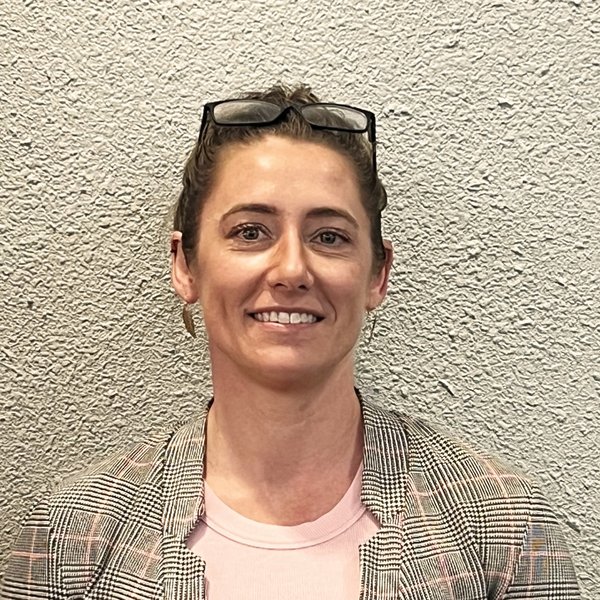
Kristin "Kj" P.
“[Peace Corps service] solidified my passion for public and community service and strengthened my commitment to international cooperation.”
1. What were your primary responsibilities during service?
As an Education Volunteer, my primary role was teaching English to approximately 200 fifth grade students annually at a primary school in Namibia. My personal focus was on fostering language development and creating a positive, safe, and engaging learning environment.
In the end, I think I was a mediocre teacher, but a really great mentor and “auntie” to my assigned students, as well as other kids I engaged with across our community.
2. What projects did you collaborate on with your community?
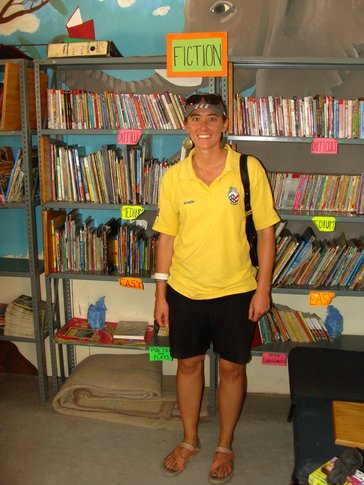
I collaborated on several impactful projects, including establishing a community library, securing prosthetics for a student who had lost his legs, and advocating for a deaf student to attend a specialized school. I also partnered with a World Teach volunteer to develop classroom management techniques and an after-school accountability program. Additionally, I assisted in organizing educational tours for at-risk youth and facilitated adult computer classes. I also assisted with the host family kindergarten business, and distributed teddy bears to the kindergarten and pre-K students. I also coached the schools track and field team.
3. How did Peace Corps service influence your professional path and development?
Peace Corps service profoundly shaped my professional trajectory by cultivating adaptability, intercultural communication, and problem-solving skills. I was immersed in a resource-constrained environment and learned to get creative, and that collaboration and projects that had organic community investment were huge keys to success. This experience directly translated to my current role in Homeland Defense and Emergency Management at the U.S. Indo-Pacific Command, where I navigate complex domestic and international disaster response challenges and work with multiple federal, state, and local partners to try and improve processes. Furthermore, the experience solidified my passion for public and community service and strengthened my commitment to international cooperation. We’re all interconnected in so many ways we can see, and many more that we cannot, and need each other to survive and thrive.
4. How do you use skills honed during service in your current job?
My Peace Corps experience equipped me with essential skills that are invaluable in my current role. Intercultural competency allows me to effectively collaborate with diverse teams and different domestic and international partners. Project management skills, developed through community projects, enable me to better handle complex contingency planning and operations. Moreover, the communication skills I refined as a teacher are crucial for conveying critical information and building consensus across the diverse communities I work with.
5. How have you helped those at home understand the value of Peace Corps service and communities abroad?
Through sharing my experiences, I've aimed to bridge cultural divides and foster a deeper understanding of global communities. I emphasize the resilience and resourcefulness of the people I worked with, highlighting the importance of intercultural exchange. By sharing stories and photos, I've helped friends and family appreciate the impact of Peace Corps and the value of international cooperation. Immediately after my service my partner and I spoke to some local community groups; I have been on a few Returned Volunteer (RPCV) or other professional panels where I discuss my service and its impacts on my career; I also regularly mention Peace Corps as a good option to consider when I’ve mentored people or provided informational interviews over the years.
6. What Peace Corps benefits have been useful to you?
The non-competitive eligibility (NCE) could have been a benefit, since I wanted to work in the federal government, however I started with an agency that already had special hiring authority, so it actually wasn’t required. The service award* helped with the transition back to the U.S. (after my partner and I did some additional end of service travel) and allowed me to relocate from Washington state to Washington, D.C., for graduate school. Beyond the tangible benefits, the intangible rewards, such as personal growth, relationships, and a broader worldview, have been invaluable.
*readjustment allowance
7. How have you remained involved with the Peace Corps community following service?
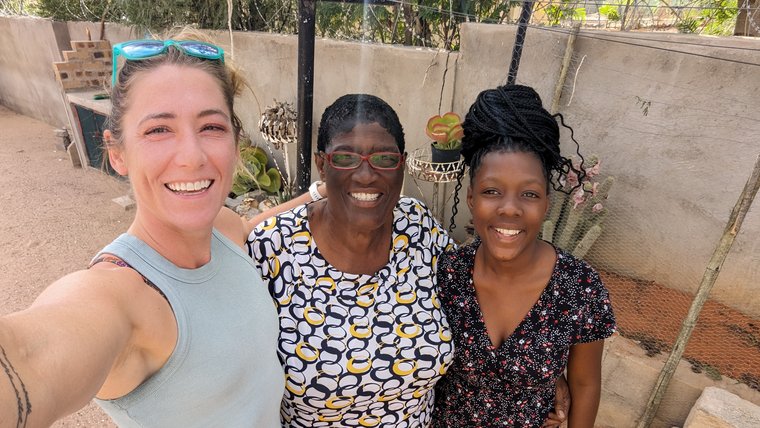
I have kept in close touch with my host family and some students and friends in Namibia and have been able to travel back there twice since I left. Namibia is absolutely a second home for me and I’m so lucky to have those connections in my life. I have provided some funding to my host mother to help her run and make improvements to her kindergarten in my host community, and I’ve helped two former students get accepted and graduate from universities via application and scholarship assistance.
I have stayed in touch with RPCV networks on social media, and am a part of my local RPCV Hawaii chapter, where I regularly attend social events, and community engagement opportunities they organize.
I remain very close friends with a number of other RPCVs from my group, and other groups before and after ours. They have been a great network for exploring employment opportunities, as well as sharing advice with, and supporting each other and enjoying good times together back home, as we did while abroad. It’s also very easy to connect with other volunteers, even when they’ve served in other countries, because you have something so impactful and unique in your life experiences. I’ve met and become friends with many other RPCVs since I’ve completed my service.
8. What tips do you have for Volunteers returning from service?
For returning Volunteers, I recommend allowing yourself time to readjust and process your experience. Embrace the transition, stay connected with your RPCV community, and explore opportunities to apply your newfound skills. Peace Corps is a once-in-a-lifetime experience. Remember the resilience you developed during service and use it to navigate your next chapter. Also be true to yourself and own and honor your experience. I once had a prospective employer as me to “justify” my past experiences, to include having served in the Marine Corps Reserves and then doing Peace Corps and working in the international humanitarian sector. I immediately knew that was not the job for me. I wanted an employer who would understand and appreciate the unique skills and experiences all these pieces of my past brought to the table.



