 An official website of the United States government


Returned Volunteer Profile
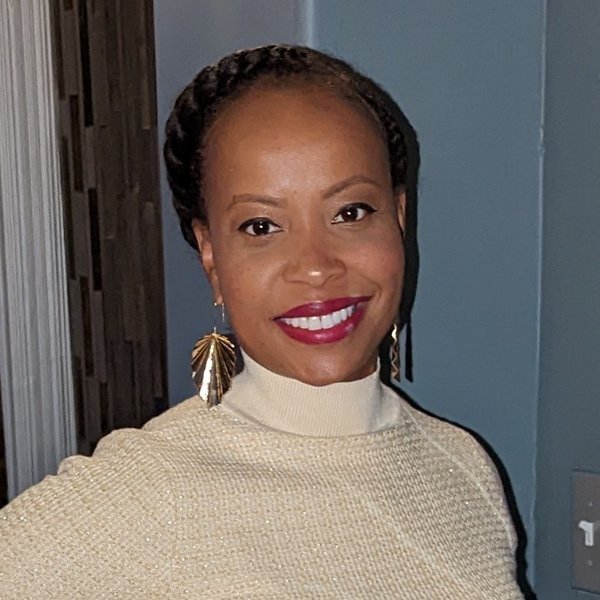
Lataurus W.
“Non-competitive eligibility definitely helped me secure a federal position after completing service. I was also bilingual in Spanish after leaving the Peace Corps, and the language skills helped me a lot.”
1. What were your primary responsibilities during service?
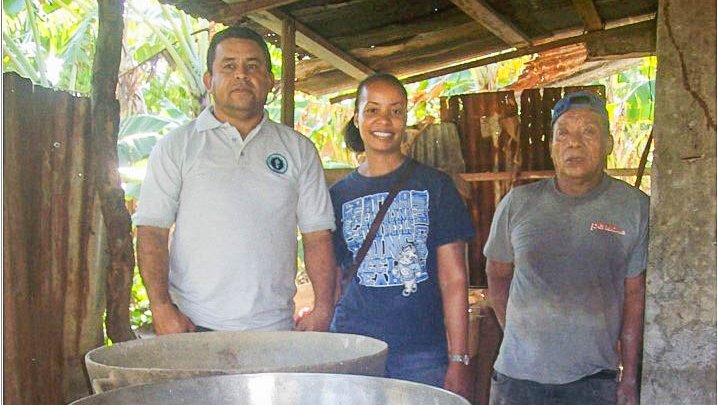
As a Sustainable Agriculture Systems Volunteer I worked to promote food security and resiliency among farming families by improving the productivity and profitability of their farming operations. During my service I got to know my community and learned what they wanted to achieve as a community. Over time we spent a lot of time together and worked very well together.
I worked with local agencies to teach best practices in agroforestry to local subsistence/coffee farmers in order to increase the quality and quantity of coffee harvested. I also taught women new recipes and ways to bake without the use of a traditional oven.
2. What projects did you collaborate on with your community?
I collaborated with the community to complete training workshops and trained 13 coffee farmers in improved agricultural techniques. I also coordinated with an environmental agency to train 19 families on the importance of reforestation techniques. The reforestation project led to writing a grant and securing funding for a Peace Corps Partnership grant to build 20 eco-stoves in the community.
The participants learned to be more proactive and maximize their resources by planting over 1700 wood and fruit trees. We also worked on coffee pruning techniques, built a solar coffee dryer, incorporated best practices like organic fertilizers, worm compost, and organic repellants, improved record keeping, and sold products to both vendors and customers.
I organized and taught a cooking class with 11 women, demonstrating how to incorporate locally grown ingredients like yucca/cassava, bananas, oranges and avocado. The cooking class led to coordinating with a local technical school to teach a bread making class in the community. The class was Monday through Friday over the course of one month, and participants earned a certificate at the end. The women’s group used their skills to bake goods for a church auction, and the proceeds were used to support various community projects.
3. How did Peace Corps service influence your professional development?
I was 35 and already had a master’s degree and a career path, so I was an older Volunteer in my cohort. I wanted to use all my skills and experiences to benefit my community.
After serving in the Peace Corps, I used my non-competitive eligibility (NCE) to secure a government position with the U.S. Department of Housing and Urban Development (HUD). That was a change of career for me but I have always been resilient and learned everything I needed to be a great employee.
Volunteering with Peace Corps, and knowing Spanish, also equipped me to volunteer for natural disaster volunteer assignments with FEMA while working at HUD. I helped on an array of projects over the years, including natural disasters in the Virgin Islands, Puerto Rico, New Orleans, North Carolina and Florida. I serve on HUD’s disaster cadre to assist as needed when there are natural disasters.
4. How do you use the skills honed during service in your current job?
I am an underwriter for the office of single-family housing at HUD. I pride myself in always being professional, working well with others and meeting the goals of our department.
In addition to my full-time position, I also serve as a disaster volunteer. My managers know I enjoy volunteering, so I am a part of the HUD disaster cadre, two of our employee engagement teams, serve as the editor for our Atlanta-area newsletter, and am on the training team for our industry partners.
Disaster volunteers must be flexible and helpful, and willing to assist as needed.
5. Have you shared your experience to help those at home understand the value of Peace Corps service and communities abroad?
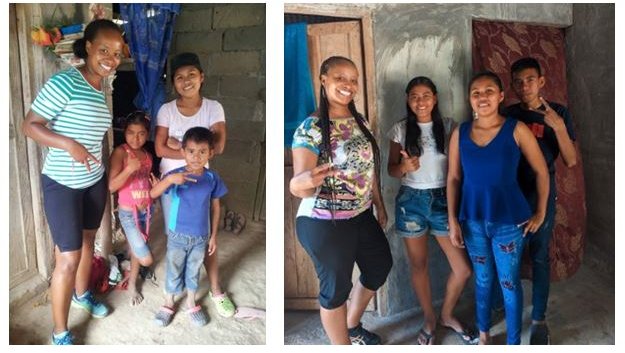
I continue to visit my community on an almost yearly basis, and always talk about Panama and share photos on social media after my visits. I consider some of the families in community as family and love them dearly. I know that it was meant for me to serve there and meet everyone I did. I am grateful for my time there and the relationships I built with everyone.
6. What Peace Corps benefits have been useful to you?
Non-competitive eligibility definitely helped me secure a federal position after completing service. I was also bilingual in Spanish after leaving the Peace Corps, and the language skills helped me a lot. I studied Spanish in college so I could always read it but being immersed in the culture and being forced to communicate in Spanish helped me a lot.
7. How have your remained involved with the Peace Corps community following service?
I’ve visited Panama and my Peace Corps community almost yearly since I left the country almost 8 years ago. I was unable to visit during the Covid-19 pandemic and last year due to political protests. The families and I keep in contact through WhatsApp, and I get photos, videos, and voice messages pretty regularly.
Sustainable Harvest International, one of the agencies I worked closely with during my service, named me one of the 25 people to positively influence their organization in their 25 years of existence two years ago.
Prior to Covid-19, I actively participated as secretary in the Peace Corps Panama Friends (PCPF) Returned Volunteer organization, to support volunteers in Panama with grants. Volunteers went home during Covid and although they are back in the country, the organization hasn’t been actively working to support Volunteers of late. PCPF is also a part of the National Peace Corps Association group.
I also used to participate in activities with the Atlanta Area Returned Peace Corps Volunteers group, but I haven’t in a while.
I remain friends with a number of Returned Volunteers from my group and others who served in Panama before or after me. Maintaining friendships is important and I try to visit friends whenever possible. On a recent trip to Mexico, I was able to visit a Peace Corps friend who now lives in Oaxaca. We hadn’t seen each other for several years but we’ve maintained communication through WhatsApp.
I also completed a Virtual Service Pilot program with the Peace Corps helping an organization in Ethiopia write a manual for urban gardening benefitting women and children living with HIV/AIDS.
8. What tips do you have for Volunteers just returning from service?
Take time to understand the benefits of non-competitive eligibility if you want to apply for federal positions, it definitely helps. I’ve met quite a few Returned Volunteers who didn’t understand all the benefits associated with it.
Stay in contact with your community if you can; they appreciate it.
Don’t be afraid to tell people about your service. I had to talk about it in order to make sense of my daily life back in the United States. I was living in the U.S. but nostalgic for the simpler way of life in Panama. I felt stuck between two places. Seek out counseling if you’re having a hard time adjusting.



