An official website of the United States government

Official websites use .gov
A
.gov website belongs to an official government
organization in the United States.

Secure .gov websites use HTTPS
A
lock (
) or https:// means you’ve safely connected to
the .gov website. Share sensitive information only on official,
secure websites.

Search
Connect with the Peace Corps
If you're ready for something bigger, we have a place where you belong.
Apply to the Peace Corps
The application process begins by selecting a service model and finding an open position.
Let us help you find the right position.
If you are flexible in where you serve for the two-year Peace Corps Volunteer program, our experts can match you with a position and country based on your experience and preferences.
Serve where you’re needed mostUniversity English Co-Teacher
 Education
Job highlights
Applications are now closed. View current openings.
Apply by
January 1, 2026Know by
April 1, 2026Depart on
August 23, 2026Duration
2 years, plus 3 months trainingAbout the project
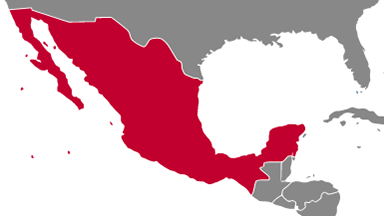
Mexico has strong cultural and economic ties with the United States. Given the economic relations between the two countries, strengthening the English-language capacities of its population is a priority for the Mexican Government. English is a key that can open doors to economic, scientific, and technical exchange, as well as to employment, commerce, and social mobility.
TEFL Volunteers serve as linguistic and cultural ambassadors and collaborate to increase mutual understanding and professional opportunities for Mexican students and teachers. They are assigned to small or medium-sized public universities. Most students commute to campus from under-resourced communities and may be on scholarship. TEFL Volunteers provide support for English teachers and learners and may link them to academic opportunities through strategic partners such as the Regional English Language Office (RELO) and EducationUSA.
Successful Volunteers support English language learning through (co-)planning, (co-)teaching, student mentoring, and on or off-campus extracurricular activities.
Additionally, TEFL Volunteers promote and participate in Communities of Practice (CoP) where teachers and Volunteers come together in a non-formal way to learn and grow professionally. A CoP emerges when two or more people share an interest in a topic and partner to fulfill common learning goals.
Volunteers are expected to work 35-40 hours per week.
As a University English Co-Teacher, you will contribute to the strategic objective of Mexican students attaining communication skills in English that will allow them to access academic and/or professional opportunities. The activities you will carry out at your university may include:
• Co-planning and co-teaching English language classes.
• Establishing and facilitating one or more Communities of Practice.
• Facilitating or co-facilitating extracurricular activities for English language learning, such as conversation clubs or cross-cultural events.
• Delivering workshops, or presentations in English for faculty members and students, to increase their awareness or knowledge about cultural or social topics while improving their English language skills.
• Mentoring and providing career counseling to students, including reviewing English-language resumes, practicing English-language job interviews, and helping to edit and proofread student papers and presentations in a way that empowers them to improve their own English.
• Providing information about academic and professional development opportunities for school staff, faculty, and students through our strategic partners.
Volunteers mainly co-teach but may occasionally be asked to substitute teach to take the place of a university English teacher who is sick or who must attend a conference or training event.
Peace Corps Mexico’s public universities are located mainly in central Mexico and are often established on the outskirts of small to large size cities; the communities to which Volunteers are assigned have populations that range from 15,000 to 2,000,000. Some universities are near industrial parks where students have internships or are adjacent to networks of small communities that provide access for students from rural areas. Others are in small towns tucked away in the mountains. Whether in a large city or a mountainous rural community, education volunteers in Mexico have meaningful opportunities to support language-learning and for cultural exchange.
Learn more about what Volunteers do in country by visiting our Mexico project page.
Required skills
Qualified candidates will have one or more of the following criteria:
Qualified candidates must have a strong interest in cross-cultural understating, a desire to teach English, and both of the following:
Bachelor of Arts/Bachelor of Science degree in any discipline
AND
At least 30 hours of English as a Foreign Language teaching/tutoring experience with primary, middle, or high school students, university students, or adults
SPECIAL NOTICE ABOUT CITIZENSHIP: Candidates who are either dual citizens of Mexico and the U.S., or who were born in Mexico and became U.S. citizens after 1998, are not eligible to serve with Peace Corps Mexico. Volunteer safety is of paramount importance, and the protections of U.S. citizenship promote Volunteer safety. Under Mexican law, anyone born in Mexico who became a U.S. citizen after 1998, or anyone holding dual U.S. and Mexican citizenship, is considered a citizen of Mexico and not of the United States. If such an individual were to face a legal, safety, or other emergency situations in Mexico, the Peace Corps' ability to intervene would be limited. If you fit either of these categories, we encourage you to look for other opportunities with Peace Corps. Please note, the Peace Corps welcomes and encourages individuals with Mexican heritage but who do not hold citizenship with Mexico to apply.
Language: Spanish
A. Completed 4 years of high school Spanish coursework in the past 8 years
B. Completed college-level Elementary II Spanish semester (Elementary III in quarter system) within the past 6 years
C. Score between 50-62 on the Spanish College Level Examination Program (CLEP) exam in the past 6 years
D. Score Novice-High or Intermediate-Low on official American Council on the Teaching of Foreign Languages (ACTFL) Oral Proficiency Interview (OPI) in Spanish within the past 6 years
Required behavioral competencies
These competencies are essential for all service assignments and are assessed in the application and interview process:
Motivation for and commitment to service
Adaptability and open-mindedness
Problem solving and resourcefulness
Behavioral maturity and professionalism

Photos from Mexico



How you and the community will make an impact together:
Living conditions in Mexico vary greatly. Larger cities or towns may be more progressive, while rural areas and small towns tend to have traditional and conservative values; these could be quite different than what most Volunteers are accustomed to and require significant adaptation.
A Volunteer’s assigned community could be located 8 or more hours from the Peace Corps Mexico Office. From where they live, Volunteers may need to commute up to an hour on public transportation to reach their universities, although such a long commute is not common. Limited bus schedules could make it necessary for some Volunteers to stay on campus more hours than others.
All Volunteer communities have some form of communication, whether by landline or cell phones, telephone booths, satellite phones, or internet access. However, due to the isolation of certain communities or adverse weather conditions, service can be weak or intermittent and may even be inactive for some days. Nevertheless, there is always a larger community within a two-hour distance where communication systems are more reliable.
In most of the central region of Mexico, especially in mountainous areas, it can be cold in the evening throughout much of the year. Daytime highs can be very hot, but a jacket and hat are often useful in the early morning or late evening. Temperatures can range from freezing to the upper-90s. Layering is a good strategy year-round, and Volunteers should be prepared for rainy weather.
Host family stays are required during the 10-week Pre-Service Training (PST), and during the first three months of service, to promote community integration and language learning. A host family could be a two-parent family with children, a grandmother living alone, a single parent who works all day, or any other type of family. Regardless, it’s important that the Volunteer integrate with the family and respect the family’s rules and norms. After living with a host family for the first three months, some Volunteers decide to live independently if suitable and affordable housing is available. Other Volunteers continue to live with a host family.
Additional information on living conditions you may encounter during service can be found at: https://www.peacecorps.gov/mexico/preparing-to-volunteer/living-conditions/
Learn more about the living conditions, including detailed information on culture, communications, housing, and health/crime statistics on our Mexico country page. You can also delve into stories about local communities by reading our blog or Volunteer stories.
Meet a Volunteer in Mexico
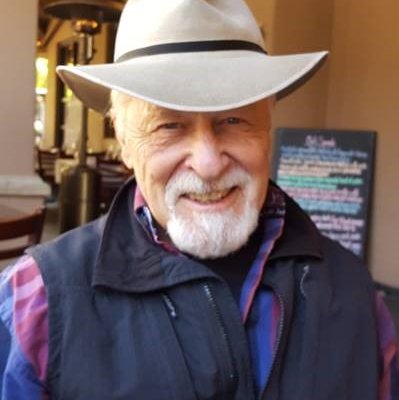
Douglas C.
English Language Facilitator
"I appreciate that for my current engagement the discussions have become increasingly valuable as we’ve become better acquainted and as I’ve learned to be more of an active listener."
See full Volunteer profile
To learn more about serving as a couple in Mexico, visit the country page.
Application process
From application to departure takes around nine months. Learn about the application process for Volunteer opportunities.
Medical/legal clearance
You will need to be cleared medically and legally in order to serve in Mexico. Review information on medical clearance and legal clearance to learn about the process.