An official website of the United States government

Official websites use .gov
A
.gov website belongs to an official government
organization in the United States.

Secure .gov websites use HTTPS
A
lock (
) or https:// means you’ve safely connected to
the .gov website. Share sensitive information only on official,
secure websites.

Search
Connect with the Peace Corps
If you're ready for something bigger, we have a place where you belong.
Apply to the Peace Corps
The application process begins by selecting a service model and finding an open position.


Let us help you find the right position.
If you are flexible in where you serve for the two-year Peace Corps Volunteer program, our experts can match you with a position and country based on your experience and preferences.
Serve where you’re needed mostFood Security Promoter
 Agriculture
Job highlights
Applications are now closed. View current openings.
Apply by
January 1, 2026Know by
April 22, 2026Depart on
August 28, 2026Duration
2 years, plus 3 months trainingAbout the project
The work of a Peace Corps Volunteer in Madagascar, working as a Food Security Promoter, is essential, collaborative, and growth promoting. You will work alongside Malagasy farmers, promoting soil improvement techniques, small gardens, and tree growing. Your work will support community nutrition centers, where mothers bring their children to be measured and plotted on growth charts. You will work with these women to introduce nutrition information and how to use local foods to enrich their diets for growth and health promotion.
You and your counterparts will collaborate with community members to promote food security through agriculture-based income generation. Working with community members to develop their capacity to grow nutrient dense foods, and transform these foods into products for family consumption and for sale, will strengthen household economic security and resilience. The ability of families to break the generational cycle of malnutrition will allow their children to receive proper nutrition during their critical first 1,000 days, which will lay the foundation for their future ability to grow, learn, and succeed.
Madagascar’s economy depends on agriculture, and women, even more than men, farm and garden to produce food for their families, and to sell. Seasonal rainfall and a tropical climate allow for many types of food to grow, yet a large percentage of the population suffers from chronic malnutrition, unable to access nutrient rich foods on a daily basis. Challenges include inflation, lack of employment, poor roads, lack of access to quality seeds, lack of access to water, poor soil quality, cyclones, floods, and limited food availability in local markets.
To address these challenges, you will work with motivated community partners including local agricultural associations, women’s groups, secondary schools, and non-governmental organizations (NGOs). Your local supervisor will likely be the mayor of the community, and you will do your work in collaboration with local counterparts. You and your counterparts will use a participatory approach to assess local knowledge, resources and needs, and to identify the most appropriate activities to address local food security challenges. These activities may include:
• Promoting weather-resilient/bio-intensive gardening techniques.
• Co-teaching food transformation and preservation techniques to increase income earned from harvested crops
• Organizing cooking demonstrations and trainings on nutrition and diversified diets to improve infant and child health
• Planting community and school gardens
• Creating local seed banks for farmers to contribute and receive quality seeds
• Co-teaching composting and other soil quality improvement techniques
Peace Corps is committed to addressing environmental challenges, and you will support the Malagasy government’s promotion of sustainable farming practices as part of their efforts to achieve national food security, focusing on methods that increase productivity and strengthen environmental adaptation and resilience.
In addition to your primary work, you may also work on secondary projects that meet community needs, such as an English club, youth leadership clubs, or malaria prevention activities.
Learn more about what Volunteers do in country by visiting our Madagascar project page.
Required skills
Qualified candidates will have one or more of the following criteria:
Qualified candidates will have an expressed interest in working in agriculture and one or more of the following criteria:
• Bachelor of Arts/Bachelor of Science degree in any field
OR
• 5 years' professional work experience
Language: There are no pre-requisite language requirements for this position.
Required behavioral competencies
These competencies are essential for all service assignments and are assessed in the application and interview process:
Motivation for and commitment to service
Adaptability and open-mindedness
Problem solving and resourcefulness
Behavioral maturity and professionalism

Photos from Madagascar



How you and the community will make an impact together:
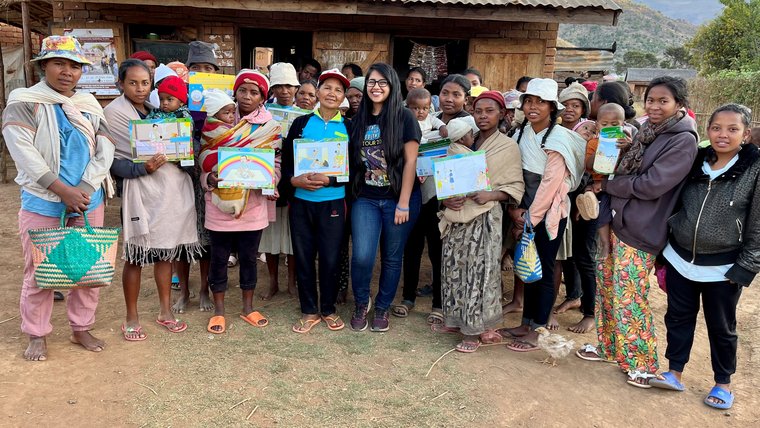
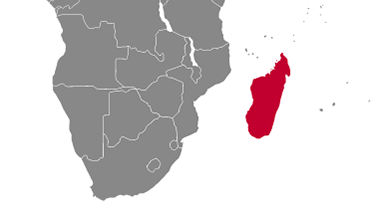
Madagascar is the 4th largest island in the world. Its terrain is diverse and the climate can change drastically. It’s one of 17 mega-diverse countries in the world. Volunteers live throughout the east coast, the highlands, the southeast, and mid-south where living conditions can vary greatly from one community to another. Volunteers should be flexible, resilient, and willing to live very modestly. Food Security Promoters typically live in small villages, often with a population less than 2,000.
• Housing: Volunteers live in private one or two-room houses. Housing materials vary by region, with walls made from local wooden material in coastal areas and bricks in the highlands. Volunteers have individual outdoor bath houses and latrines, but often no running water or electricity. Some families in the community may have access to generators that can provide electricity/battery recharge, but that is not standard and it is easy to buy solar panels and batteries locally.
• Communication: Most communication is conducted by cell phone. You’ll have an opportunity to buy your phone during Pre-Service Training if you did not bring an unlocked phone. Call costs are based on the minutes used, texts sent and are deducted immediately. Incoming calls and texts, even from the U.S., are free. It’s possible to access very slow internet or messaging apps through the purchase of local data plans.
• Transportation: On a case-by-case basis, Peace Corps Madagascar may provide a bike, helmet, and bicycle maintenance training to assist you in daily routines. You may also be required to walk or bike between 3 to 10 kilometers to reach a main road or an outlying village where community partners live and work, and for long distances between towns, you take bush taxis.
• Food: Rice is the staple. Other foods include cassava, potatoes and corn. Meat and fish could be expensive or difficult to find depending on the region. Fish is more present on the coast and meat in the highlands. If meat or fish are unavailable, a variety of beans and peanuts can be used as protein sources. Vegetables vary by region, but most are produced in the highlands. Madagascar is graced with wonderful, though seasonal, fruits. During the off-season, specific fruits may be unavailable and unevenly distributed across the country. You will do your shopping at the local market, but some items might have to be purchased at a larger town nearby.
Vegetarians and vegans may face challenges and should be mindful of food customs. Turning down a plate of food because it has meat may be seen as rejecting a gift. Volunteers have found it possible but difficult to maintain a vegetarian diet.
The Malagasy are generally tolerant, although values concerning sexual orientation are conservative. Same-sex marriages are not permitted under Malagasy law. Volunteers will need to be mindful of cultural norms and use their judgment to determine the best way to approach sexual orientation in their communities. Staff and currently serving Volunteers will address this topic during Pre-Service Training and identify support mechanisms for incoming trainees.
Learn more about the living conditions, including detailed information on culture, communications, housing, and health/crime statistics on our Madagascar country page. You can also delve into stories about local communities by reading our blog or Volunteer stories.
Meet a Volunteer in Madagascar
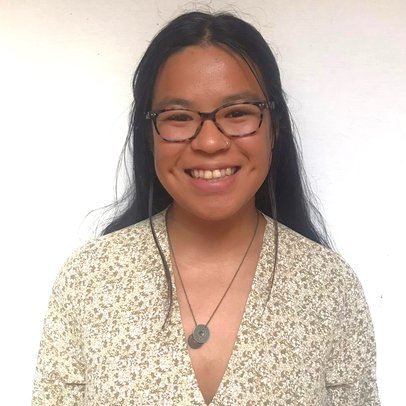
Julia L.
Community Health Advisor
"In Madagascar, when you walk down the street everyone says hello, invites you into their home, and wants to converse. My community has been extremely welcoming from day one, and I am blessed with their kindness and openness."
See full Volunteer profile
To learn more about serving as a couple in Madagascar, visit the country page.
Application process
From application to departure takes around nine months. Learn about the application process for Volunteer opportunities.
Medical/legal clearance
You will need to be cleared medically and legally in order to serve in Madagascar. Review information on medical clearance and legal clearance to learn about the process.