An official website of the United States government




How chocolate, vanilla, and spices brought 7 RPCVs together in Madagascar
Returned Volunteers connect to support sustainability in Africa
Do professional connections among Returned Peace Corps Volunteers (RPCVs) continue after completing service? In the case of the TSIRO Alliance in Madagascar, the answer is a resounding “yes.” Several RPCVs who served in various countries between 1984-2019 currently work collaboratively to help small-scale farmers while protecting biodiversity.
Biodiversity under threat
Madagascar’s incredible biodiversity is under threat due to destructive farming practices and deforestation. Less than 25 percent of forests remain. Because of shrinking habitats, many species of animals are endangered. Humans in Madagascar are impacted, too. Seventy-five percent of the population lives on less than $2 per day and malnutrition rates in the country, including child stunting, are among the world’s highest.
Since 1993, the government of Madagascar has invited Peace Corps Volunteers to address many of these challenges through their work in the Environment, Community Economic Development, Agriculture, Education, and Health sectors.

USAID and partners launch the TSIRO Alliance
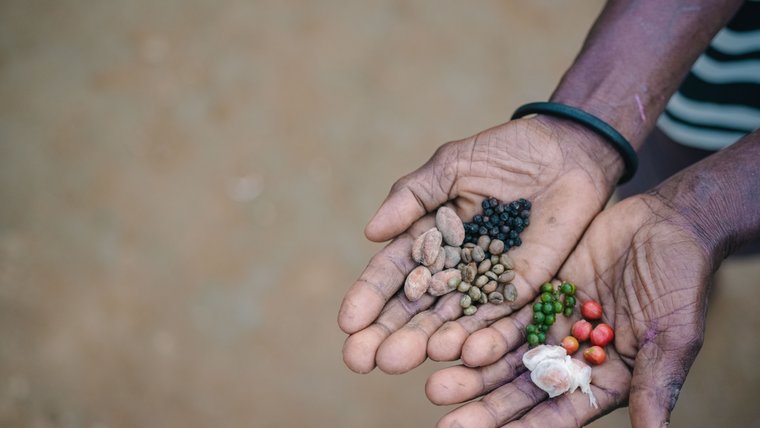
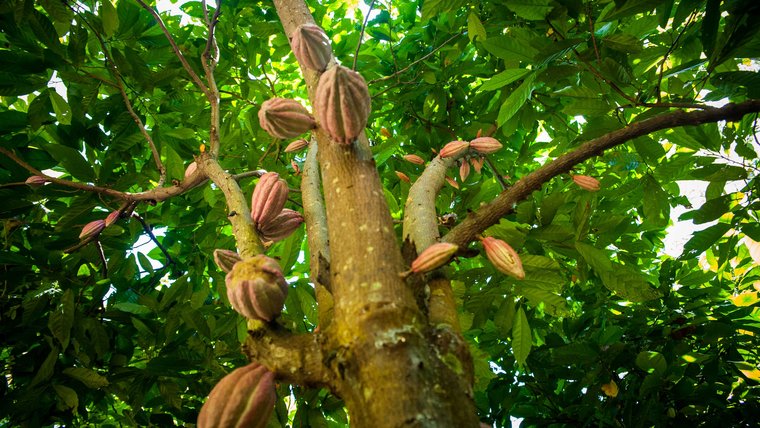
In 2021, the United State Agency for International Development (USAID), alongside Catholic Relief Services (CRS) and private sector partners, launched the TSIRO Alliance to address deforestation while supporting sustainable cacao, vanilla, and spice production. The five-year, $5.8 million public-private partnership is strengthening agroforestry systems, diversifying farmer incomes, and promoting sustainable agricultural practices.
Returned Volunteers play key roles
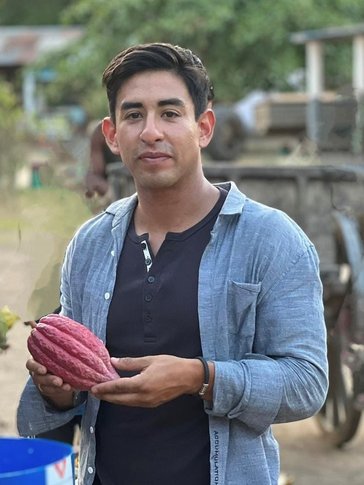
One interesting aspect of the TSIRO Alliance is the extraordinary number of RPCV leaders in the program, representing government, NGOs, and private companies. The list includes Jim Hazen, CRS, TSIRO former chief of party (Madagascar 2000-02); Liz Toomey, former USAID communications consultant (Madagascar 2011-13); Tim McCollum, CEO of Beyond Good Chocolates (Madagascar 1991-2001); Tyler Sanderson, supply chain director for Beyond Good Chocolates (Zambia 2015-17); Jesus Del Toro, sourcing manager for Beyond Good Chocolates (Madagascar 2017-19); Bill Guyton, founder of Specialty Cocoa and Chocolate Associates (Democratic Republic of the Congo 1984-86); and Elizabeth Moore, SPICES deputy director, CRS (Cameroon 2008-11).
Peace Corps service provides a foundation for collaboration
The common thread among these RPCVs is their dedication to environmental stewardship and appreciation of small-scale farmers.
Liz Toomey says that “even before the launch in 2021, the TSIRO partners spent several months co-creating the program together. This included working closely to develop a theory of change, key activities, and agreeing on funding contributions. Our common Peace Corps experience provided a high level of trust between the partners right from the start, ultimately paving the way for the success of the alliance.”
Successes of the alliance
Now that the program is approaching completion, the alliance can report some significant achievements:
● 747,500 trees have been planted on over 3,000 hectares of restored land
● 540 village savings and loans groups have saved over $365,000
● 19 participating farmer cooperatives have reported sales of over $2.2 million
● Nearly $2.1 million has been leveraged from private sector companies
RPCVs keep the focus on local community needs
Beyond Good is one of the private sector companies contributing financial and human resources to the TSIRO Alliance. The company was founded and staffed by several RPCVs.
CEO Tim McCullum explains that “Beyond Good began operations in 2008. Over a decade later, our perseverance has paid off and we are now able to produce chocolate in Madagascar and pay premiums to farmers for quality products. We are thankful to the TSIRO Alliance partners who have helped train farmers on agroforestry, financing, biodiversity, and post-harvest practices to improve quality.”
Jim Hazen, TSIRO Alliance’s former chief of party, recognizes the success that can be achieved when the public and private sectors work together towards the common goals of protecting biodiversity and improving farmer livelihoods. “This model really works. As I learned in the Peace Corps, providing farmers with diversified income streams is the first step toward reducing poverty,” he said.
Bill Guyton adds, “I often think back to my Peace Corps experience in the Congo and how working with and listening to local community needs will result in the best outcomes. I am honored to work with the leadership team of the TSIRO Alliance and for the contributions of USAID, CRS, and the private sector partners.”