An official website of the United States government

Official websites use .gov
A
.gov website belongs to an official government
organization in the United States.

Secure .gov websites use HTTPS
A
lock (
) or https:// means you’ve safely connected to
the .gov website. Share sensitive information only on official,
secure websites.

Search
Connect with the Peace Corps
If you're ready for something bigger, we have a place where you belong.
Apply to the Peace Corps
The application process begins by selecting a service model and finding an open position.


Let us help you find the right position.
If you are flexible in where you serve for the two-year Peace Corps Volunteer program, our experts can match you with a position and country based on your experience and preferences.
Serve where you’re needed mostEnglish Teacher and Teacher Trainer
 Education
Job highlights
Applications are now closed. View current openings.
Apply by
January 1, 2026Know by
May 1, 2026Depart on
September 23, 2026Duration
2 years, plus 3 months trainingAbout the project
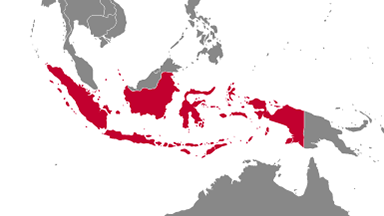
Indonesia is the most populous Muslim nation in the world and consists of hundreds of ethnic groups, with over 700 languages used across the 17,000 islands of the archipelago. In this geographically complex country, most of the nation’s population is concentrated on the island of Java, the most populous island in the world. The Peace Corps office is located in Surabaya, East Java.
As an English Education Volunteer, your primary goals will be to support the development of students’ English communication skills and increase access to academic and professional opportunities. Volunteers work alongside Indonesian teacher counterparts and community members to create opportunities for growth, resiliency, and leadership skill development inside and outside of the classroom.
Volunteers collaborate with teachers at an Indonesian public or Islamic school (Madrasah) and work with two or more local teachers to co-plan English curricula in middle school (grades 7-9) or high school (grades 10-12) and co-teach lessons. Some of the teachers might only have a basic or intermediate understanding of English. Other teachers might have mixed abilities to use English in conversation, writing, or reading. Supporting teacher language acquisition is an important part of the role.
The Indonesian school week is Monday through Friday or Saturday; Volunteers work in a professional capacity at their assigned school and are required to attend school at least five days each week. It is expected that you will devote a minimum of 30 hours per week; 20 hours will be direct co-teaching and the other 10 hours are reserved for planning and supporting classroom management. Volunteers will have opportunities to design and facilitate teacher trainings through local teachers’ organizations. Volunteers will also have opportunities to co-plan and co-lead extracurricular and community activities that foster interest in language acquisition, such as English clubs, after-school sports, or art. Previous Volunteers and their Counterparts have successfully launched English Clubs or youth leadership camps. Some Volunteers may be assigned to teach in schools with only basic resources, while others may have access to computer labs or audio-visual equipment. Depending on community needs, digital literacy engagement may also be part of your assignment.
Throughout service you will receive training on implementing a participatory approach within schools and the local community to identify needs and work together to strengthen their capacity to meet those needs. You may collaborate on projects that aim to create safe, engaging, and supportive learning environments for Indonesian students, such as activities related to leadership and life skills development, girls’ and boys’ empowerment, environmental awareness, and health.
A willingness to develop your intercultural skills and cultural sensitivity, including religious tolerance, is essential to your success as a Volunteer, and your health and safety. Peace Corps goals two and three are of particular importance to our Indonesian partners; building people-to-people connection is integral to Peace Corps service in Indonesia and is as important as the development of skills.
Due to teacher retirement regulations by the Indonesian government, Volunteers must conclude their service prior to the age of 60. Peace Corps Indonesia invitees must submit additional biographical information for visa applications and may be required to interview with Republic of Indonesia representatives prior to receiving approval from the Government of Indonesia.
Learn more about what Volunteers do in country by visiting our Indonesia project page.
Required skills
Qualified candidates will have one or more of the following criteria:
Qualified candidates will have a Bachelor of Arts/Bachelor of Science degree in any discipline and a strong desire to teach English
Language: There are no pre-requisite language requirements for this position.
Required behavioral competencies
These competencies are essential for all service assignments and are assessed in the application and interview process:
Motivation for and commitment to service
Adaptability and open-mindedness
Problem solving and resourcefulness
Behavioral maturity and professionalism

Photos from Indonesia



How you and the community will make an impact together:
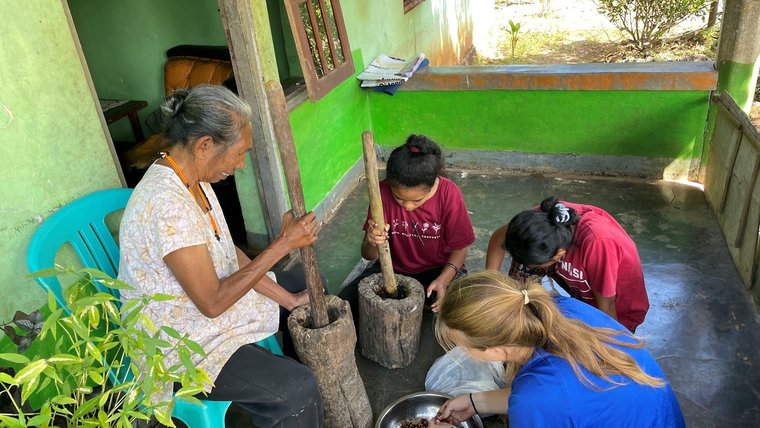
All Volunteers live with host families for the full duration of their service. The experience of living with an Indonesian family is often one of the most rewarding aspects of Volunteer service. Host families support Volunteers in becoming an integral part of the community by supporting a deeper understanding of local culture, traditions, and customs in a safe, welcoming environment. Many homes are multi-generational, and Volunteers may have less privacy than what they are accustomed to. Volunteers will have their own bedrooms and will most likely share a bathroom and kitchen with the rest of the household. Volunteers live in communities where indoor plumbing may not be available and bucket showers and squat toilets are typical. Volunteers are expected to live according to the cultural norms of their communities.
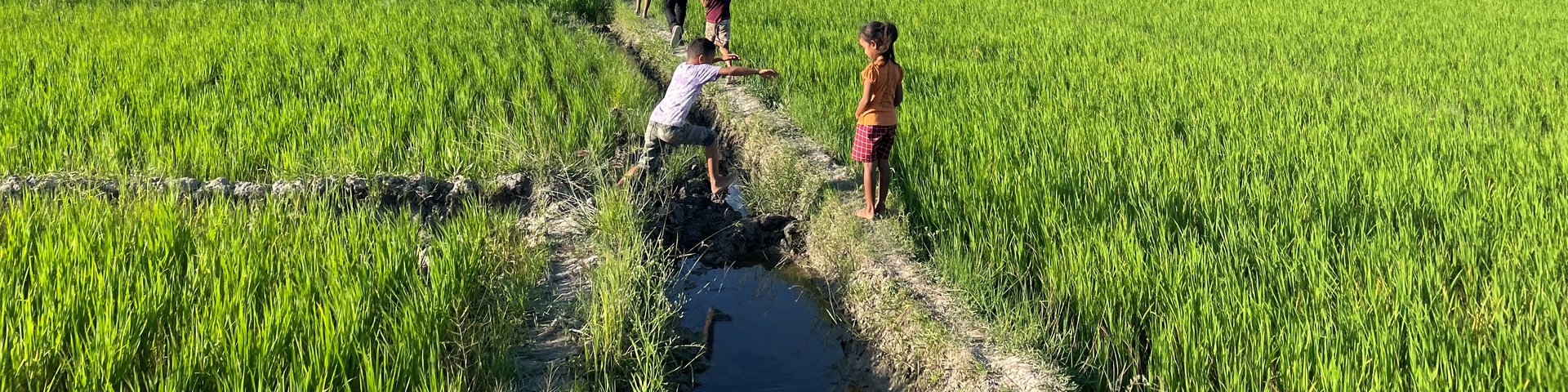
Volunteers bicycle several miles, walk for about an hour, or use public transportation to get to and from work, and other activities. Volunteers may find that transportation to and from school by personal bike is the best mode of daily transportation. While most Volunteers are placed in rural locations, the extreme population density in most areas can make villages feel urban. Depending on the region, rural communities may have limited transportation options to Surabaya but much easier access to their regional capitals, where all basic goods and services can be accessed. Additionally, rural areas may have limited or unreliable internet/data. Volunteers should not expect to access consistent internet while living in their community.
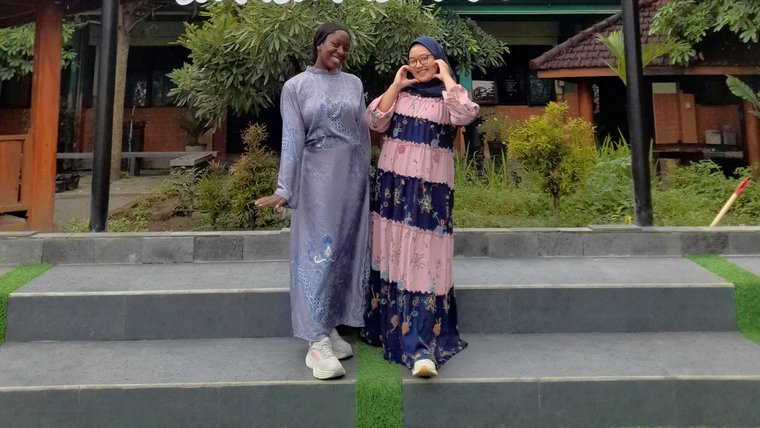
Indonesians are often curious about the backgrounds of Volunteers. Volunteers, and particularly Volunteers of color, should prepare to answer many questions regarding their identity. It is also quite common for Indonesians to comment on physical appearance. Volunteers may experience a range of responses to their skin color: from being mistaken for an Indonesian, to being questioned about their U.S. citizenship, to facing behavior and language skill expectations, to being able to get better prices for goods and services. These instances can be turned into teachable moments for the Volunteer and the community. Respectful exchanges can make for rewarding Volunteer experiences that can help to balance some of the more trying moments Volunteers may experience in Indonesia when it comes to managing misconceptions about the United States.
Indonesian community members will be curious about your religious beliefs and practices. Volunteers with belief systems that fall outside the recognized religions in Indonesia (Islam, Buddhism, Hinduism, Catholicism, Protestantism, Confucianism, and indigenous faiths) will need to learn strategies for responding to questions about this topic. Peace Corps Indonesia places Volunteers in two provinces with a majority Muslim population and one with a majority Christian population.
Volunteers will likely find that values and norms are different from those in the U.S. Training sessions and discussions on community integration are part of Pre-Service Training, and Volunteers will be equipped with intercultural tools to navigate cultural differences and build strong relationships. Peace Corps Indonesia is committed to creating a supportive environment for Volunteers of all backgrounds. Staff and experienced Volunteers will address bridging differences throughout the training curriculum and identify support mechanisms for incoming trainees.
Learn more about the living conditions, including detailed information on culture, communications, housing, and health/crime statistics on our Indonesia country page. You can also delve into stories about local communities by reading our blog or Volunteer stories.
Meet a Volunteer in Indonesia
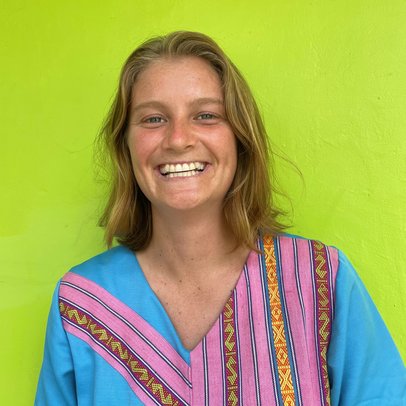
Maggie D.
English Teacher and Teacher Trainer
"[My host parents] have taught me to not worry about what we have, but to just give, because the more we give the more we gain; the needs of others are the needs of us all as a whole."
See full Volunteer profile
To learn more about serving as a couple in Indonesia, visit the country page.
Application process
From application to departure takes around nine months. Learn about the application process for Volunteer opportunities.
Medical/legal clearance
You will need to be cleared medically and legally in order to serve in Indonesia. Review information on medical clearance and legal clearance to learn about the process.