An official website of the United States government

Official websites use .gov
A
.gov website belongs to an official government
organization in the United States.

Secure .gov websites use HTTPS
A
lock (
) or https:// means you’ve safely connected to
the .gov website. Share sensitive information only on official,
secure websites.

Search
Connect with the Peace Corps
If you're ready for something bigger, we have a place where you belong.
Apply to the Peace Corps
The application process begins by selecting a service model and finding an open position.

Let us help you find the right position.
If you are flexible in where you serve for the two-year Peace Corps Volunteer program, our experts can match you with a position and country based on your experience and preferences.
Serve where you’re needed mostCommunity Economic Development Facilitator
 Community Economic Development
Job highlights
Applications are now closed. View current openings.
Apply by
January 1, 2026Know by
May 1, 2026Depart on
September 4, 2026Duration
2 years, plus 3 months trainingAbout the project
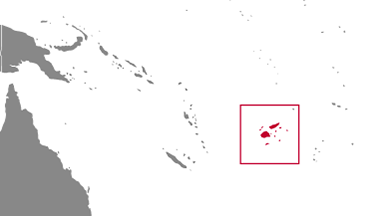
Fiji is a small island nation steeped in rich culture and tradition. Despite a century of colonization, the country has maintained strong indigenous identities and practices. Fijians are born into communal systems that guide and support them throughout their lives, with family relationships and kin networks at the center.
Fiji is a lower middle-income country whose economy is largely supported by tourism and agriculture. However, Fijians’ overall economic wellbeing is multidimensional. For example, a family without income but access to land is often better off than a family with income but no land access. This is where Peace Corps Volunteers can offer support. Fiji is rich with resources beyond the white beaches that fuel tourism. The country boasts a year-round growing season, access to an ocean full of fish, and an enabling environment for business. However, to see an economic growth that is shared broadly, there are a variety of enabling skills that our government partners would like to see strengthened within the indigenous context: financial literacy and money management, recordkeeping, project design, risk management, monitoring and evaluation, and business development, to name a few. Volunteers are uniquely positioned to support the bolstering of these skills.
All two-year Volunteers are placed in rural, and often remote, villages. Their goal is to support community-based groups—such as women’s and youth groups—to improve their project design and management skills, and to support individuals and families as they build income-generating activities and related money management skills. Volunteers must be comfortable with ambiguity, very entrepreneurial, and committed to working with communities to identify opportunities. To accomplish this, Volunteers generally follow this sequence:
Upon arrival to their villages, Volunteers spend three months proactively learning about and integrating into their communities. In an intentional way, they settle into local rhythms, joining their neighbors’ daily activities, such as farming, fishing, washing, cooking, and drinking kava. With village counterparts (i.e., the mayor and leaders of women’s and youth groups), they also co-lead participatory activities focused on developing relationships.
In time, the objective of those collaborative participatory activities shifts toward uncovering village assets, needs and development priorities. With counterparts, Volunteers co-plan and co-facilitate community trainings, workshops and focus-group discussions on topics such as project management, income-generating activities, and financial literacy.
As needed and appropriate, Volunteers support their communities’ efforts to find and solicit support from the many Government Ministries, international donors and NGOs that provide relevant funding.
Finally, Volunteers and counterparts use coaching skills to support community members as they deepen and leverage their new abilities, cheerleading and celebrating successes along the way. Activities may include the development of cooperatives, communal projects, community savings groups, and an array of income-generating activities. Volunteers work within existing communal systems, and they are not assigned to a specific business or local project in their village.
The focus of this approach is mutual learning and sustainable growth, where Volunteers do not take the lead in identifying priorities or implementing projects, but support the discussion and prioritization of community needs. The Peace Corps defines Volunteer success by the quality of community learning and initiatives that they support, rather than the number or size of the projects they complete. For Volunteers who arrive to Fiji fresh out of the achievement-driven pulse of many U.S. colleges and jobs, the quiet pace and hands-off approach of Peace Corps’ development model can take some adjustment. Rather than managing much themselves, Volunteers support the bolstering of a suite of foundational economic and organizational skills that, when understood deeply and wielded with diligence over time, can be transformational.
This job begins and ends with heartfelt integration into rural, conservative, unhurried villages. Volunteers’ first priority is to be engaged neighbors and friends, building genuine connections with the people around them. Along the way, there are vibrant opportunities for Volunteers to leverage their business skills and passions, catalyzing the economic advancement of the community they come to call home.
Learn more about what Volunteers do in country by visiting our Fiji project page.
Required skills
Qualified candidates will have one or more of the following criteria:
Qualified candidates will have one or more of the following criteria:
• Bachelor of Arts/Bachelor of Science degree in any business discipline; or at least
OR
• 3 years’ professional experience in business management.
Language: There are no pre-requisite language requirements for this position.
Required behavioral competencies
These competencies are essential for all service assignments and are assessed in the application and interview process:
Motivation for and commitment to service
Adaptability and open-mindedness
Problem solving and resourcefulness
Behavioral maturity and professionalism

Photos from Fiji



How you and the community will make an impact together:
For many, the mention of Fiji conjures images of translucent waters and idyllic island living, and Fiji is indeed a country of shimmering beauty. At the same time, the daily reality for most Peace Corps Volunteers (PCVs) is textured and more complex.
The indigenous Fijian village context is central to most PCVs’ experience. Villagers often place great value on hierarchy, Christianity, and traditional roles of men and women. The Peace Corps’ approach to development asks PCVs to understand these norms with curiosity and respect, even when it involves such acts as wearing modest clothing in hot, humid weather, conforming to expectations for men and women, or regularly attending church. Fijians are often playful—cheeky, as locals say—but (like all of us) also carry biases that might feel hurtful. PCVs’ professional success hinges upon their ability to build the cultural sensitivity, maturity, and interpersonal skills to navigate these elements with grace, while also respectfully, but vibrantly sharing who they are with their communities.
All PCVs live with a host family for the ten (10) weeks of Pre-Service Training (PST). After PST, PCVs are assigned to their two-year communities. PCVs will live in rural villages on the large islands of Viti Levu or Vanua Levu, usually in an independent home that the village loans to Peace Corps. PCVs’ communities and homes vary across a number of factors, including:
Location: Locations range from mountainous interiors, to coastal plains, to swampy river delta regions. Few PCV communities are next to sandy beaches.
Housing type: While PCVs live in a variety of house types, most are fairly small and made from corrugated tin.
Electricity: Many PCVs’ homes do not have consistent electricity. In these cases, Peace Corps provides a solar panel that can usually power one light or charge a phone.
Phone/data coverage: Many PCVs do not have smart phone coverage within their home, though there are usually spots within walking distance where they can make a call or check email. For safety, all Volunteers have access to basic connectivity for a phone call or are given a Satellite phone for emergencies.
Water: Some communities experience periodic shortages of fresh water, requiring PCVs to save and store water to use during those periods.
Access to market towns: Few villages hold more than basic “canteen” shops, and market towns may be up to three hours away by public transit (buses, trucks, or vans).
Here are four other important elements of PCVs’ lived experiences:
Floor-sitting: Sitting cross-legged on woven mats is a culturally important part of village life, and Volunteers do so for hours at a time most days.
Food: While Fiji has an abundance of food, village diets are heavy in root starches, fish, canned meat, processed noodles, fried dough, and other oily foods, often featuring little variety and few vegetables. Peace Corps encourages PCVs to grow their own vegetable gardens.
Religion: Fiji is a deeply religious society. While there are many religions throughout Fiji, Protestantism and Catholicism dominate in the villages where most PCVs live. Religion and culture are inextricably linked in Fiji, and attending church is an important avenue for cultural integration.
Identity: Hollywood stereotypes permeate many Fijians’ understandings of U.S. Americans, and PCVs who are of a non-majority racial, ethnic, or other group in the United States may encounter unwanted attention and questions about their identity. Fiji’s colonial history contributed to a hierarchical sense of colorism that exists in some Fijians’ belief systems. There is a small gay community in Fiji, and a handful of gay rights organizations. However, being openly gay is not generally accepted in rural, conservative communities where PCVs serve. To reveal or not to reveal your full identity is a personal one.
Learn more about the living conditions, including detailed information on culture, communications, housing, and health/crime statistics on our Fiji country page. You can also delve into stories about local communities by reading our blog or Volunteer stories.
Meet a Volunteer in Fiji

Kaitlan M.
Markets for Change Volunteer
"It is immensely meaningful for me to carry forward initiatives that originated during my two-year service in 2015."
See full Volunteer profile
To learn more about serving as a couple in Fiji, visit the country page.
Application process
From application to departure takes around nine months. Learn about the application process for Volunteer opportunities.
Medical/legal clearance
You will need to be cleared medically and legally in order to serve in Fiji. Review information on medical clearance and legal clearance to learn about the process.