An official website of the United States government

Official websites use .gov
A
.gov website belongs to an official government
organization in the United States.

Secure .gov websites use HTTPS
A
lock (
) or https:// means you’ve safely connected to
the .gov website. Share sensitive information only on official,
secure websites.

Search
Connect with the Peace Corps
If you're ready for something bigger, we have a place where you belong.
Apply to the Peace Corps
The application process begins by selecting a service model and finding an open position.


Let us help you find the right position.
If you are flexible in where you serve for the two-year Peace Corps Volunteer program, our experts can match you with a position and country based on your experience and preferences.
Serve where you’re needed mostCommunity Development Facilitator in Coastal Resource Management
 Environment
Job highlights
Applications are now closed. View current openings.
Apply by
January 1, 2026Know by
March 1, 2026Depart on
July 3, 2026Duration
2 years, plus 3 months trainingAbout the project
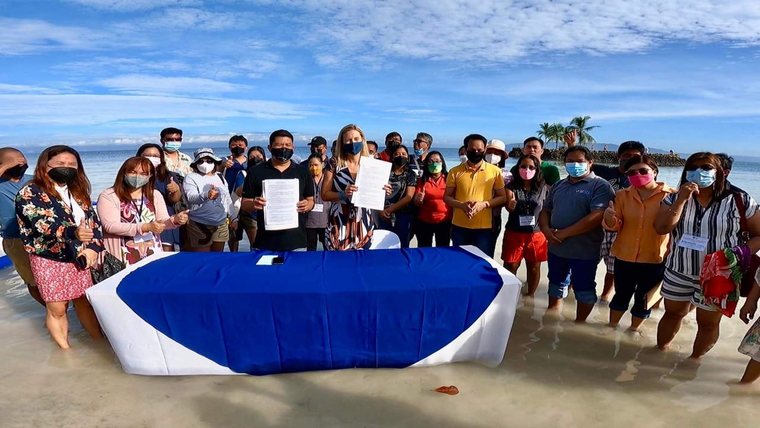
Community Development Facilitators (CDFs) work in Local Government Units (LGUs) at the provincial, city, or municipal level. CDFs also collaborate with LGU partners such as non-governmental organizations (NGOs). LGUs have the mandate to manage coastal and marine resources under the Local Government Code (Republic Act 7160) of the Philippines. Volunteers work alongside LGU staff, NGO staff and the community on a variety of activities around environmental education, community organizing, and local government planning. While specific activities depend on the needs of the LGU and community, typical activities include:
Facilitation of participatory coastal resource assessments.
Development and/or update of databases (e.g., Coastal Environment Profile).
Development and/or update of the 5-year LGU Coastal Resource Management Plan.
Review of existing laws and guidelines that govern the management of coastal and marine resources and explore the possibility of improving those laws and guidelines.
Sharing transferable skills with community-based organizations (e.g., youth, women, fisher folk).
Establishment and/or enhancement of a marine protected area management system.
Development of business concepts/alternative livelihoods in the community.
Facilitation of environmental awareness activities for in-school and out-of-school youth.
Participation in the Disaster Risk Reduction and Management Office through coastal resource management planning and activities.
Volunteers collaborate primarily with people and are not technical advisors. As Community Development Facilitators, Volunteers spend most of their time engaging and collaborating with people in government, the school community, women’s groups, children and youth groups, and the fisher folk in general. As a result, Volunteers must have good people skills and the interest and ability to collaborate with people of all ages and different sectors of the community. Additionally, Volunteers must develop the ability to understand and diplomatically manage the political dynamics in the LGU and community so they can strategize win-win solutions that strengthen the local coastal resource management program and establish the community’s buy-in to support the program. This includes respect for the bureaucratic government processes and time frames in terms of program implementation.
Depending on the LGU and calendar of activities, Volunteers may have weeks or months when they spend most of their time in the LGU office. During other periods, Volunteers may spend time away from the office doing environmental education in schools, community organizing with individuals and organizations, and meetings with fisher folk and other groups.
Community integration is an indispensable part of Volunteer work. To be successful in service, Volunteers must have an interest in Filipino culture and a willingness to integrate into their Filipino community. The responsibility for integration rests on Volunteers and host communities, and that includes learning the local language. During Pre-Service Training, Peace Corps Philippines provides tools and strategies for Volunteers to enhance their community integration and language acquisition. The Volunteers’ main focus during their first three months at their permanent sites is community integration. Volunteers may find that utilizing Facebook and other social media will help them connect with a larger community. By devoting attention to community integration and language learning, Volunteers lay the groundwork for their future community collaboration.
Learn more about what Volunteers do in country by visiting our Philippines project page.
Required skills
Qualified candidates will have one or more of the following criteria:
Qualified candidates will have an expressed interest in promoting environmental awareness in schools and communities, and one or more of the following criteria:
•Bachelor of Arts/Bachelor of Science degree in any field
OR
•5 years' professional work experience
All candidates are required to have intermediate-level swimming abilities and comfort or experience with snorkeling. SCUBA certification is desirable, but NOT required.
Due to the Philippines government visa requirements and the government’s current strong stance and action on combatting drug production, distribution/trafficking, and use, applicants will not be considered for Peace Corps positions in the Philippines at this time if they have ever been convicted of any major crimes, even if it was expunged or sealed, and even if they otherwise would meet the standards for legal clearance to serve as a Peace Corps Volunteer more generally.
Language: There are no pre-requisite language requirements for this position.
Required behavioral competencies
These competencies are essential for all service assignments and are assessed in the application and interview process:
Motivation for and commitment to service
Adaptability and open-mindedness
Problem solving and resourcefulness
Behavioral maturity and professionalism

Photos from Philippines



How you and the community will make an impact together:
Housing:
Housing conditions for Volunteers vary widely depending upon their community and can range from heavily urban to very rural. In underdeveloped areas, housing construction is typically a hollow concrete block or a mix of concrete, wood, and bamboo. Housing in more developed areas, can range from the same construction as in underdeveloped areas up to full concrete and modern design. Most houses have running water and electricity but do not have air conditioning. Access to internet will vary and cannot be guaranteed.
Host Family Situation:
Volunteers live with host families during the community-based portion of Pre-Service Training. Typically, Volunteers live with host families for the first four months in their permanent communities. After this period, Volunteers may choose to continue living with a host family or move into their own rented accommodations. Volunteers are strongly encouraged to continue living with host families to strengthen their language fluency and integration into the community.
Intercultural Challenges:
Volunteers will encounter very different social and cultural norms that will require patience and flexibility. The American sense of privacy, in terms of information-sharing or physical space, does not exist in many Philippine communities. Questions about topics that Americans may deem private, such as religion or marital status, are considered conversation starters in local communities. Some American women may experience challenges in adjusting to the limitations that are imposed on women by the culture. Views and attitudes about what is proper for girls and women can be very traditional such as being home by sunset or having a host family member or relative accompany them when going out with male friends or community members.
Intercultural Differences
Volunteers of an American racial, ethnic, or national minority or those whose religious or spiritual beliefs differ from the majority of the local community members may experience a high degree of curiosity or unwanted attention. An American without any religious affiliation might receive an unusual number of questions about why the Volunteer does not have a religious affiliation. They may expect to receive invitations to attend religious activities for exposure. These experiences can be uncomfortable, but Volunteers are encouraged to use these moments as opportunities to deepen local community members’ understanding of the U.S. through conversations and authentic engagement in building relationships and intercultural integration. Staff will address challenges and opportunities during Pre-Service Training and in individual consultations.
Climate:
The climate of the Philippines is tropical and characterized by relatively high temperatures and high humidity. Generally, the country experiences two major seasons; rainy season from June through November, and dry season from December to May.
Dress:
Philippine culture is traditional with strict norms related to appearance. Therefore, Volunteers must be prepared to abide by these guidelines to ensure a successful service. Volunteers with visible body and facial piercings or tattoos will need strategies to remove or conceal them, especially when they are teaching. Volunteers are looked upon as role models in the community and are therefore expected to be neat, clean, and well-groomed even in informal occasions. Men should wear their hair short and be clean-shaven or have neatly trimmed facial hair.
When Volunteers are in the Local Government Unit (LGU) office, they must wear business casual attire such as polo shirts and long pants (either jeans or slacks) for men, or blouses, skirts at or below the knees, jeans, and women’s slacks for women. All clothes must be neat and clean. Jeans may not be frayed or have rips/holes.
Learn more about the living conditions, including detailed information on culture, communications, housing, and health/crime statistics on our Philippines country page. You can also delve into stories about local communities by reading our blog or Volunteer stories.
Meet a Volunteer in Philippines
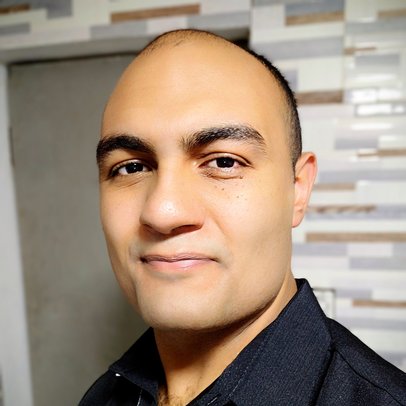
Angel P.
English Teacher
"The Peace Corps has given me the opportunity to actualize my passion to serve through numerous developmental projects addressing real needs within local communities."
See full Volunteer profile
To learn more about serving as a couple in Philippines, visit the country page.
Application process
From application to departure takes around nine months. Learn about the application process for Volunteer opportunities.
Medical/legal clearance
You will need to be cleared medically and legally in order to serve in Philippines. Review information on medical clearance and legal clearance to learn about the process.