An official website of the United States government

Official websites use .gov
A
.gov website belongs to an official government
organization in the United States.

Secure .gov websites use HTTPS
A
lock (
) or https:// means you’ve safely connected to
the .gov website. Share sensitive information only on official,
secure websites.

Search
Connect with the Peace Corps
If you're ready for something bigger, we have a place where you belong.
Apply to the Peace Corps
The application process begins by selecting a service model and finding an open position.

Let us help you find the right position.
If you are flexible in where you serve for the two-year Peace Corps Volunteer program, our experts can match you with a position and country based on your experience and preferences.
Serve where you’re needed mostBusiness Advising Volunteer
 Community Economic Development
Job highlights
Applications are now closed. View current openings.
Apply by
January 1, 2026Know by
March 1, 2026Depart on
July 11, 2026Duration
2 years, plus 3 months trainingAbout the project
OVERVIEW OF THE PROJECT:
The Community Economic Development (CED) project seeks to sustain economic growth and improve the standard of living for families and communities. Peace Corps CED Volunteers (hereafter, Volunteers) are assigned to work throughout the country with community development organizations in rural communities where small-scale business activities, such as retail, rural tourism, agribusiness, or community-based services drive the local economy. All CED activities will have a particular emphasis on working with women and youth.
PROJECT OBJECTIVES:
1) Strengthen the capacity of community organizations to contribute to local economic development.
2) Empower individuals, especially women and youth, to create and access economic opportunities.
PROJECT FOCUS AND APPROACH:
The primary focus is on capacity building through a unique one-on-one relationship with local development associations, as well as current and potential entrepreneurs. The Volunteer will conduct community assessments and engage in monitoring and evaluation activities throughout service. The working environment will include formal settings, including high schools, and informal settings, such as communal meeting spaces, entrepreneur’s homes, or places of business. Collaboration includes, but is not limited to:
• Strengthening management of community organizations and businesses.
• Guide project design, planning, marketing, bookkeeping, etc.
• Support individuals in adopting entrepreneurial behaviors.
• Improving individuals’ skills to achieve economic security.
DIGITAL LITERACY:
Volunteers will also focus on bridging the digital gap by building capacities in digital literacy to better position community members to achieve future economic growth goals. Staff will train Volunteers and provide them with curriculum materials and other resources so they can offer digital literacy courses to community members.
EXPECTATIONS FOR VOLUNTEERS:
• Be a highly-motivated, self-starter prepared to work full-time within an un-structured environment across formal and informal settings.
• Overcome challenges, including geographic, environmental, climatic, cultural, and socio-economic factors, to integrate fully into a rural, under-resourced community.
• Adapt to Peace Corps and Costa Rican norms and procedures during trainings, meetings, recreational activities, and daily life in our communities of service.
EXAMPLES OF CURRENT VOLUNTEER ASSIGNMENTS:
Ben's Experience:
• Ben works in a rural community focused on agribusiness. Each morning, he walks 30 minutes to the high school where he supports the Talleres Socioproductivos Program, helping 7th-11th graders develop skills in leadership, teamwork, and business. Three half-days per week, Ben enjoys giving hands-on support to a teacher developing a school garden where students grow and sell vegetables.
• After the school day, Ben works with the manager of a local cheese factory, teaching her basic computer skills for bookkeeping and marketing, and helps her in building her organizational skills.
• Finally, Ben works twice a week with local women's groups to facilitate entrepreneurial activities, offering training in leadership, empowerment, and business skills.
Jackie's Experience:
• Jackie works in a very remote, rural community of about 150 people. Here, she devotes the majority of her time developing a rural tourism business with the community. She teaches business skills and guides them in applying for grants to build lodging for tourists visiting a nearby National Park. This work is in the afternoons and weekends, as many participants come from outside the area.
• Her work also focuses on helping the community transition from informal work activities, such as illegal gold digging, to more formal and sustainable employment, such as learning how to run a tour guide business. Separately, Jackie loves going daily to the local school where she supports children with their English and physical education classes.
Learn more about what Volunteers do in country by visiting our Costa Rica project page.
Required skills
Qualified candidates will have one or more of the following criteria:
Qualified candidates will have one or more of the following criteria:
• Bachelor of Arts/Bachelor of Science degree in any business discipline
OR
• 5 years professional experience in business management
Language: Spanish
A. Completed 4 years of high school Spanish coursework in the past 8 years
B. Completed college-level Elementary II Spanish semester (Elementary III in quarter system) within the past 6 years
C. Score between 50-62 on the Spanish College Level Examination Program (CLEP) exam in the past 6 years
D. Score Novice-High or Intermediate-Low on official American Council on the Teaching of Foreign Languages (ACTFL) Oral Proficiency Interview (OPI) in Spanish within the past 6 years
Required behavioral competencies
These competencies are essential for all service assignments and are assessed in the application and interview process:
Motivation for and commitment to service
Adaptability and open-mindedness
Problem solving and resourcefulness
Behavioral maturity and professionalism

Photos from Costa Rica



How you and the community will make an impact together:
HOUSING:
Volunteers are required to live with a host family for at least nine months, including three months during Pre-Service Training (PST) and at least six months in their assigned community. If suitable housing is available, they may request independent living. Volunteers should be prepared for the possibility of living with a host family throughout their service.
Although living with a family brings challenges (less privacy, new diet, noise, etc.), the homestay experience offers rewards like community integration, safety considerations, increased language skills, building trust and friendships, cultural sharing, and a unique understanding of the Costa Rican culture. Applicants must think carefully about the commitment to live and integrate with a Costa Rican host family. They must be willing to follow cultural norms and respect family dynamics.
Peace Corps Staff arrange housing with respected host families in the assigned communities. Staff thoroughly inspect homes prior to approval. Most host-family homes have indoor bathrooms and showers but do not have hot water.
PROFESSIONAL APPEARANCE:
Most Costa Ricans take great pride in being neat, clean, and well-groomed, even on informal occasions. Volunteers should always follow the example of Costa Ricans at their worksites and in their communities (e.g., clean and ironed clothes, polished shoes, and groomed hair). Working with schools, government officials, and other professionals requires that Volunteers consistently demonstrate a professional attitude and appearance. Professional dress in the workplace is business casual and includes knee-length skirts/dresses, pressed pants, khakis, nice jeans, blouses, collared shirts, or short sleeve polos. Flip-flops, sport sandals, shorts, tank tops, t-shirts, crop tops, and other athleisure wear should only be worn in the home, during recreational activities, or at the beach, but never at work. Revealing attire or the lack of proper undergarments is never acceptable for Peace Corps service.
CULTURAL COMPETENCE:
While Peace Corps/Costa Rica welcomes Volunteers of all backgrounds and experiences, the culture and beliefs in some communities may produce stigma and discrimination. Volunteers must be mindful of cultural norms and use their judgment to determine how best to approach differences in Costa Rica. Volunteers with backgrounds and/or beliefs that differ from most of their Costa Rican community may experience curiosity or unwanted attention. Many Volunteers have been able to turn these encounters into learning experiences, to share values, and to deepen community members’ understanding of the U.S.
COMMUNITY:
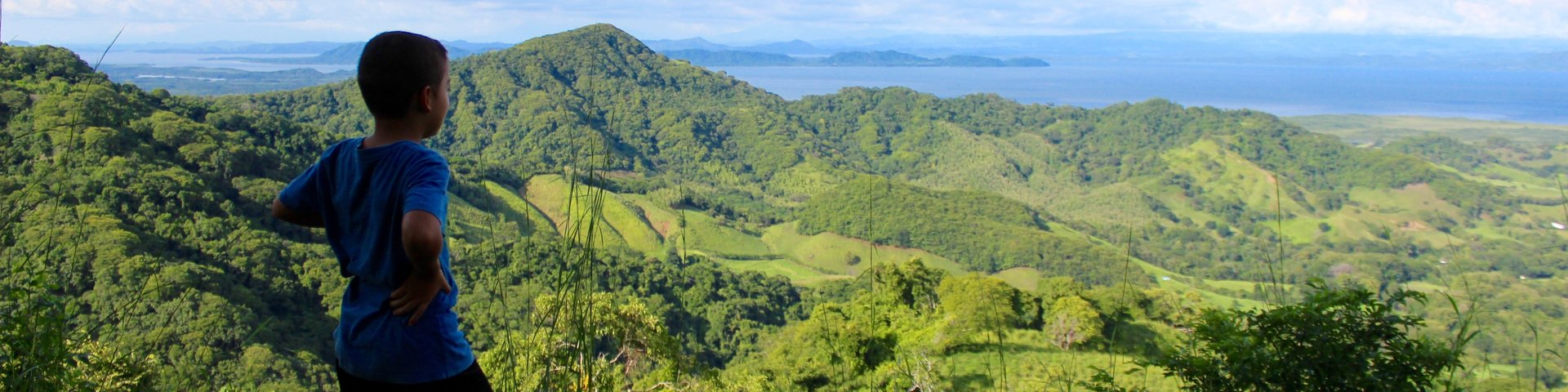
Work communities vary in size and geographical characteristics, from remote rural communities to semi-rural towns, all with limited public transport options. Most communities enjoy a warm and humid climate throughout the year, offering a unique environment to explore. The landscape includes diverse, mountainous terrain and rustic unpaved roads. All regions of Costa Rica experience a heavy rainy season. Volunteers should be prepared for tropical living and coexistence with a variety of insects and animals. Training will be provided to help Volunteers navigate the unique tropical flora and fauna.
Nearly all Volunteer communities are accessible to the capital San José within two to eight hours by public transportation. The closest urban center may be as little as 1 hour away by public transportation. Buses are available from all communities several days a week. They are both inexpensive and relatively dependable.
COMMUNICATIONS:
Volunteers must have a cell phone connected to local phone service. Both pre-paid and post-paid services are available. Peace Corps does not purchase cell phones for Volunteers. Volunteers may use an "unlocked" cell phone brought from the U.S or purchase a cell phone in Costa Rica. Internet service is not available in in all communities, and access to Wi-Fi may be limited.
Learn more about the living conditions, including detailed information on culture, communications, housing, and health/crime statistics on our Costa Rica country page. You can also delve into stories about local communities by reading our blog or Volunteer stories.
Meet a Volunteer in Costa Rica
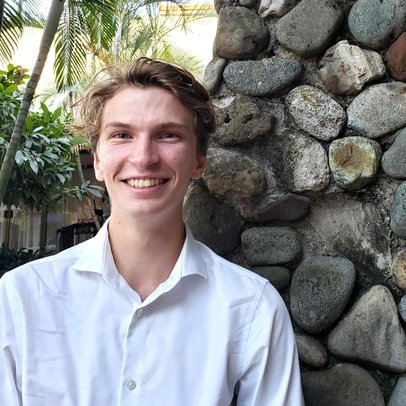
Henry B.
Elementary English Education Volunteer
"Dancing is big in my community, and it has been a great way to meet people and to distinguish myself from the tourists who are constantly coming through town."
See full Volunteer profile
To learn more about serving as a couple in Costa Rica, visit the country page.
Application process
From application to departure takes around nine months. Learn about the application process for Volunteer opportunities.
Medical/legal clearance
You will need to be cleared medically and legally in order to serve in Costa Rica. Review information on medical clearance and legal clearance to learn about the process.