An official website of the United States government

Official websites use .gov
A
.gov website belongs to an official government
organization in the United States.

Secure .gov websites use HTTPS
A
lock (
) or https:// means you’ve safely connected to
the .gov website. Share sensitive information only on official,
secure websites.

Search
Connect with the Peace Corps
If you're ready for something bigger, we have a place where you belong.
Apply to the Peace Corps
The application process begins by selecting a service model and finding an open position.


Let us help you find the right position.
If you are flexible in where you serve for the two-year Peace Corps Volunteer program, our experts can match you with a position and country based on your experience and preferences.
Serve where you’re needed mostAgriculture and Environment Extension Agent
 Environment
Job highlights
- Gain valuable experience applying agroforestry technologies to strengthen food security
- Experience the diverse cultural traditions of a country with over 70 ethnic groups
- Build lifelong connections with community members and colleagues
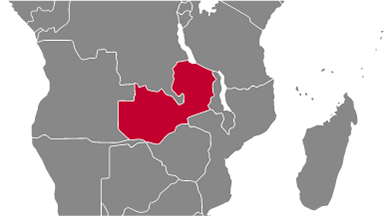
Zambia • Africa
In partnership with: Schools, community groups, local government partners
Applications are now closed. View current openings.
Apply by
March 15, 2026Know by
June 1, 2026Depart on
October 5, 2026Duration
2 years, plus 3 months trainingAbout the project
Interested in supporting a community’s food and nutrition security through strategic agricultural practices? Communities in Zambia are looking for you.
In Zambia, flood and drought are the biggest disrupters to livelihoods of citizens and the domestic economy in recent years. Recent droughts have increased people’s vulnerability to food shortages, thereby exacerbating an increase in the number of children under five with stunted growth due to chronic malnutrition. Communities in Zambia are interested in learning and applying agroforestry techniques to mitigate future floods and droughts, which will contribute to smallholder famers’ livelihood resilience.
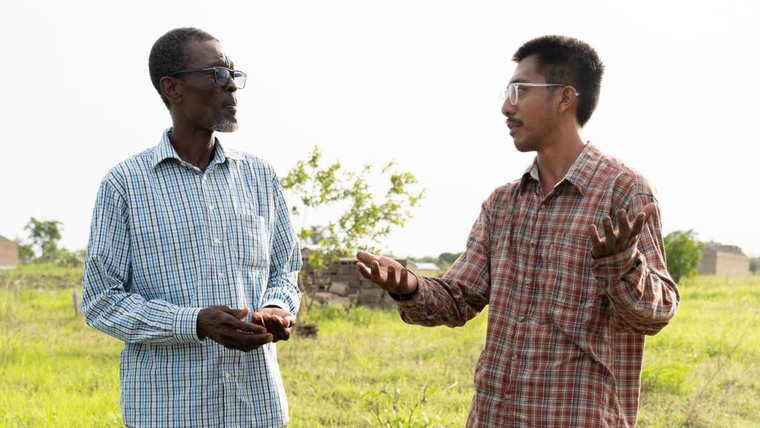
As an Agriculture and Environment Extension Agent, you will collaborate with community members to boost local food and nutrition security through sustainable agriculture. Alongside your colleagues, you will apply agroforestry techniques to improve flood control, natural resource management, and the soil’s health and stability.
Learn more about what Volunteers do in country by visiting our Zambia project page.
Required skills
Qualified candidates will have one or more of the following criteria:
Qualified candidates will have an expressed interest in working in agriculture or forestry and a Bachelor of Arts/Bachelor of Science degree in any field.
A bachelor’s degree is mandatory for all candidates as a requirement for a Zambian work permit.
Language: There are no pre-requisite language requirements for this position.
Required behavioral competencies
These competencies are essential for all service assignments and are assessed in the application and interview process:
Motivation for and commitment to service
Adaptability and open-mindedness
Problem solving and resourcefulness
Behavioral maturity and professionalism

Photos from Zambia



How you and the community will make an impact together:
How you and the community will make an impact together:
Conduct a needs assessment
Promote the incorporation of agroforestry technologies in the farming system
Strengthen soil and water management practices.
Highlight useful gardening and tree planting techniques.
Conduct training on planning, recordkeeping, and marketing for farmers.
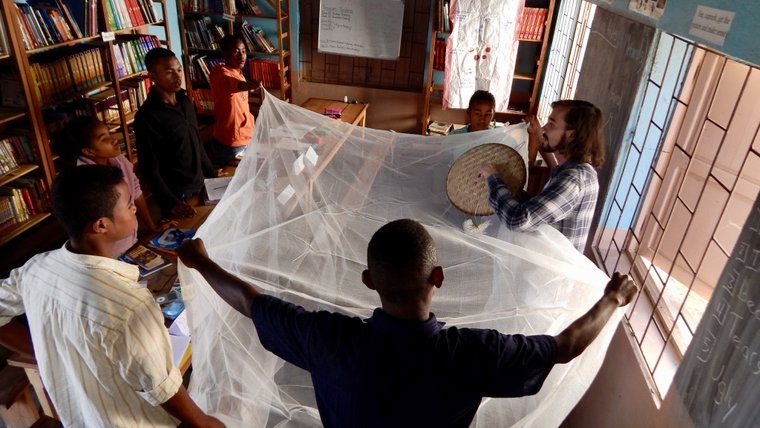
You may also work on additional projects that meet the community’s interests and priorities, such as cooking demonstrations and nutrition workshops.
Volunteers typically live on a large housing compound, but have their own living structure, cooking area, private bathing area, and latrine.
Learn more about the living conditions, including detailed information on culture, communications, housing, and health/crime statistics on our Zambia country page. You can also delve into stories about local communities by reading our blog or Volunteer stories.
Meet a Volunteer in Zambia
Trinity S.
Community Health Empowerment Volunteer
"Rather than just looking at issues and jumping straight to solutions, I'll use what I've learned in the Peace Corps to take the time and energy to understand the lived experiences and daily challenges faced by those in affected communities."
See full Volunteer profile
As an Agriculture and Environment Extension Agent, you will be trained in monitoring and evaluation (M&E) best practices and technical agroforestry techniques. Peace Corps/Zambia will teach you one of the country’s 45 local languages to help you comfortably live in and connect with the community.
After 10 weeks of training, you will move to a rural community where you will collaborate with schools, community groups, local government partners, and individual households. You will work with the community to assess the local needs and develop solutions based on available resources and agroforestry best practices.
Heterosexual and same-sex couples are accepted for this program. Each person must apply separately and must qualify for a position in either the same or a different sector than their partner. Couples will live together during training but may separate occasionally for field-based activities. Couples who are selected for the same sector will live together but work with different local partners which may be in the same community or in neighboring communities (not more than 30 minutes apart).
To learn more about serving as a couple in Zambia, visit the country page.
Application process
From application to departure takes around nine months. Learn about the application process for Volunteer opportunities.
Medical/legal clearance
You will need to be cleared medically and legally in order to serve in Zambia. Review information on medical clearance and legal clearance to learn about the process.